
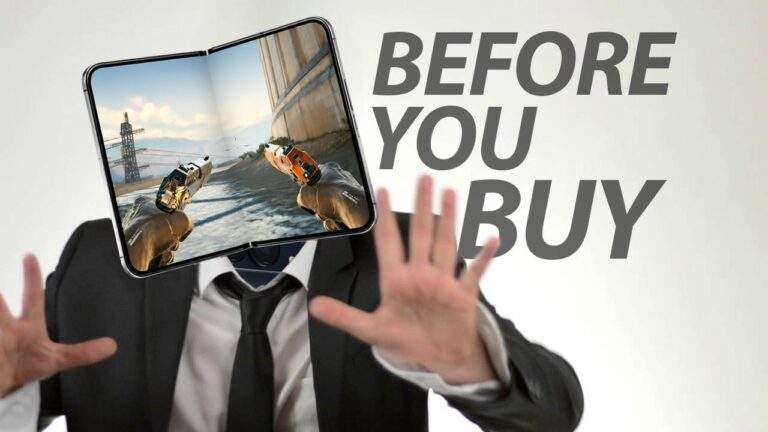
The iPhone Duo got my attention for a pretty simple reason: Apple showed games doing something more interesting than running with shinier graphics. Changing camera perspectives, rearranging controls, adapting to a folded or unfolded screen. That is the kind of weird tech stuff I like messing around with.
After spending time with it over the weekend, I think there is something here. Not necessarily a $2,000 reason to run out and buy one, but something. Right now, the strongest gaming experiences I found were emulation and streaming, while some of the more exciting native gaming features are still waiting on updates.
I’m approaching this as somebody who likes games and tinkering with hardware, not as a specialist phone reviewer. I’ve used Android for a decade, owned the original Galaxy Fold, and spent plenty of time in Apple’s ecosystem too. So, before anything else: Apple did not invent foldables, emulation or streaming games to a phone. What interests me is whether Apple getting involved can help push these ideas further.
Key Takeaways
- The $2,000 iPhone Duo has an excellent unfolded screen, but durability concerns and incomplete app support are significant caveats.
- Asphalt Legends and Planet of Lana adapt to orientation, while some promoted gaming features still need updates.
- Delta emulation is a standout, and game streaming benefits from the larger screen and a Bluetooth controller.
- I find the Duo appealing for enthusiasts, but not an easy purchase to justify on future gaming promises.
The Hardware: A Great Shape With Some Expensive Caveats
The first thing I have to get out of the way is the price. At $2,000, the iPhone Duo is firmly in enthusiast territory. It is not an easy purchase to justify just because Pokémon looks cool on it.
Then there is durability. There have been reports of Duo displays cracking when opened. That has not happened to the unit I’ve been using, at least during my time with it, but it is worth knowing before spending that kind of money.
Even without a failure, the phone feels delicate. It is heavy, but not in a reassuring, indestructible way. More in a “please do not let me drop this” way. That is an impression rather than a drop test, obviously, but it colours how comfortable I feel carrying it around.
That said, I really like the folded shape. I’m partial to smaller phones, and the compact, squarer front screen is easy to navigate, easy to type on, and useful for getting quick everyday stuff done. I don’t feel like I have to unfold it for every little interaction.
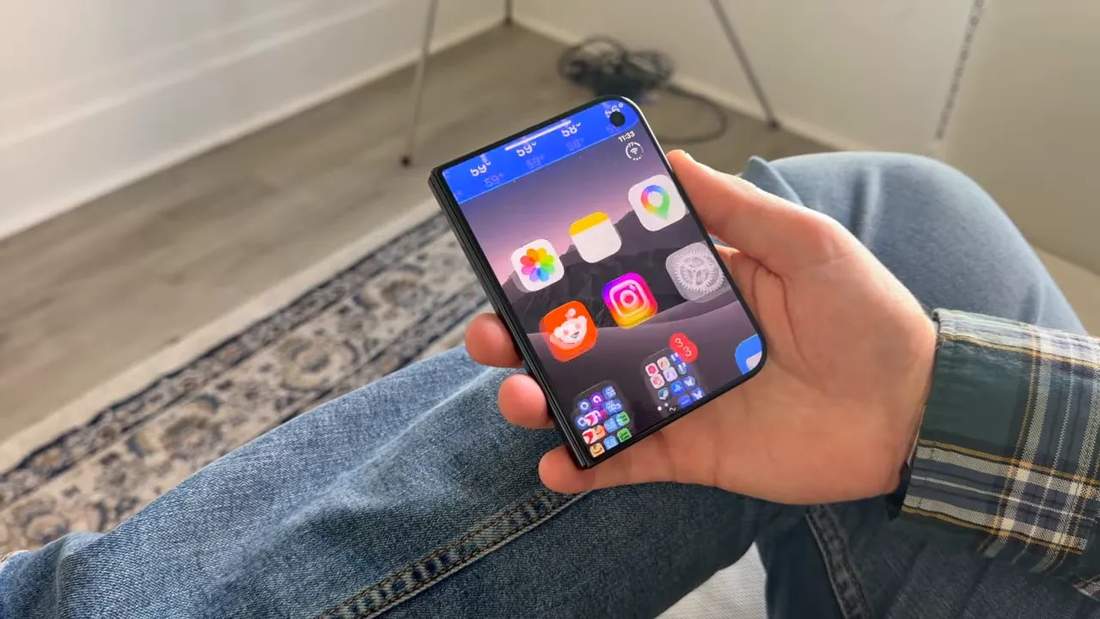
Folded, it still feels close enough to a regular phone. A thicker phone, sure, but nothing unreasonable, and not as cumbersome as some early Android foldables I’ve used.
Open it up and the big, crisp matte screen is excellent. As a daily phone, I haven’t had major problems using it. There is some muscle memory to relearn, but the more noticeable issue is software: not every app knows what to do with the extra space yet. Some scale awkwardly. Others leave unused space around the edges. That same inconsistency carries over into games.
Native Gaming: The Interesting Stuff Isn’t All Ready Yet
The gaming pitch that interested me wasn’t simply “here is a bigger screen”. Apple showed games such as Zenless Zone Zero from HoYoverse and Ungodly adapting to different ways of holding and opening the phone.
The idea is that the camera, aspect ratio and on-screen controls can change depending on whether I’m using the small outer screen, opening the device fully, or holding it vertically or horizontally. Potentially, those changes could affect gameplay too, rather than just stretching the same picture.
That sounds cool. The problem is that I couldn’t properly test much of that promise yet. At the time of my testing, Zenless Zone Zero was due to receive its Duo optimisation update in November. So this is not just a case of everyday apps catching up. Some of the games used to sell the concept are catching up as well.
Asphalt Legends Shows Why Thoughtful Adaptation Matters
Asphalt Legends is one of the better examples I could actually try. It is a familiar, fairly straightforward mobile racer, but it makes useful changes to its layout.
In portrait orientation, the racing sits up top with a large map underneath. Turn the phone horizontally and the race expands into a wide layout. The extra space has a purpose instead of just making everything larger.
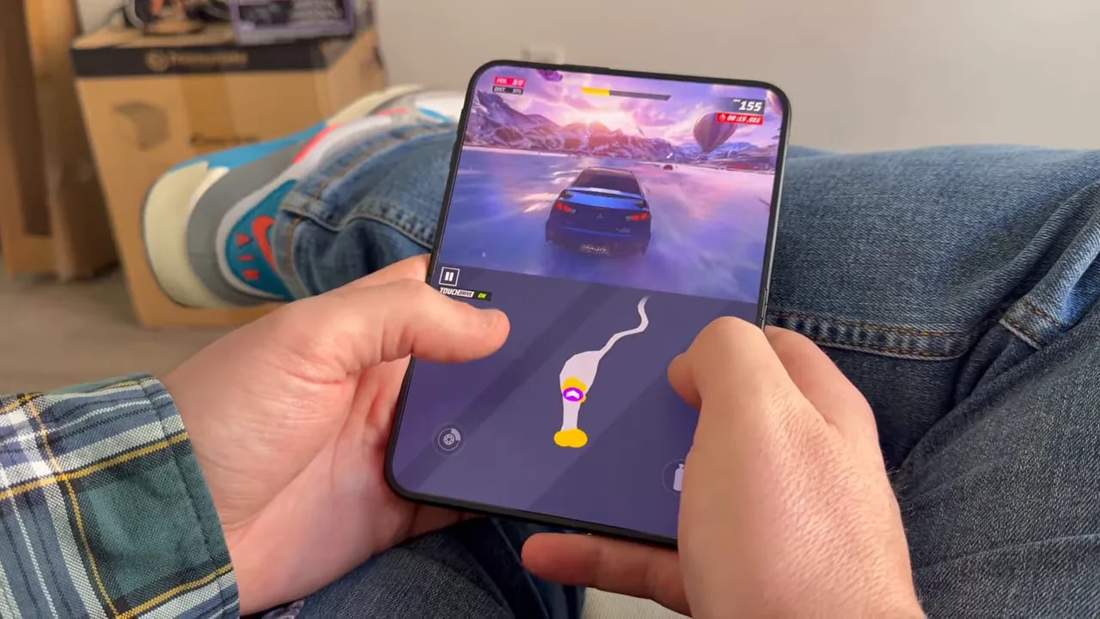
It also looks great, with flashy effects and a high frame rate during my time with it. But my favourite detail is a small usability decision: when I rotate the phone, the game changes its layout and pauses. I then press resume when I’m ready.
That matters. I don’t want to crash because I decided to turn my phone and the controls moved halfway through a corner. Adapting the interface and giving me a moment to adjust is the kind of sensible design I hope other developers copy.
Planet of Lana Scales Nicely, Even in Portrait
Planet of Lana also adapts to how I hold the device. Rotating the phone changes the aspect ratio, and it remains a good-looking game either way.
I wouldn’t say it suddenly feels built from the ground up for vertical play. Still, it scales well enough that portrait mode is a usable option rather than an obvious compromise that ruins the presentation.
These are encouraging examples, but they don’t yet add up to a huge library of games that make the Duo feel essential.
The Novelty Games Aren’t Enough for Me
I like the idea behind Apple Arcade, and I think it does good things. I just haven’t found enough Duo-specific gaming substance yet.
There are playful little experiments: a piano game, an origami game, and the grilled-cheese game that has been making the rounds online. The latter is covered in IGN’s look at Toastie, if that particular bit of foldable weirdness sounds appealing.
I’m not against silly games. I’m just not personally that interested in quick novelties that get attention for a few days and then disappear. I want to see what this hardware can add to games I’ll keep coming back to.
Emulation Is My Favourite Use for the Duo
This is where I started having a really good time.
Emulators have been available on iOS for a while, and Android has had this stuff for much longer. Nothing about playing an old game on a phone is new. But the Duo’s changing shape adds a little charm to the experience, especially when the emulator properly supports it.
Delta Feels Ready for the Form Factor
Delta is the standout for me. It had already been updated to support the Duo’s features and screen resolution during my testing, and its on-screen controls adapt to the position and orientation of the phone.
That means I can play Pokémon on a big unfolded screen, close the device, and carry on with something that feels more like a tiny Game Boy. It is still a touchscreen, obviously, but the change in size gives the whole thing a different feel.
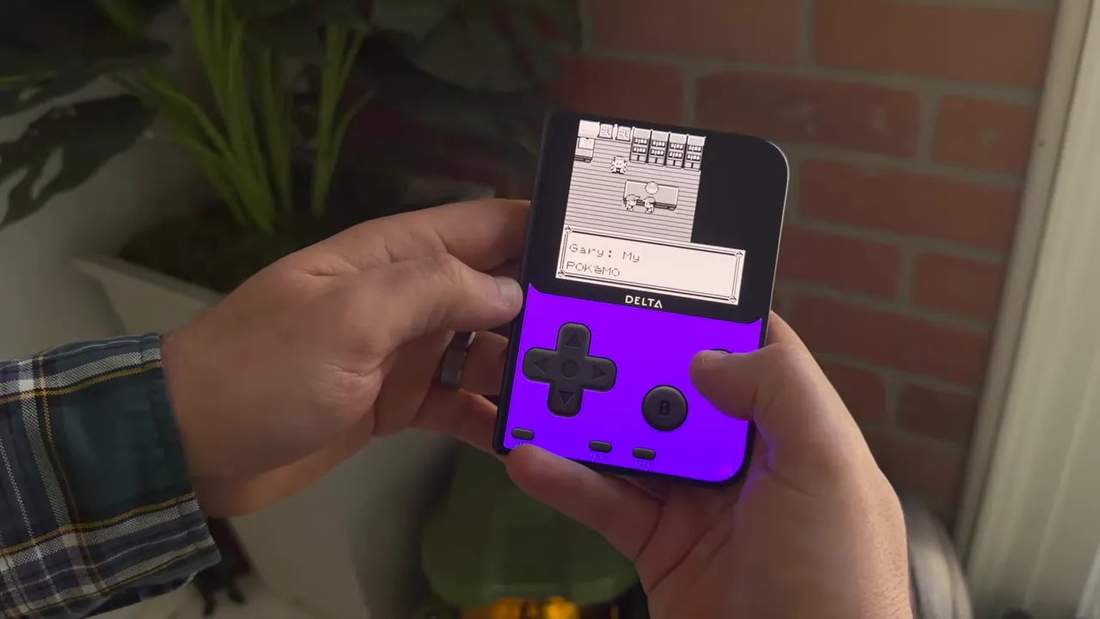
Open it again and I get the larger presentation with the controls rearranged to suit. It is a simple trick, but I’m a sucker for that sort of thing.
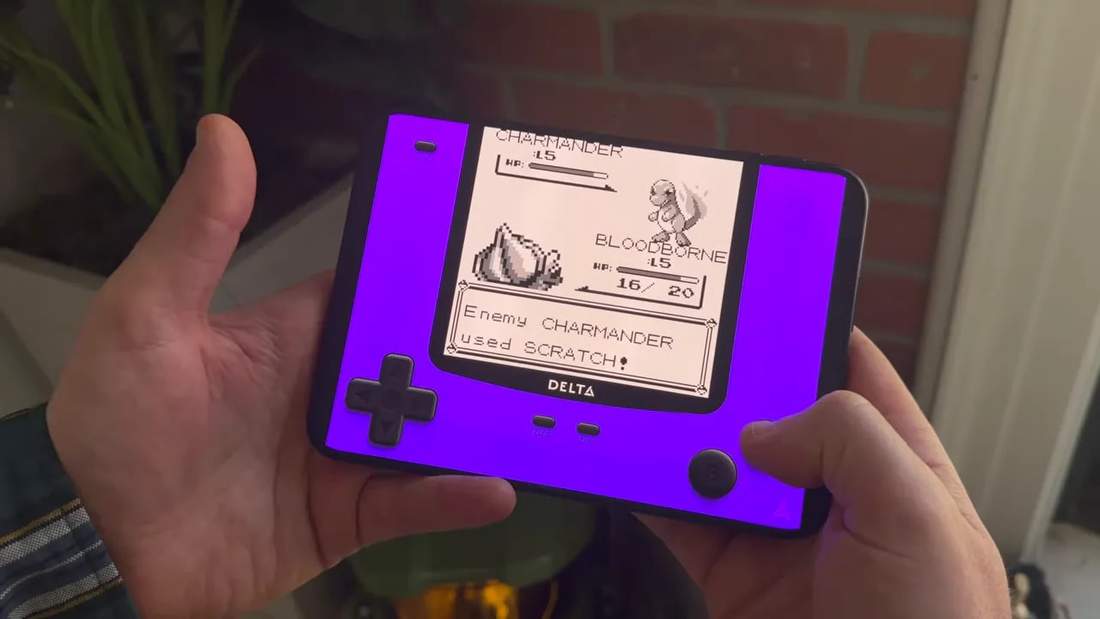
Delta itself is slick and easy to use, including for somebody who is relatively new to emulation. Across the testing period, I had a good experience with:
- Game Boy games, including Pokémon.
- Game Boy Advance games.
- Some Nintendo 64 games.
I didn’t run into many issues with those games. That is not an exhaustive compatibility verdict, and the most demanding emulation enthusiast may have a different checklist. For casually playing older games on the go, though, I found it really useful.
RetroArch Works, but Doesn’t Use the Space as Well Yet
RetroArch is another familiar option, and one I’ve used on other platforms. During my time with the Duo, it had not yet been updated to take full advantage of the screen space.
It was still usable. I played some Metal Gear Solid, and the basic experience worked. It just didn’t feel as tailored to this particular phone as Delta did.
That distinction is important: an app running successfully is not the same thing as an app making the most of a foldable. Delta made the hardware feel more interesting because the interface moved with it.
Streaming PlayStation and Xbox Games Makes Sense Here
Game streaming is the other use that makes the Duo appealing to me, even though streaming itself is not my ideal way to play.
I generally prefer running a game locally rather than relying on an internet connection. Even a good connection doesn’t make streaming my first choice. But if I’m stuck somewhere with decent Wi-Fi, having access to a bigger gaming screen in my pocket is pretty nice.
I tried games including Spider-Man, Call of Duty and Cyberpunk 2077. With a suitable connection and a decent underlying streaming experience, the Duo can do a good job here.
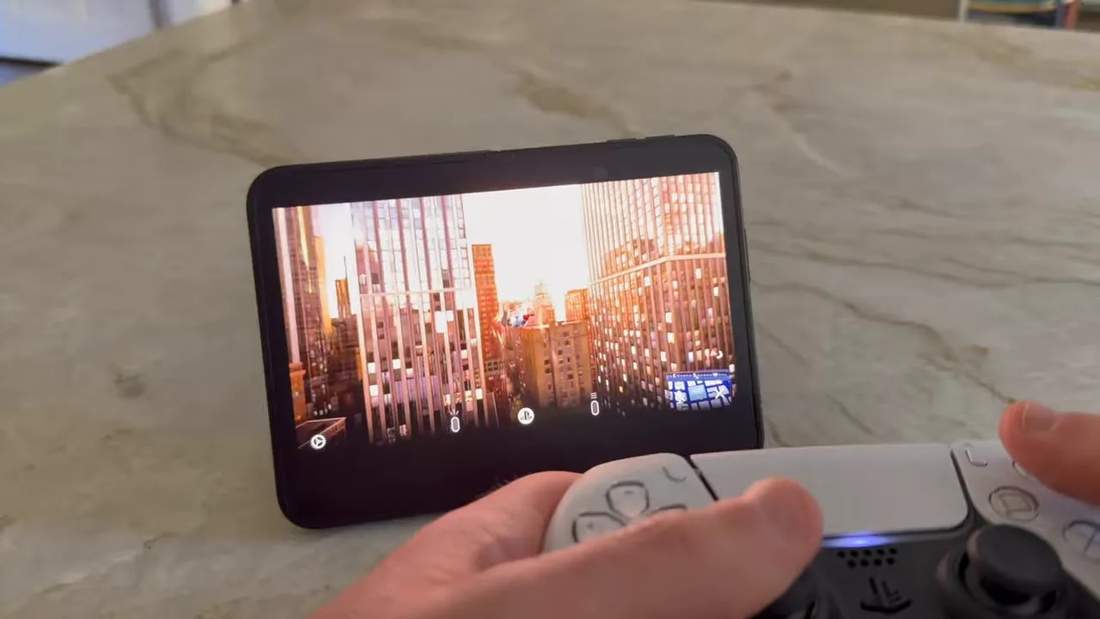
Again, the software isn’t perfectly adapted. The streaming app I used didn’t quite fit the available screen space, so opening the phone didn’t mean every part of the display was used ideally.
Still, I like the basic proposition: carry a normal-sized phone, unfold it, connect a Bluetooth controller and play on a larger screen. I tend to prefer a controller for this because it keeps touch controls out of the way and leaves more of the image unobstructed.
I could do similar things with an iPad, another tablet or a TV. The appeal here is not that those options stop existing. It is that the larger display folds down into the phone I already have in my pocket.
For a tech-obsessed gamer who is sometimes away from the usual setup, that convenience is genuinely enticing.
Heat, Battery Questions and the Foldable Trade-Offs
I’m not ready to give a definitive verdict on long-session gaming performance. One thing I did notice is that the iPhone Duo gets hot fairly quickly.
It also uses two separate batteries, but I don’t have enough information from this testing to turn that into a useful battery-life judgement. I wouldn’t pretend this is a full thermal or endurance review.
The broader foldable compromises are easier to identify:
- Price: these devices cost significantly more than an average phone, and the Duo’s $2,000 price is a serious hurdle.
- Delicacy: the hardware feels fragile, with reported display failures adding to the concern.
- Case bulk: protective cases can make an already unusual phone thicker and more awkward.
- Software support: some apps and games still waste space or need updates to suit the display.
Foldables have improved a lot in a relatively short period, but I don’t think the growing pains are over. The Duo has its own, and the category as a whole still asks for compromises.
Could Apple Help Make Foldable Gaming More Interesting?
The bigger question for me is what happens if more people start carrying these devices.
I’ve been an early adopter of odd phones, so I know Android manufacturers have spent years experimenting here. They try unusual things, refine them, and gradually work through the problems. Apple tends to arrive later with its own approach, sometimes doing parts better, while presenting the whole thing as a very big new idea.
I’m not interested in turning that into an Apple-versus-Android argument. I work on a Mac. I use both ecosystems. What matters to me is the possibility that Apple’s reach could help popularise features Android helped establish.
The Duo had sold out at the time of my testing, and for some buyers it will be their first foldable. With foldables already popular in some Asian markets, I’m curious whether broader adoption could give developers more reason to experiment.
Personally, mobile gaming hasn’t been exciting me as much lately. There are powerful chips, impressive graphics and good games, but I want more than bigger versions of familiar experiences. I don’t think the possibilities end with Balatro, Fortnite and casual games.
I’m not a game designer, so I don’t have the killer concept ready to pitch. I just want developers to find creative uses for the larger display, the folding action and the smaller front screen. More people owning the hardware could help make that worth exploring. It is a hope, not a guarantee.
My Verdict: Cool for Enthusiasts, Still a Wait-and-See Purchase
Right now, I think the iPhone Duo is an interesting way to enjoy emulation and, with the right connection, stream PlayStation or Xbox games. A recent Samsung Fold can offer that same broad foldable appeal. This is not something I’d treat as an Apple-exclusive revelation.
I wouldn’t buy the Duo purely on the promise of future native games. Too much of that experience is still waiting for updates, and the price, delicate hardware and heat all deserve consideration.
But I do understand the appeal. I can be sitting there playing Pokémon on a little screen, unfold the phone, and suddenly I’m playing big Pokémon. That is not a technical argument that makes $2,000 disappear. It is just a little bit of video game magic.
For an enthusiast, that might be enough to make the device tempting. For everybody else, I think this is still the moment to wait and see whether foldable gaming grows beyond an expensive, charming experiment.