Eight hundred hours. That is the kind of commitment one game on this list can demand if completing absolutely everything is the goal. Not finishing the story. Not seeing the credits. Everything.
I like a good grind, but there is a pretty big difference between a game that gives me a reason to keep playing and one that simply refuses to respect my time. The best grindy games make repetition satisfying. The combat stays fun, the next unlock feels worthwhile, or the whole thing becomes a wonderfully relaxing routine.
These are my picks for games that get that balance right, from legendary loot hunts to enormous car collections and postgame dungeons that really do not know when to stop. There are caveats, particularly around completion times and monetisation, but that is part of finding the right grind.
Key Takeaways
- Monster Hunter, Diablo II: Resurrected, and Nioh 2 turn demanding challenges and better equipment into rewarding long-term loops.
- Completionist goals are much bigger than story clears, especially in Gran Turismo 7 and Xenoblade Chronicles 2.
- Dragonsword: Awakening keeps random character unlocks but removes real-money pulls, while its unfinished story remains a caveat.
- Fantasy Life i offers a gentler grind through 14 jobs, while Crimson Desert favours enormous amounts of optional activity.
Table of Contents
- 10. Monster Hunter Series: A Grind That Makes the Reward Matter
- 9. Diablo II: Resurrected: The Classic Loot Loop, Still Doing Its Job
- 8. Splatoon Raiders: The Credits Are Not the Finish Line
- 7. Gran Turismo 7: Finishing Is Easy Compared with Collecting Everything
- 6. Dragonsword: Awakening: The Gacha Grind Without Paying for Pulls
- 5. Nioh Series: Loot Hunting While Getting My Head Kicked In
- 4. Earth Defense Force 6: Simple Progression, Ridiculous Weapons
- 3. Xenoblade Chronicles 2: Completion Can Become an 800-Hour Project
- 2. Fantasy Life i: Fourteen Jobs and Very Little Urgency
- 1. Crimson Desert: An Open World with an Enormous Appetite for Time
10. Monster Hunter Series: A Grind That Makes the Reward Matter
If I wanted one franchise to keep me happily grinding for a very long time, Monster Hunter would be near the top of the pile. It has been going since 2004, but 2018’s Monster Hunter: World was the breakthrough that brought the series to a much bigger audience.
For me, World and its Iceborne expansion are an ideal example of rewarding repetition. There is a mountain of stuff to pursue, the game makes me work for it, and the reward feels like something I actually earned. That last part matters. A huge checklist means very little if ticking something off brings no satisfaction.
Monster Hunter Rise and Sunbreak offer an excellent variation on that formula. Monster Hunter Wilds is more divisive, particularly because of the changes made to streamline the experience. I do not think that makes Wilds a bad game. If anything, someone who does not want an enormous grind might prefer it.
For a rough sense of the difference in scope, the completion estimates being compared here are:
- Monster Hunter Wilds: around 114 hours.
- Monster Hunter World: Iceborne: around 365 hours.
- Monster Hunter Rise: Sunbreak: around 391 hours.
Those are estimates, not promises, and future expansion content could change the Wilds comparison considerably. I would still expect its underlying systems to remain a sticking point for anyone who dislikes the streamlining.
For a truly gigantic grind, I would also look further back at Monster Hunter Generations Ultimate. Some of these older entries have enough content to rival an MMO, without actually being an MMO. Personally, I consider that a bonus.
9. Diablo II: Resurrected: The Classic Loot Loop, Still Doing Its Job
Diablo is almost the definition of a grind game. Kill a bunch of things, grab the loot, equip the good stuff, sell the rubbish in town, and head straight back out. Written down, that sounds absurdly simple. In practice, it can swallow an entire evening.
The complication arrives when better equipment alone stops being enough. I need skill synergies, a coherent build, and a character properly equipped for the challenges beyond the first clear.
Diablo II’s three difficulty tiers give that progression a beautifully clear structure:
- Normal: the relatively forgiving first trip through the game.
- Nightmare: a tougher return journey with better loot to chase.
- Hell: the brutal test, where the strongest rewards become especially important.
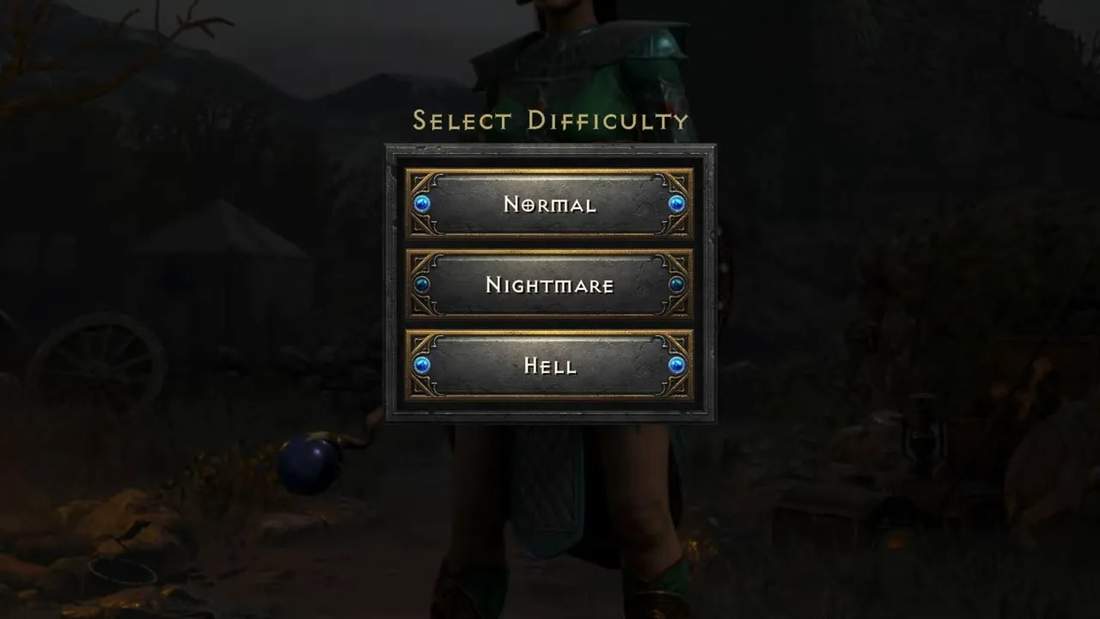
I prefer that straightforward escalation to the many adjustable difficulty levels used in later Diablo games. The newer entries certainly offer plenty of grinding, and a rewarding season can give established players a good reason to return. I would still choose Diablo II as the series’ ultimate grind.
Specifically, I would play Resurrected. It improves the presentation without tearing apart the thing that made the original great. The new 3D graphics look fantastic, and the classic presentation is still available for anyone who prefers it.
For digging further into the game’s systems and character planning, PureDiablo’s Diablo II resources make a useful companion. This is exactly the sort of game where understanding a build gives all that loot hunting a stronger purpose.
8. Splatoon Raiders: The Credits Are Not the Finish Line
A single-player and co-op Splatoon game might sound like the less grindy option. Without the usual competitive multiplayer unlocks, surely there cannot be that much left after the campaign?
That assumption runs directly into the Bottomless Buffet.
This postgame challenge dungeon pushes far beyond the difficulty of the main story. It is the reason comparisons with something like Phantasy Star Online make sense: the campaign gives way to a much more demanding cycle of farming equipment and refining a build.
Top-tier weapons become a necessity rather than a nice extra. Getting them means repeating the highest-difficulty missions until the right drops finally appear. Then I have to put together a loadout that balances survivability with enough damage per second to clear enemies before they overwhelm me.
This is not the stage where I would expect any random collection of favourite equipment to work. The difficulty starts demanding deliberate optimisation and some frankly ridiculous combinations.
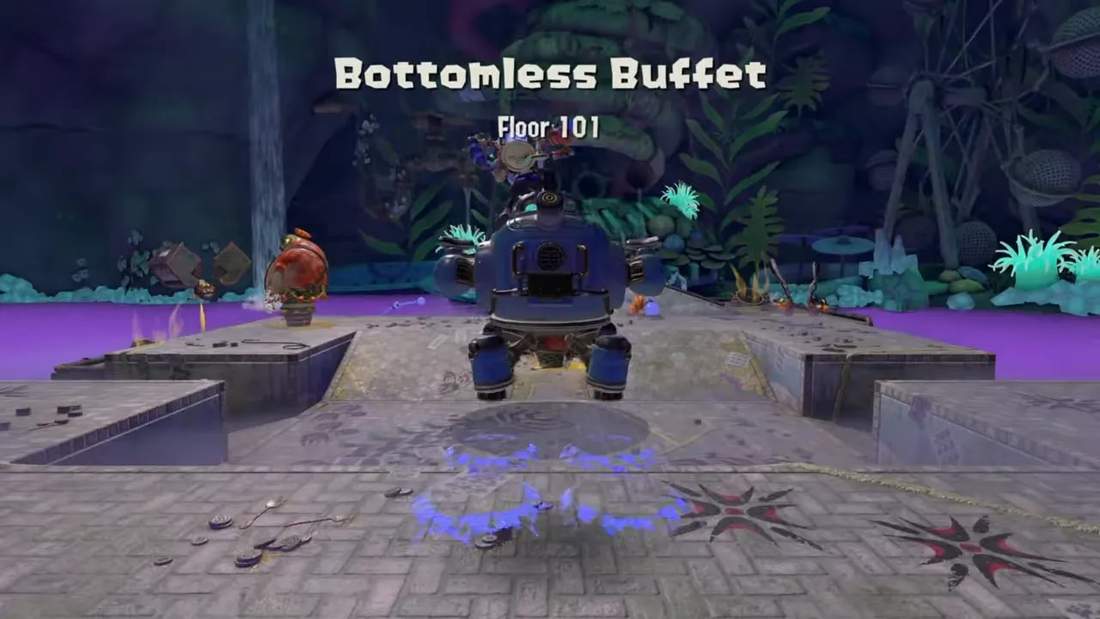
Reaching the bonus boss around the 100th floor gives a kind of completion target, but the dungeon carries on beyond it. The challenge keeps escalating, with the full climb extending towards 1,000 floors.
Technically, that gives the grind an endpoint. In practical terms, I am not getting to floor 1,000. There is a point where “finite” and “basically endless” start looking suspiciously similar.
7. Gran Turismo 7: Finishing Is Easy Compared with Collecting Everything
The era of racing games demanding outrageous commitments for individual unlocks has mostly passed. Gran Turismo 7 is more forgiving than some of its predecessors. At least I am not being asked to complete a 24-hour race just to get a particular car.
That does not mean it is light on grinding. It just means the serious commitment lives elsewhere.
The real long-term goal is owning every car. Finishing the main progression is one thing. Building a complete garage is another project entirely, potentially involving hundreds of hours of events, time trials, and credit earning.
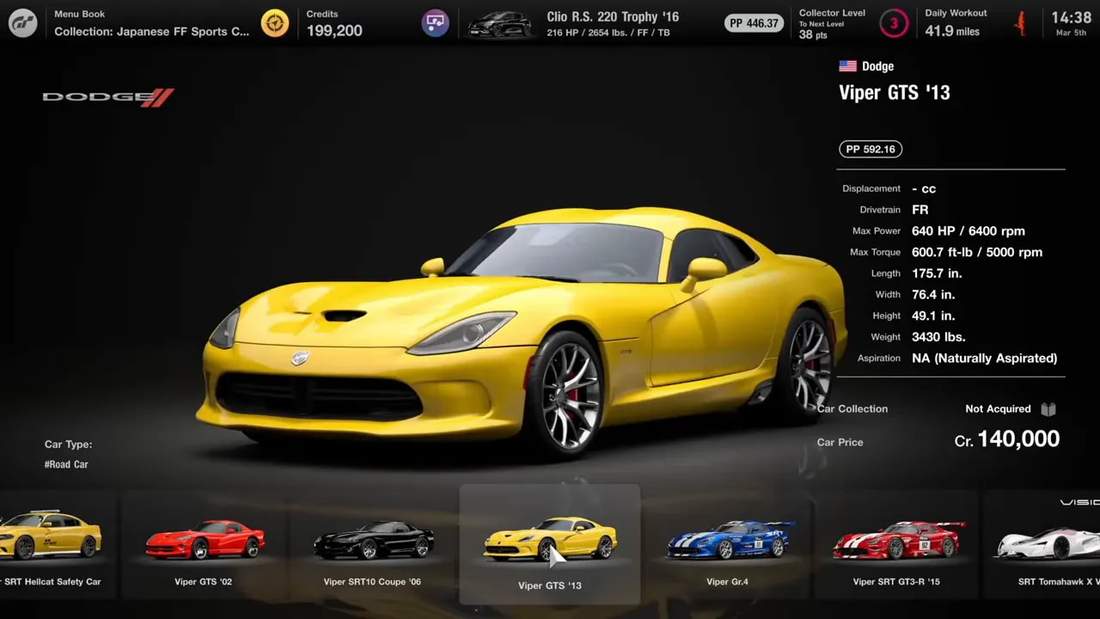
Some rare and concept cars are enormously expensive. At one point, the total collection cost being discussed was roughly 430 million in-game credits. That is a snapshot rather than a fixed total, but it gives a pretty good idea of the scale.
The economy is less stingy than it was at launch. The right weekly challenges can bring in a couple of million credits, which makes collecting feel more reasonable. Reasonable is relative, obviously. A couple of million does not go quite as far when the shopping list runs into hundreds of millions.
Early frustration was strong enough that some players used scripts to repeat races automatically. I understand why the original payouts encouraged that reaction, even if automating the driving rather defeats the point for me.
I would also separate this recommendation from a claim that every game here has no microtransactions. Gran Turismo 7 sells credits. My reason for including it is the appeal of earning the collection through racing, not pretending that paid shortcut does not exist.
6. Dragonsword: Awakening: The Gacha Grind Without Paying for Pulls
I can see the appeal of the big free-to-play action RPG formula: an open world, multiple playable characters, flashy combat, and an endless supply of things to improve. The aggressive monetisation is where that appeal starts getting buried.
Dragonsword: Awakening takes the parts people enjoy and offers a different arrangement. It is a flat-price, single-player game without an always-online requirement or in-game microtransactions.
That was not the original plan. The project began as a free-to-play gacha game, then its publisher dropped it. The developers reworked what remained into this version.
The important distinction is that the gacha mechanics themselves have not disappeared. Unlocking new playable characters still involves spending currency on random pulls. The difference is that the currency comes from playing and grinding, rather than opening a wallet.
Whether that sounds better depends on what bothers me about these games. If I dislike random unlocks altogether, removing real-money payments does not magically solve that. If I enjoy the chase but hate how heavily it is monetised, this is a refreshing alternative.
There is a substantial caveat: the story is not fully finished in the version being discussed, with its ending still dependent on updates. I would keep that in mind if narrative closure were the priority.
For grinding, though, there is plenty to do. No paying to skip the queue. The queue is the game.
5. Nioh Series: Loot Hunting While Getting My Head Kicked In
Nioh combines two very effective ways of keeping me busy: demanding Soulslike combat and a Diablo-style avalanche of equipment. It is not enough to survive a difficult fight. There is also the temptation to assemble the most outrageously powerful armour and weapon combination possible.
The series backs that up with multiple difficulty levels. Finishing the story opens the door to harder challenges, better rewards, and further reasons to reconsider a build.
That creates a progression loop where postgame preparation can also matter for tackling expansion content. I am not simply returning to the same missions to fill time. I am building towards something that can genuinely test the equipment and understanding I have accumulated.
Nioh 3 eases back on some of that grinding. I think it has a strong case as an excellent all-round entry, particularly for exploration and progression, but that does not automatically make it the best choice for this particular purpose. Additional difficulty content points towards a growing endgame, rather than changing that comparison outright.
For the biggest grind, I would choose Nioh 2 Complete Edition. It has a massive amount of postgame content, and its strongest late-game equipment can genuinely change how powerful a character feels.
That is a distinction I appreciate. Some loot-heavy RPGs hand out upgrades that barely register outside a statistics screen. Nioh can make the payoff unmistakable.
I also like that the commitment is largely optional. Finishing the main story does not require treating the game as an endless farming exercise. Digging into the postgame is where the really substantial grind begins.
4. Earth Defense Force 6: Simple Progression, Ridiculous Weapons
Earth Defense Force 6 is clunky. The controls can be awkward, and the graphics are not why I am here. Somehow, a formula that has existed in one form or another since the PlayStation 2 era remains ridiculously compelling.
The reason is not complicated: hundreds, sometimes thousands, of alien monsters, huge battles, and weapons that have absolutely no interest in restraint.
The grind is about as basic as it gets:
- Collect weapon boxes for random equipment.
- Collect armour boxes to increase durability.
- Repeat missions on higher difficulties for even more excessive firepower.
The random guns are what make it work. A lot of drops are not particularly useful. Every so often, though, something turns up that is capable of obliterating a city block, and suddenly all those repeated missions feel justified.
Multiple classes keep the equipment hunt interesting because each has its own weapons and tools. I particularly enjoy the Air Raider, whose air strikes and vehicle requests turn the battlefield into a playground for absurd military hardware.
This is not elegant character progression dressed up in a slick interface. It is a big, awkward machine for producing spectacular fights and occasionally handing me an unreasonable gun. That is enough.
I consider EDF 6 the strongest entry in the series up to this point. A further version has been discussed for 2027, but my recommendation rests on what makes this one so enjoyable already: a very simple grind with an exceptionally satisfying payoff.
3. Xenoblade Chronicles 2: Completion Can Become an 800-Hour Project
The idea of an MMO-inspired single-player RPG existed before Xenoblade. White Knight Chronicles was exploring that territory on the PS3, for example. Xenoblade is where I think that style really found its feet as something enjoyable in its own right.
The series offers plenty of lengthy adventures, but Xenoblade Chronicles 2 is the one I would pick specifically for grinding.
A major reason is the system for unlocking Blades, the companions who fight alongside the core cast. Their randomised acquisition gives the game a gacha-style collection chase. Anyone who wants a deeper explanation of their role can use the Xeno Series Wiki’s Blade reference.
Through ordinary play, acquiring the majority of the unique Blades can happen within roughly 60 hours. Hunting down the extremely rare ones and pushing towards full completion is an entirely different proposition.
The broad estimate here stretches from around 250 to 800 hours, depending on the completion target and dedication involved. I would not treat that upper figure as a normal story playthrough. It describes the extreme end of the collection and completion chase.
Even Xenoblade Chronicles X, which can feel like one enormous grind itself, can take less time to complete.
Whether Chronicles 2 is the best game in the series is a separate argument. Its initial reception was mixed, later improvements helped, and the story remains divisive. It is also probably the most aggressively anime entry of the bunch. For someone specifically seeking a huge grind, however, it makes a very convincing case.
2. Fantasy Life i: Fourteen Jobs and Very Little Urgency
Not every RPG needs to end with a party marching into heaven to punch a god. Sometimes I would rather get on with a job.
Fantasy Life i leans into that quieter appeal. Think of the pleasure of everyday pursuits in Stardew Valley or Story of Seasons, except farming is just one part of a much wider collection of things to do.
There are 14 jobs to pursue, and the central attraction is making progress through whichever ones appeal. I can dabble, focus on a favourite, or decide that mastering everything sounds like a sensible use of my free time. That last option is where the hours start piling up.
The important part is how smoothly those pursuits fit together. Switching between jobs is easy, so I am not constantly fighting the structure of the game just to make progress. Completing one job is not necessarily an enormous undertaking. Completing all 14 is a considerably bigger commitment.
For me, that accessibility is what separates a relaxing grind from tedious busywork. The activities are the attraction, rather than obstacles standing between me and the interesting part.
The overarching story is not the main justification for continuing. The easygoing rhythm is. I keep making progress because making progress feels pleasant.
Compared with the brutal build checks and rare-drop hunts elsewhere on this list, this is the option I would choose when I want the satisfaction of grinding without quite so much pressure.
1. Crimson Desert: An Open World with an Enormous Appetite for Time
Crimson Desert is the kind of open-world game that seems determined never to run out of distractions. Finishing its main progression is achievable in a reasonable amount of time. Experiencing everything is where the commitment gets ridiculous.
I am talking well over 250 hours, with that figure sitting towards the shorter end of the completionist ambition being described. Personally, I do not need to see absolutely everything. There are limits.
Its developer’s previous game, Black Desert Online, sets an even more extreme benchmark for grinding. Crimson Desert is not competing with that simply by having a huge world. What matters is whether all the extra activity feels worth doing.
For its fans, the appeal is having a world full of things to potter around with:
- Gathering herbs, bugs, and other ingredients.
- Solving small puzzles.
- Finding hidden dungeons.
- Completing optional quests.
I have mixed feelings about the structure. It can feel like an offline MMO, and that is not automatically a compliment from me. There are chores here. A lot of them. If gathering another handful of ingredients sounds like pulling teeth, an enormous supply of gathering opportunities is hardly a selling point.
But if those little tasks are exactly how I want to spend time in an open world, the abundance becomes the attraction. There is always another activity, another detour, another reason not to head straight for the ending.
That is the common thread running through all these games. The best grind is not necessarily the longest one. It is the one whose basic actions remain enjoyable after the novelty wears off. Whether I am hunting monsters, chasing one last Blade, earning another car, or happily changing jobs, the reward works best when getting there is part of the fun.