
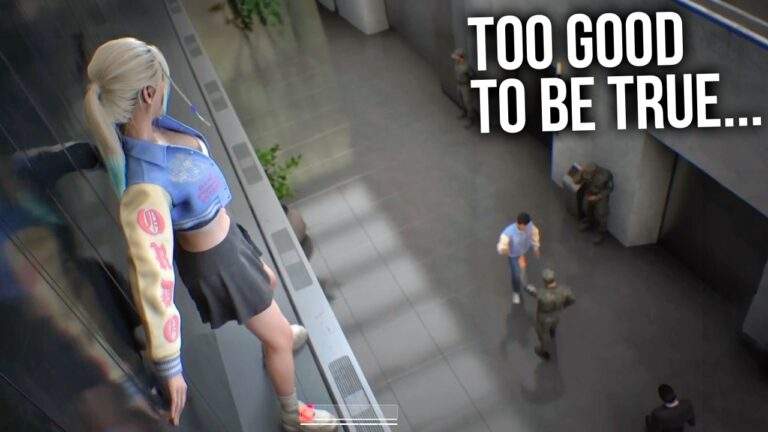
A game trailer has one job: make my brain forget every disappointing launch I have ever experienced. Gorgeous lighting, impossible destruction, a perfectly timed combat sequence, and suddenly I am ready to believe again. Apparently, I learn nothing.
But looking spectacular and being a great game are different achievements. A polished vertical slice can demonstrate an idea without proving that an entire campaign, open world or multiplayer ecosystem works. Sometimes the concern is technical ambition. Sometimes it is funding. Sometimes it is Peter Molyneux making another promise.
These are 20 new games that set off my internal alarm bells, counting down from intriguing but questionable to almost suspiciously impressive. This is not a declaration that every one will fail. A few could be genuinely excellent. I would love to be wrong about them.
Key Takeaways
- Beautiful trailers and polished vertical slices do not prove that a full game works.
- The biggest concerns span gameplay depth, excessive scope, uncertain funding and multiplayer sustainability.
- Lords of the Fallen 2, ILL and Hunter: The Reckoning Deathwish still offer meaningful reasons for optimism.
- Extended gameplay and credible production plans would do more to build confidence than another cinematic montage.
Table of Contents
- 20. NEO Berlin 2087
- 19. Squadron 42
- 18. Blood Message
- 17. 1666: Amsterdam
- 16. Supreme Experiment
- 15. Black State
- 14. Tides of Annihilation
- 13. Waste the Fallen
- 12. Masters of Albion
- 11. The Defiant
- 10. Gang of Dragon
- 9. Hunter: The Reckoning Deathwish
- 8. Ananta
- 7. Lords of the Fallen 2
- 6. ILL
- 5. Mudang: Two Hearts
- 4. Tarae: The Unbound
- 3. Beautiful Light
- 2. Saw: Genesis
- 1. DEFECT
- What Would Actually Convince Me?
20. NEO Berlin 2087
NEO Berlin 2087 makes a strong first impression: glossy Unreal Engine 5 environments, detective work, futuristic gunplay and the voice behind Deus Ex protagonist Adam Jensen. Then it throws in Max Payne-style shoot-dodging, switches between first and third person, and adds a Crysis-like weapon interface. Subtle about its influences? Not particularly.
The problem is how those ingredients fit together. Short bursts look impressive, but the movement can seem stiff, the editing is odd, and the cutscenes do not always match the visual ambition. Even the studio website has a distinctly homemade quality. That alone proves nothing, but it contributes to the uneasy impression.
I think the comparisons with MindsEye are a little harsh. This is pitched as a single-player game, not an enormous platform for other developers to build games inside. That is a more manageable goal. Still, a good-looking engine does not automatically produce a good game. Hopefully, I get to find out before the actual year 2087.
19. Squadron 42
Squadron 42 looks considerably more convincing. Cloud Imperium Games has shown ground combat, fighter combat in space and expensive-looking narrative sequences. The cast includes Gary Oldman, Mark Hamill, Henry Cavill and Gillian Anderson. That is not a cast list. That is a substantial chunk of a film festival.
My hesitation comes from the enormous shadow of Star Citizen. I find that project’s playable sandbox far removed from the coherent experience its ambition suggests. Squadron 42 is a more contained, story-led proposition, closer to a traditional cinematic shooter, which gives it a better chance.
But it was announced back in 2014. A long development history makes even confident gameplay presentations harder to take at face value. The planned episodic structure adds another question: delivering an initial instalment is not the same thing as completing the wider project. I want a finished campaign, not another impressive promise with more promises attached.
18. Blood Message
Blood Message has the kind of atmosphere that immediately gets my attention. Its reveal combines grim, blood-soaked action with slick animation and striking environments. It looks expensive, stylish and intensely choreographed.
That last part is where my scepticism kicks in. I have seen this pattern plenty of times: an impressive showcase suggests a sprawling, immersive adventure, then the full game struggles to sustain the quality of that carefully prepared section.
I am not dismissing the artistry. The trailer is gorgeous. I simply need to see what happens outside the controlled presentation. Unscripted gameplay would tell me more than another immaculate montage. How does combat behave when an encounter goes wrong? What connects the big sequences? Those are the things that turn a stunning demonstration into an actual game.
17. 1666: Amsterdam
1666: Amsterdam has an interesting concept and the attention that comes with its connection to former Assassin’s Creed creative lead Patrice Désilets. An unsettling historical setting with supernatural elements is absolutely something I can get behind.
But an interesting premise is not the same as convincing execution. The concerns here centre on stiff-looking animation, basic-looking combat and whether the ambition can translate into a polished, responsive experience.
I am cautious about treating early material as a final verdict. Equally, I cannot award a game points simply because the idea sounds brilliant. I have interesting game concepts floating around in my head, too. The difficult part is building the thing, making it work and knowing when it is ready to leave the workshop.
16. Supreme Experiment
Supreme Experiment looks like NieR: Automata had a deeply unhealthy encounter with Junk Head. Giant structures, strange mechanical creatures and one bizarre image after another make it hard to ignore. Whoever is handling the art direction has my attention.
What I do not have is a clear understanding of the game. The footage suggests third-person exploration, while the Steam description points towards first-person shooting. Elsewhere, the pitch invokes immersive simulation, atmospheric exploration, science-fiction mystery and potentially branching choices. That is quite a shopping list.
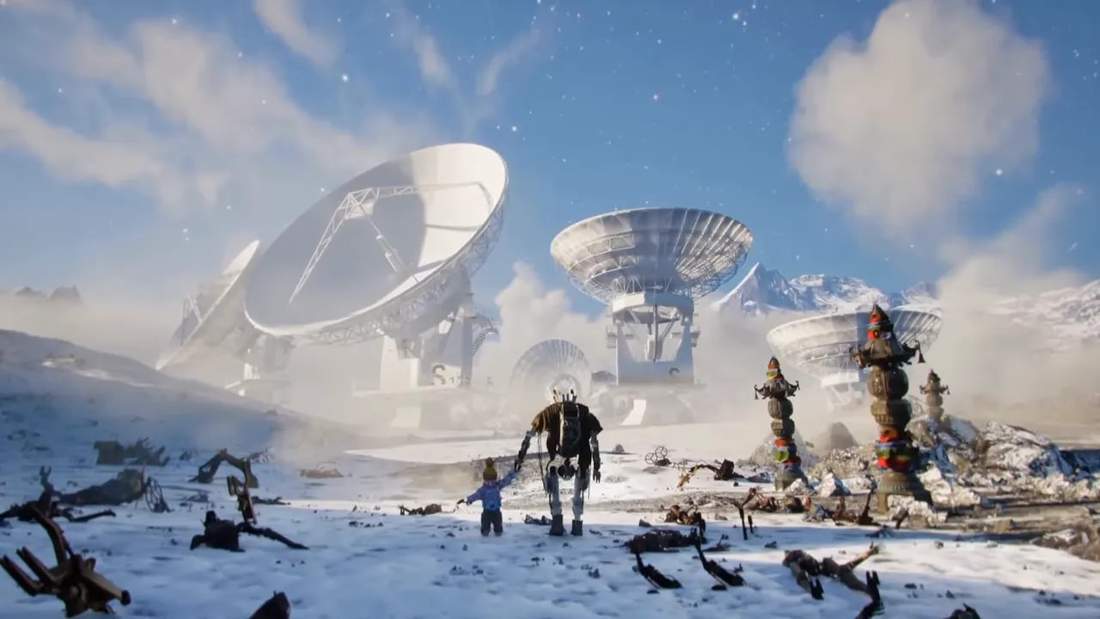
I do not think realistic graphics are destroying games. I think prioritising graphics at the expense of the actual design can produce a bad game, whether the art is realistic or stylised. Supreme Experiment needs to demonstrate a coherent gameplay identity, not just another astonishing environment.
15. Black State
Black State belongs to a growing crowd of paranormal military shooters, alongside names such as Level Zero: Extraction, Gray Zone Warfare and Active Matter. Its most refreshing distinction might be that it is not another extraction shooter. It is a third-person action game with spooky environments, military enemies and robots.
The premise is familiar: an elite operator enters an anomaly and encounters things that really should not be there. If Trepang2 is already in the collection, the broad appeal will be recognisable.
In motion, Black State looks impressive, although some environments have that familiar glossy Unreal Engine appearance. My bigger concern is the developer’s history, including the obscure horror game Kabus 22, which left an extremely poor impression on me. A studio can improve, of course. But that track record makes it harder for me to accept the new presentation without substantial proof.
14. Tides of Annihilation
Tides of Annihilation presents itself like a blockbuster action epic: elaborate Unreal Engine 5 visuals, enormous destruction, dramatic cityscapes and a protagonist fighting through spectacular encounters. At a glance, it looks like the work of an established team operating at full strength.
The question is whether that impression holds beyond brief, heavily controlled sequences. An unproven developer is not automatically a problem. Every great studio had to make a first game. But a short gameplay clip cannot establish encounter variety, performance, responsiveness or how the quieter sections work.
I am interested. I am also waiting for a substantial, uninterrupted demonstration. Give me ten minutes that show how the game actually plays, rather than thirty seconds that make the marketing department look extremely good.
13. Waste the Fallen
Waste the Fallen has a strong hook for an extraction shooter: Lovecraftian horror, shifting dimensions, monsters, cultists and the suggestion that venturing deeper changes the people who return. Its claustrophobic atmosphere gives it more personality than another collection of soldiers searching warehouses.
Unfortunately, personality is only part of the battle. Extraction shooters need enough players to populate matches, and they need ongoing developer support. A beautiful empty lobby is still an empty lobby.
Developer Royal Crow previously made CROWZ, a military multiplayer shooter that entered Steam Early Access in 2022 and shut down within a year. That history makes audience sustainability a specific concern, not just a general complaint about multiplayer games.
Moving into another crowded shooter category does not solve the discovery problem. Waste the Fallen needs to be distinctive enough to attract players and compelling enough to keep them.
12. Masters of Albion
Peter Molyneux is back, and I can practically hear my expectations trying to escape through a window.
I love Fable for what it actually is. That does not mean I have forgotten the gap between Molyneux’s grand promises and the games that eventually arrived, or the unfinished feeling surrounding some of his more recent projects.
Masters of Albion combines town building with defending that settlement against enemies. The colourful presentation suggests a lively world full of possibilities. The concern raised by early closed-beta impressions is that the underlying experience may be considerably more linear and basic, with an uncomfortable resemblance to elements of an earlier NFT project.
The Albion name also invites Fable associations, but I would not treat those associations as proof of a shared universe. What matters is whether the town-building and defence systems have depth. At this point, I need more than familiar branding and another ambitious pitch.
11. The Defiant
The Defiant has a genuinely appealing idea: approach a familiar style of military shooter from a less familiar historical perspective. Instead of returning to Normandy yet again, it focuses on Asian battlefields and conflicts that preceded those well-worn Second World War settings.
I would happily make room for a strong alternative to Call of Duty. The problem is that The Defiant’s presentation does not yet have the impact that comparison invites. It looks competent, but also a little dry and generic in places.
That does not mean it will be bad. A restrained trailer can conceal a very good game. My concern is the distance between a worthwhile historical shooter and a game capable of challenging the genre’s biggest blockbuster. Those are very different targets.
10. Gang of Dragon
A grittier Yakuza-style crime game with a minigun? Yes, that sounds like something I would enjoy. Gang of Dragon’s presentation has the actors, music and cinematic confidence to make the idea feel immediately convincing.
The worrying part is not the concept. It is the reported production situation. NetEase provided funding, but reports indicate that financial support stopped, with further sources suggesting the developer had closed. Those reports should not be confused with an official confirmation of the game’s final fate.
A remaining Steam listing does not resolve that uncertainty. Neither does the possibility that someone could find new funding. Even if Gang of Dragon survives, a disrupted production can leave a finished game very different from the original pitch.
I would be delighted to see it rescued. I would not build my expectations around that rescue happening.
9. Hunter: The Reckoning Deathwish
Hunter: The Reckoning Deathwish has a concept I like a lot. A human hunter works with specialists to expose and confront vampires in the same broader setting as Vampire: The Masquerade. The enemies are stronger than the protagonist, so preparation and outsmarting them should matter.
My anxiety comes partly from the disappointment surrounding Bloodlines 2. But there is a meaningful reason for optimism here: the team behind Terminator: Resistance and RoboCop: Rogue City. I have a lot of affection for those entertaining, slightly flawed games.
I suspect the sensible expectation is something more focused than the original Bloodlines: smaller areas, structured missions and dangerous opponents that encourage a game of cat and mouse.
A narrower scope could make this a better game. I am not predicting failure. I am questioning whether the expansive experience people might imagine is the one the developer is actually building.
8. Ananta
Ananta initially sold me on the fantasy of an anime GTA. A large city, energetic traversal, rocket launchers and a clean anime art style make a pretty effective first impression.
My enthusiasm cooled as the free-to-play structure became clearer. The pitch also includes multiple playable characters, two cities, custom housing and premium vehicles. That is a huge amount of expensive content to support.
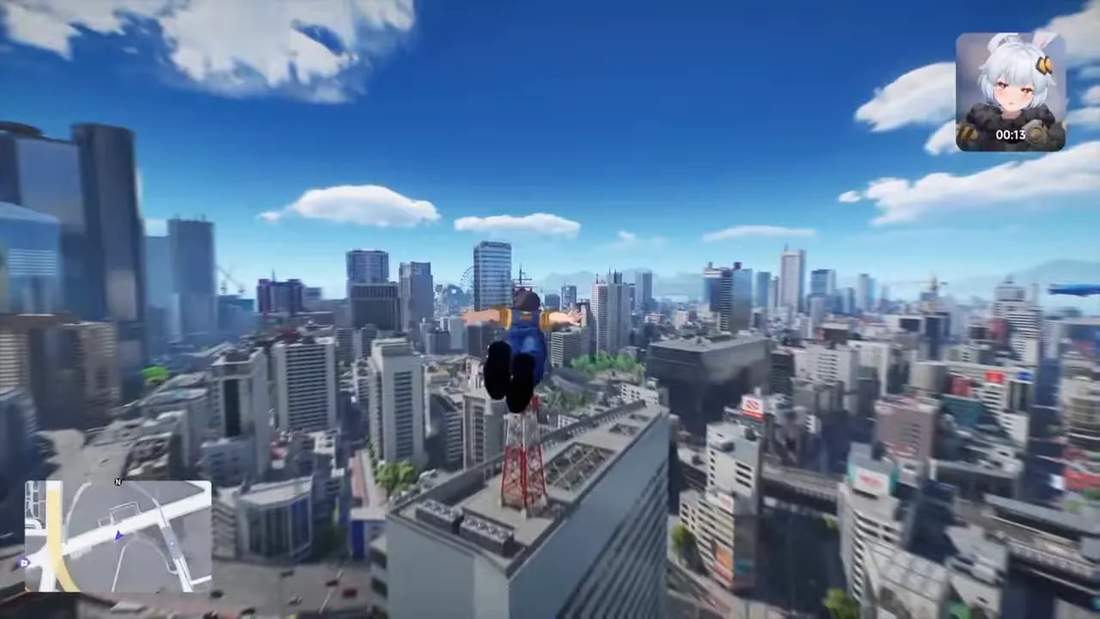
The developers have said there will be no gacha system and that skins will be sold instead. That is worth distinguishing from assumptions about other anime action RPGs. Still, removing gacha does not automatically settle questions about progression, monetisation or depth.
I want the lively urban playground suggested by the footage. I am concerned about getting an enormous checklist of activities that looks broader than it feels satisfying.
7. Lords of the Fallen 2
Of everything here, Lords of the Fallen 2 has one of the strongest chances of turning out well. I actually expect a good game. The previous instalment improved substantially through post-release updates, and I appreciate that it remembered exploration is part of the Soulslike formula, not an optional extra between difficult fights.
My hesitation concerns the scale of the ambition. Positioning a sequel as the equivalent of Dark Souls 4 is setting an absurdly high bar, especially when that hypothetical game does not exist.
There are already excellent attempts to push the genre forward. Lies of P and its expansion are strong examples. I want Lords of the Fallen 2 to compete at that level, and I would love it to surpass its influences.
But it does not need to defeat an imaginary FromSoftware sequel to justify itself. A confident improvement on its own foundation would be plenty.
6. ILL
ILL immediately appealed to the part of my brain that enjoys Resident Evil 7 and deeply unpleasant body horror. Its early material looked gooey, disgusting and wonderfully horrible. Exactly the sort of thing I want from this corner of survival horror.
The catch is that those early showcases functioned more like concept trailers. They demonstrated ideas and a desired look, not necessarily features guaranteed to appear in the finished game.
After a long period of limited communication, more concrete gameplay has made the project feel much more tangible. It still looks promising, but the newer footage does not quite deliver the impossible impact of those original teasers.
That might simply mean expectations are becoming realistic. I remain hopeful. The important question is no longer just whether ILL can emerge, but how closely the playable horror experience will resemble the remarkable first impression.
5. Mudang: Two Hearts
Mudang: Two Hearts looks unusually convincing for a new team’s debut. Set during a crisis in Korea, it switches between a soldier and a K-pop star trying to survive. Shooting, stealth and close combat all appear more assured than several other projects on this list.
Then the trailer introduces zombie-like horror elements, which raises another interesting question: how does the tactical thriller connect to the supernatural nightmare?
Unfortunately, the more urgent question is financial. Reports suggested the studio had gone bankrupt after a period of funding difficulties, even while store listings continued to advertise a 2026 release.
The concern is that the impressive material represents a vertical slice rather than a largely completed game. I think of those old Duke Nukem Forever presentations: polished fragments can communicate the intended experience without demonstrating that the surrounding game exists. A project this elaborate needs the money to build everything outside the showcase, too.
4. Tarae: The Unbound
Tarae: The Unbound aims for the sort of fantasy spectacle that makes people start talking about generation-defining games. The presentation offers dramatic landscapes, cinematic combat and impressive magic. There is plenty to admire in the ambition.
But a new studio promising a vast, seamless, high-fidelity RPG immediately makes me ask how much lies beyond the set pieces. Some combat animation looks floaty under closer scrutiny, and the spaces between the dramatic moments can seem sparse.
I am not saying new developers cannot deliver extraordinary games. I am saying extraordinary scope requires extraordinary evidence.
What would change my mind is a sustained hands-on demonstration, with clear performance expectations rather than an assumption that everyone owns a top-tier PC. A breathtaking minute establishes visual potential. It does not establish an entire world worth exploring.
3. Beautiful Light
Beautiful Light looks polished. Detailed weapons, realistic animation, paranormal threats and a dangerous environment give its PvPvE extraction-shooter pitch an immediately professional appearance.
Its most interesting twist is the ability to threaten other players as an anomaly. That could add a welcome wrinkle to the usual cycle of entering a hostile area, grabbing loot and attempting to escape.
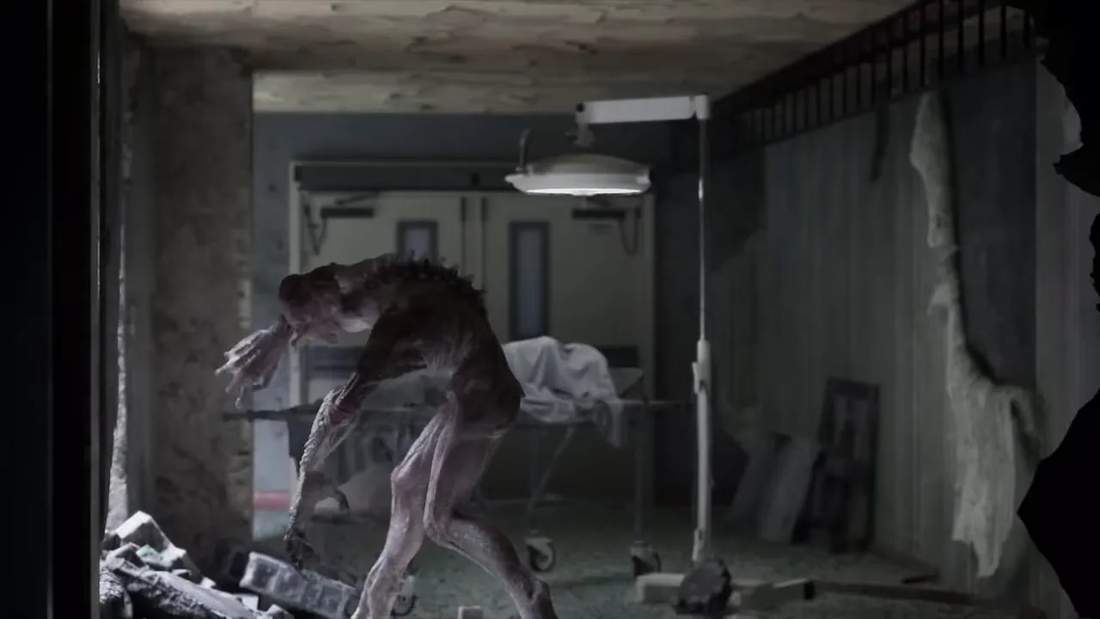
My concern is whether that wrinkle is enough. There are already plenty of military shooters with supernatural elements competing for the same audience. Active Matter is an obvious point of comparison.
A team built around one ambitious multiplayer project has to do more than finish it. It has to establish a population large enough to sustain it. Beautiful Light could be mechanically good and still struggle commercially. For a multiplayer game, long-term availability is part of the experience, not a separate issue.
2. Saw: Genesis
Saw: Genesis takes the asymmetrical multiplayer route, which is never a comfortable ride. Its setup centres on a villain called the Judge rather than Jigsaw, with three survivors cooperating to avoid traps and escape. A First World War-inspired aesthetic gives the familiar survival structure a different flavour.
The publisher and developer distinction matters here. Bloober Team is publishing, and I think its recent work shows meaningful improvement. That does not mean it is directly developing this game.
Anshar Studios is one of the teams involved. Its previous work, including Gamedec and the co-operative Painkiller project, does not inspire much confidence in me. Technical competence is not the same as engaging design.
Another development team is also involved, so there is room for a better outcome. But asymmetrical multiplayer introduces its own design and audience challenges. The traps need to be more than impressive scenery, and the competing roles need a reason to remain fun after the initial novelty wears off.
1. DEFECT
DEFECT earns its initial excitement. The decaying, neon-soaked dystopia has terrific atmosphere, and its tense combat and mysterious science-fiction imagery make a powerful combination. The presentation knows exactly how to make every shot count.
That precision is also what makes me cautious. When every sequence is pristine, every visual reveal lands perfectly and every encounter arrives in a tightly edited fragment, I want to see what happens without the editing.
The risk is not that the art suddenly stops looking good. It is that an apparently extraordinary experience turns into repetitive combat once the same mechanics have to carry hours of play. Atmosphere can get me through the door. It cannot do every other job.
DEFECT needs to prove its moment-to-moment gameplay. Until there is convincing evidence beyond the immaculate presentation, it sits at the top of my too-good-to-be-true list.
What Would Actually Convince Me?
I do not want smaller teams to stop making ambitious games. Some of the most exciting projects come from developers attempting something that initially sounds unreasonable. I just want the evidence to grow alongside the promises.
The things that would make the biggest difference are straightforward:
- Extended, uninterrupted gameplay that shows ordinary play as well as spectacular set pieces.
- A clear core experience, rather than a description that seems to include every fashionable genre.
- Credible production plans, especially when funding or the studio’s continued operation is uncertain.
- A sustainable audience strategy for multiplayer games that depend on populated servers and ongoing support.
If a project is already playable in an unfinished form, I also want to know what is available now, not just what is planned. Steam’s Early Access guidance is useful context for keeping that distinction clear.
A spectacular trailer can earn my interest. A coherent, finished game earns my enthusiasm. I would be very happy for several of these projects to make this list look foolish.