
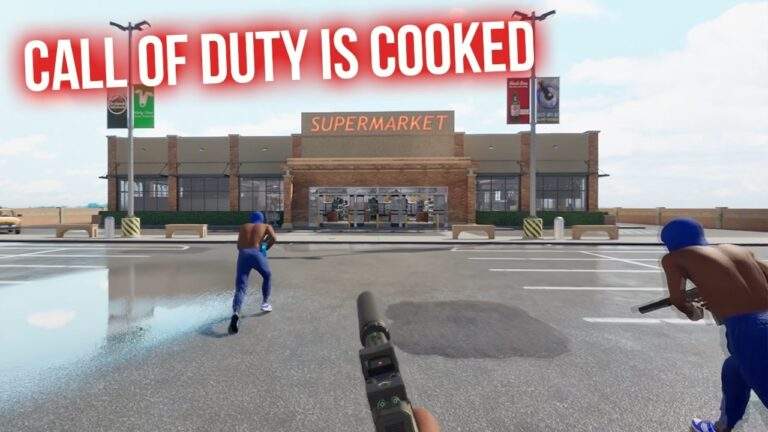
Gaming is a weird world, but October 2026 really put in the effort. Call of Duty finally offered a way to escape its crossover costume party. NBA 2K27 cheaters decided losing a basketball match justified taking down an entire server. And somebody reverse engineered a reverse engineered World of Warcraft project because its creator wanted to keep the code to himself.
I keep coming back to the same question with these stories: what are people actually trying to accomplish? Sometimes the answer is wonderful, like preserving a horror classic that should never have become inaccessible. Other times, the answer appears to be protecting a win record at the cost of a permanent ban. Brilliant plan. No notes.
Key Takeaways
- Call of Duty’s goofy-skin toggle applies to Warzone, while Modern Warfare 4 promises a more restrained cosmetic direction.
- P.T. and Fallout: New York illustrate the difference between purposeful AI-assisted development and relying on tools without enough creative direction.
- Roblox game uploads and NBA 2K27 server exploits show why technical workarounds rarely escape platform enforcement.
- Minecraft’s cold war and Azeroth Survivors demonstrate the extraordinary ambition of community-led gaming projects.
Table of Contents
- 10. Call of Duty Finally Lets Players Hide the Goofy Skins
- 9. Hood Warfare 2 Becomes a $5 Call of Duty Alternative
- 8. Fallout: New York Shows Why AI Still Needs Artistic Direction
- 7. P.T. Gets a Native PC Port With AI-Assisted Development
- 6. Commercial Games Turn Up Inside Roblox
- 5. Minecraft Hosts an Elaborate Cold War
- 4. GTA 6 Cloud Hopes Meet a Firm No
- 3. NBA 2K27 Cheaters Crash Servers to Avoid Losing
- 2. Mass Effect Fans Buy a Times Square Billboard
- 1. Azeroth Survivors Gets Reverse Engineered Into Open Source
10. Call of Duty Finally Lets Players Hide the Goofy Skins
I have spent plenty of time complaining about Black Ops 7. It earned that criticism. Modern Warfare 4, thankfully, looks like a considerable improvement, and apparently it is also intended to bring the Modern Warfare subseries to a close rather than keep stretching the name forever.
But the particularly welcome change is much simpler: a toggle that replaces outlandish operator skins with default appearances.
I am not fundamentally opposed to Beavis and Butt-Head turning up on a battlefield. Sometimes that is funny. I just do not want every match to look like somebody emptied a licensing department into a war zone.
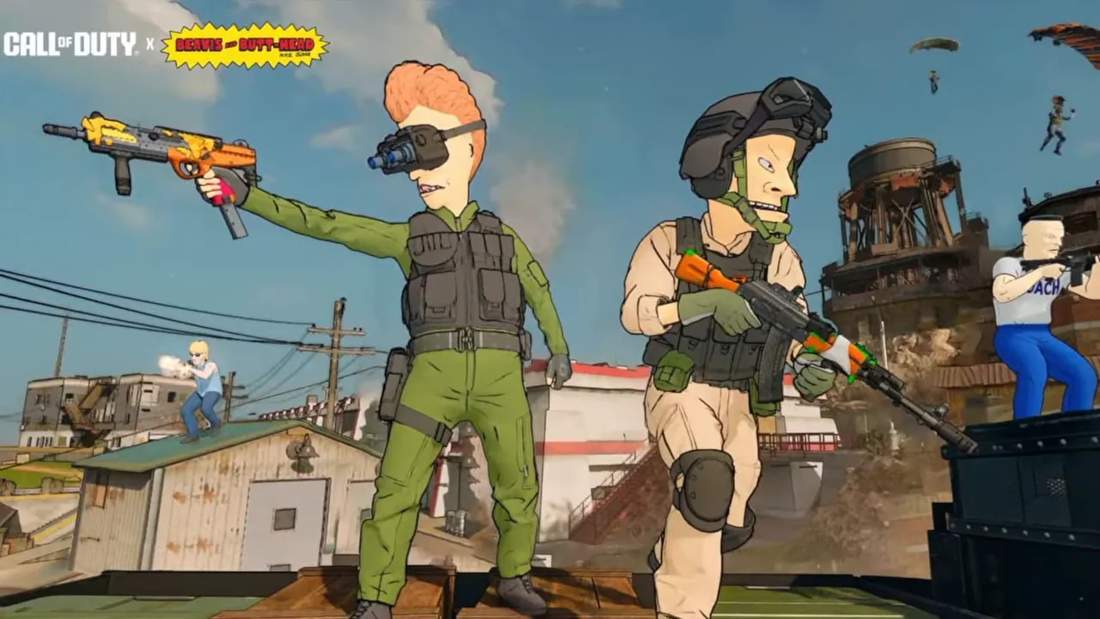
There is an important catch, though. Despite arriving alongside Modern Warfare 4, the skin toggle applies to Warzone, not Modern Warfare 4 itself. It changes what the person using the setting sees, rather than removing those cosmetics for everybody else.
The accompanying promise is that Modern Warfare 4 will avoid the clownish crossover skins in the first place. If that holds, it should not need the same switch. There is also a carry-forward feature for previously earned and purchased cosmetics, which addresses the opposite concern: people who actually want to keep using the stuff they already own.
Those are sensible changes. Astonishing that sensible changes can feel like a major concession, but here I am.
My bigger wish is still for Activision to give the series some breathing room. Put the studios behind one Call of Duty for two or three years. Let people miss it, then deliver something exceptional. I do not expect that to happen, but I would happily trade the annual conveyor belt for a genuinely excellent game.
9. Hood Warfare 2 Becomes a $5 Call of Duty Alternative
At the other end of the shooter business sits Hood Warfare 2, a five-dollar game about rival gangs in Chicago. Instead of another enormous military production, it offers something much smaller and more direct.
The first Hood Warfare existed, but the sequel is the one that caught fire. After launching on 8 October, it reached a peak of 15,258 concurrent players. The original peaked at 68. That is not a modest improvement. That is practically a different universe.
Its mostly positive Steam reception helps explain the appeal. A lot of people seem to want an alternative to the bloat surrounding Call of Duty, and a cheap shooter with a straightforward pitch is finding an audience.
I am also interested in its use of Unreal Engine 5. It does not appear obsessed with becoming the most photorealistic game ever made. Instead, it looks like a project using a powerful engine to serve a manageable idea.
That distinction matters to me. Unreal Engine 5 does not have to mean pushing every visual feature as hard as possible. Scope and optimisation still count. Sometimes a game benefits from knowing what it is, rather than trying to become a technology demonstration with a shooter attached.
8. Fallout: New York Shows Why AI Still Needs Artistic Direction
Somebody made a browser-based Fallout: New York using Claude and AI-assisted development. The pitch includes quests, dialogue trees, V.A.T.S. and a working Pip-Boy, with the creator presenting its visuals and sound as generated through code rather than downloaded assets.
As a technical demonstration, sure, that is interesting. Being able to produce something recognisably Fallout-like in a browser is impressive in a particular sense. That does not automatically make it a good game.
My standard for AI-assisted projects starts with what the human is bringing to the work. Somebody might have an excellent game idea, writing ability or artistic skill, but lack programming experience. Using a tool to bridge that gap could produce something interesting. Good is a higher bar, but interesting is at least a start.
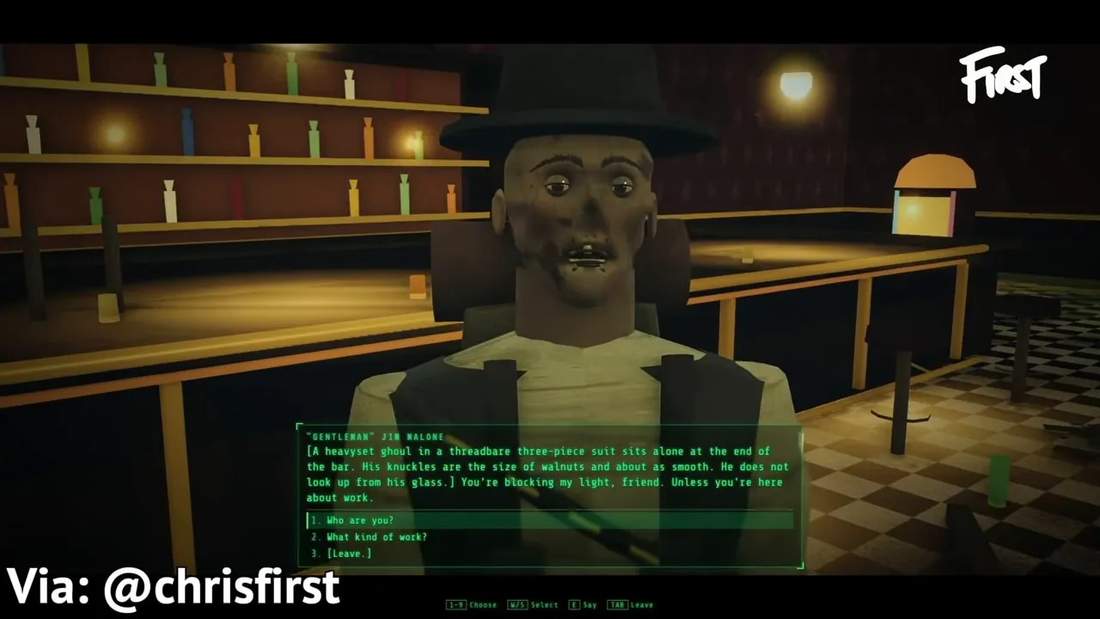
What I see here looks sloppy. I cannot measure the creator’s effort from the finished footage, but I can judge the result, and the result does not communicate much care or discretion.
Artistic vision is still the point. Someone has to decide what belongs, what looks wrong, what needs revision and whether the experience is worth anybody’s time. Asking a model to make Fallout in New York is a prompt, not a substitute for those decisions.
The stranger part of the reaction, to me, is the sudden enthusiasm for copyright enforcement. I understand that Fallout is somebody else’s intellectual property. I also find it odd when people furious about restrictive digital game ownership become enthusiastic defenders of those same restrictions the moment an unofficial experiment appears.
I do not need to like this particular project to find that tension worth thinking about.
7. P.T. Gets a Native PC Port With AI-Assisted Development
Here is the more encouraging side of that argument. P.T., the influential horror experience removed from the PlayStation Store and left stranded on existing PS4 installations, has received a native PC port.
The distinction is important: this is presented as a port of the original PS4 game, not an emulator and not a fan-made recreation. Developer Lorean Xavier, aged 21, used AI as part of the development process.
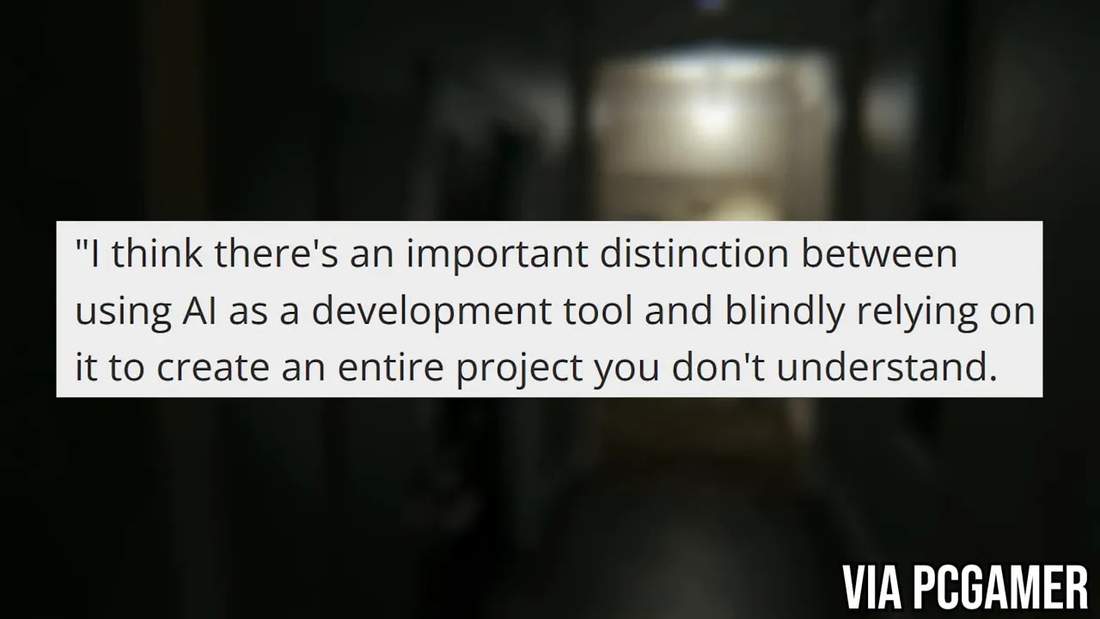
His approach gets at exactly the boundary I care about. AI can be a development tool used by somebody who understands the project. That is different from handing over the whole thing and accepting whatever comes back.
Xavier’s motivation also makes sense to me. He did not have a PS4 when P.T. was available, so experiencing the original was never really an option. The idea that something so influential could gradually become unplayable bothered him, and he wanted to create the PC version his younger self wished existed.
That is a worthwhile reason to take on a difficult technical project.
I recently revisited the original P.T. on a PS4, and it remains absolutely terrifying. It also remains an experience that requires an unusually specific surviving installation to access in its original form. A native PC port offers a different preservation route.
It is bizarre that this is what it took. Still, I would much rather see tools used to recover an important piece of gaming history than to produce another hollow imitation. Hats off to the person doing the difficult work.
6. Commercial Games Turn Up Inside Roblox
Then there is the other kind of technical achievement: getting Undertale running inside Roblox through a PlayStation 4 virtual machine.
That is certainly an attention-grabbing sentence. Similar projects appeared for Left 4 Dead and Halo: The Master Chief Collection, although the reported underlying methods were not identical across every game.
I can acknowledge the ingenuity and still ask what the endgame was supposed to be. These are existing commercial games appearing inside another commercial platform. Roblox moved to remove the projects, which is not exactly a shocking conclusion.
To me, there is a meaningful difference between these examples:
- An unofficial concept: making a new Fallout-inspired setting to demonstrate an idea.
- A preservation project: bringing an inaccessible game such as P.T. to another platform.
- Redistributing a commercial game: putting an existing game inside Roblox through emulation or a similar workaround.
Those distinctions do not settle every legal question. They do explain why I respond differently to the purpose of each project.
I am deeply frustrated by the way intellectual property restrictions can obstruct game preservation. But uploading commercial games into Roblox and expecting them to stay there feels like uploading a newly released film to a monetised YouTube channel and assuming nobody will object.
Technically possible and remotely sustainable are two very different things.
5. Minecraft Hosts an Elaborate Cold War
Unstable SMP is a Minecraft server that creator Spoke describes as a cold war simulation. That sounds fairly straightforward until the details arrive.
There are three rulers, each controlling a different dimension:
- Spoke rules the End.
- A second ruler controls the Nether.
- A third controls the Overworld.
The result is a high-stakes, scripted political drama involving 10,000 players, complicated diplomacy and a mob-based arms race. Apparently, Minecraft geopolitics means constructing enormous cannons capable of dropping wardens and turtles on the opposition.
Of course it does.
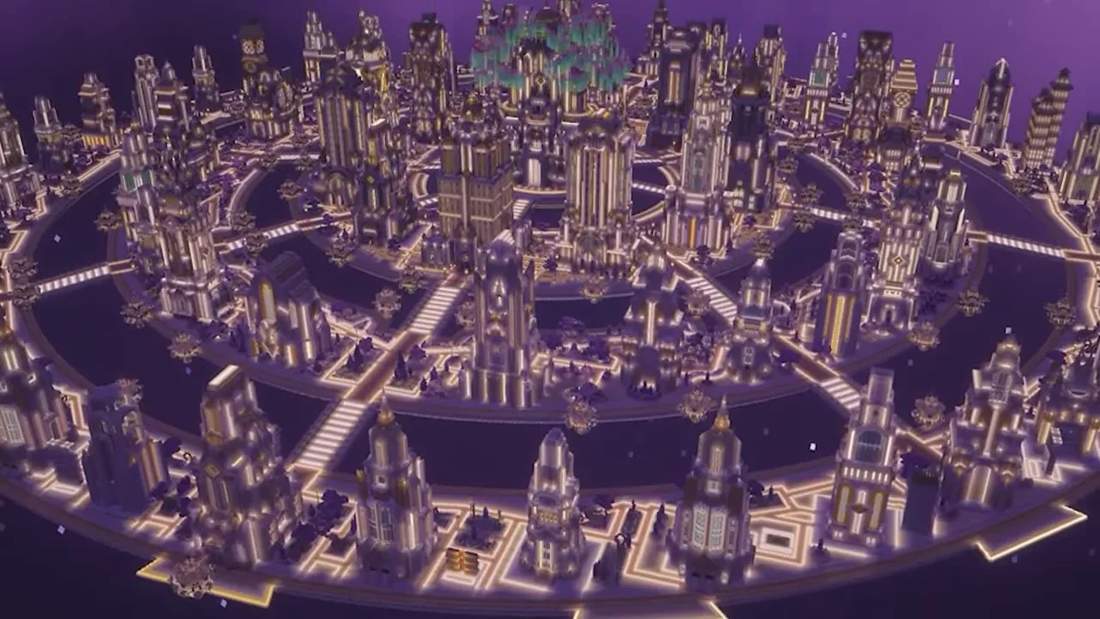
What impresses me is the combination. There is serious Minecraft engineering here, but it is being used to support something that also resembles a cinematic spy thriller. The builds, the weapons and the political manoeuvring all feed the same elaborate scenario.
I cannot pretend it is simple to follow. Elaborate, confusing and oddly impressive is probably the most honest description I can offer. Every time I think Minecraft has exhausted its capacity for absurd community projects, somebody invents turtle-based deterrence.
4. GTA 6 Cloud Hopes Meet a Firm No
Some PC players thought Xbox cloud streaming might provide a way to play Grand Theft Auto 6 without waiting for a native PC release. The excitement around the Xbox arrangement encouraged the idea that there was a technical loophole.
The clarification was considerably less exciting: GTA 6 would not be available to stream to PC through that arrangement. An Xbox release is not, by itself, a promise of PC access through the cloud.
I understand why people went looking for a workaround. I also think this is a good example of a possibility becoming an assumption before the actual terms support it.
The month’s GTA weirdness did not stop there. A separate alleged leaker presented himself as acting on behalf of ordinary people while directing attention towards his cryptocurrency. The account of that episode involved a token pump followed by a sell-off worth roughly $250,000.
I have a hard time taking a public-service manifesto seriously when the practical instruction is to buy the author’s coin.
There was also a reported change involving the original GTA 6 leaker, who had previously been found unfit to stand trial and placed under a hospital order. The update described that order being lifted following a reassessment that found him no longer dangerous to himself or others.
Those are separate stories involving different people. Between cloud-access confusion, cryptocurrency opportunism and legal developments, GTA 6 managed to generate plenty of noise without any of it being a straightforward new game announcement.
3. NBA 2K27 Cheaters Crash Servers to Avoid Losing
There is cheating to win, and then there is making sure nobody gets to finish because a loss would hurt your feelings.
NBA 2K27’s reported exploit falls into the second category. Players were using third-party devices to trigger widespread disconnections when a match was going badly. If the session collapsed, the result could be wiped out rather than recorded as a defeat.
So the supposed competitive strategy was to wreck the match for everybody.
The behaviour was described as denial-of-service-style disruption: overwhelming infrastructure with more traffic or requests than it can handle. For a plain-language explanation of the terminology, Cloudflare’s DDoS guide explains the general mechanism. Whether a particular incident is distributed depends on where the attack traffic originates, so I would not pretend to diagnose every technical detail here.
The important part is that this goes well beyond finding an overpowered move or exploiting a strange animation. It interferes with the service other people are using.
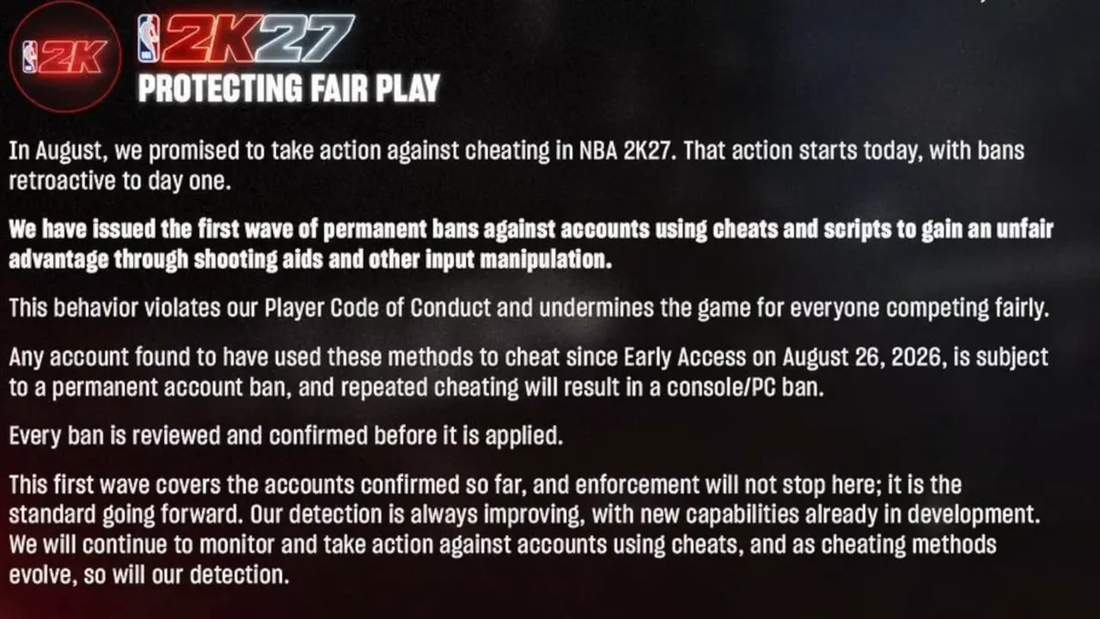
2K responded with waves of permanent bans. My reaction is basically: what other outcome did anyone expect?
Avoiding one loss does not look like much of a victory when the consequence is losing access to the game. I do not claim to understand every component of the exploit or its detection, but deliberately disrupting a publisher’s online infrastructure seems like a very efficient way to attract enforcement.
It has the same flaw as the Roblox uploads. Getting something to work once does not mean it is a plan that survives contact with the people running the platform.
2. Mass Effect Fans Buy a Times Square Billboard
Mass Effect fans went beyond petitions and bought a Times Square billboard as part of the campaign to save the series following reports that EA had closed BioWare and cancelled the next Mass Effect.
I understand the attachment. I would have liked another great Mass Effect too. Buying public advertising is a pretty extraordinary expression of that affection.
I am much less convinced that it changes the decision.
The comparison people reach for is the backlash to Mass Effect 3’s ending. At the time, the people who made the game were still there. They had a personal stake in how their work was received, and they attempted to respond. I do not think that response solved everything, but I understand why those creators cared.
A campaign directed at a private-equity-owned publisher faces a different problem. My concern is that a corporate ownership structure focused on financial returns does not necessarily respond to disappointment in the way an invested creative team might.
And even if the campaign somehow reversed the decision, who would actually make the game?
Respawn is the EA studio I can most readily imagine handling something of that ambition. But it is already working on the follow-up to Jedi: Survivor. I cannot see an obvious reason to pull it away from a successful franchise to solve the much less defined problem of what a new Mass Effect should be.
That uncertainty matters. Approving a familiar name is not the same as assembling the people, direction and expertise required to make a worthy sequel.
Mass Effect: Andromeda is the warning sign for me. I was open to moving beyond the original trilogy, but the result did not justify that optimism. It arrived before Anthem and Dragon Age: The Veilguard and, in my view, marked the beginning of BioWare’s decline.
Handing the property to another EA studio would not automatically fix the underlying creative challenge. Could another company buy the IP? Could somebody license it? Perhaps, but I do not have an answer.
Personally, I would put more hope in spiritual successors made elsewhere. I would rather see a team capture what made Mass Effect special than see the name revived simply because the name is valuable.
1. Azeroth Survivors Gets Reverse Engineered Into Open Source
Azeroth Survivors takes the Vampire Survivors idea and adapts it to the World of Warcraft setting. It is an AI-assisted roguelite built through reverse engineering around the World of Warcraft 1.12.1 client engine.
That is already an unusual project. The really funny part is what happened next.
The original creator did not want to release the source code. Other technically capable people then reverse engineered his project and made their version open source.
A reverse engineered game became the subject of another reverse engineering effort. There is a certain symmetry there that I cannot help appreciating.
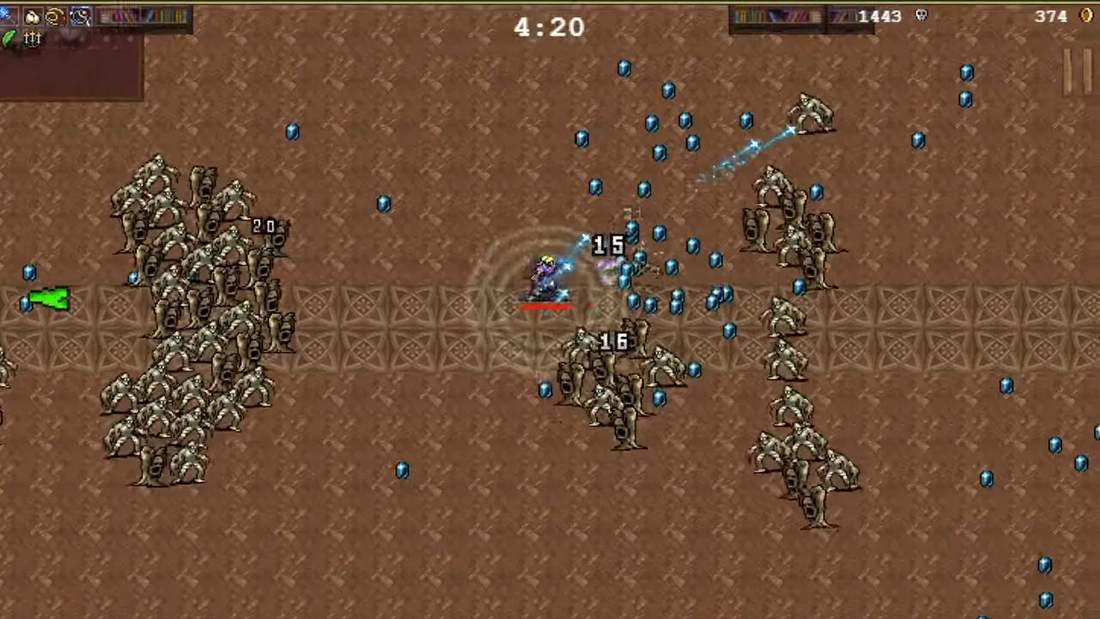
The open version allows other people to inspect and contribute to the project. It uses a custom client and server rather than operating through the official World of Warcraft service.
Another important detail is the asset arrangement. The project does not distribute the copyrighted maps, creatures, icons and other game assets itself. Instead, it reads the material it needs from an existing World of Warcraft installation. That describes how the project is packaged, rather than settling every possible copyright question.
I like seeing these tools used for something with a clear purpose. This is not just generating a familiar-looking game and calling the job finished. It is adapting a gameplay idea, solving technical problems and, through the open-source version, allowing other people to build on the result.
That is the distinction running through a lot of October’s strangest gaming stories. Tools can enable preservation, experimentation and clever new experiences. They can also enable sloppy imitations, pointless redistribution and astonishingly shortsighted cheating.
I judge the result and the decisions behind it. An AI-assisted game can be worthwhile. A game that costs millions and takes years can still be rubbish. Black Ops 7 has already done enough work illustrating the second point.