
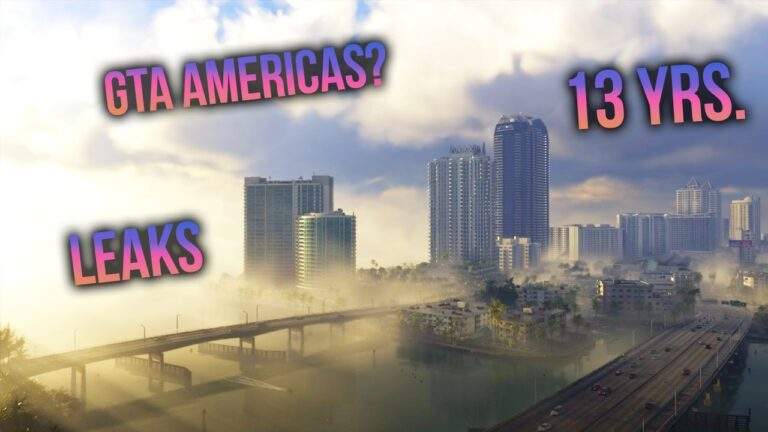
GTA 6’s development history has somehow become almost as ridiculous as a Grand Theft Auto storyline. There are hackers, cryptocurrency schemes, accusations of corporate sabotage and, apparently, an emergency operation devoted to getting random pedestrians enough dialogue.
Behind all of that is a more familiar problem: Rockstar trying to make something enormous, then figuring out how to actually finish it. Early ideas spanned continents. Other projects lost resources. Even the release date became something the rest of the games industry had to plan around.
I find the whole saga fascinating, but the important distinction is between confirmed announcements, reported development details and outright speculation. GTA 6 has attracted plenty of all three. These are the ten moments that best explain how it reached this point.
Key Takeaways
- Project Americas reportedly began with a two-continent vision before Rockstar reduced its scope.
- NPC writing demands and competition for development resources reportedly reshaped the release plans.
- The 2022 hack had lasting consequences for Rockstar’s security and working practices.
- GTA 6’s scale affected other Rockstar projects and release scheduling across the industry.
Table of Contents
- 10. Project Americas Was More Than a Wild Rumour
- 9. The CyberLeak Saga Turned GTA Hype into a Crypto Warning
- 8. Dan Houser Left Rockstar
- 7. NPC Dialogue Became an Emergency
- 6. GTA 6 Became a US Army Re-enlistment Incentive
- 5. MindsEye Brought Former Rockstar Leadership and Sabotage Claims into the Story
- 4. The New GTA Online Reportedly Lost Its Near-Launch Slot
- 3. The 2022 Hack Changed More Than Rockstar’s Marketing Plans
- 2. GTA 6 Reshaped Rockstar’s Entire Project Slate
- 1. The Launch Became an Industry-Wide Scheduling Event
10. Project Americas Was More Than a Wild Rumour
Before GTA 6 had a proper public identity, speculation about its map went completely off the rails. Multiple cities? Multiple countries? Two continents? At a certain point, I half expected somebody to claim Rockstar was building the entire planet.
The funny part is that one of the biggest rumours had a genuine basis. Project Americas was reportedly a real early codename, attached to plans for large areas of North and South America.
Think of Red Dead Redemption’s US and Mexico split, only with a much bigger geographical appetite. That does not mean every imagined city or country from the rumour mill was actually planned. It means the underlying idea of a game spanning both continents was not simply invented by impatient fans.
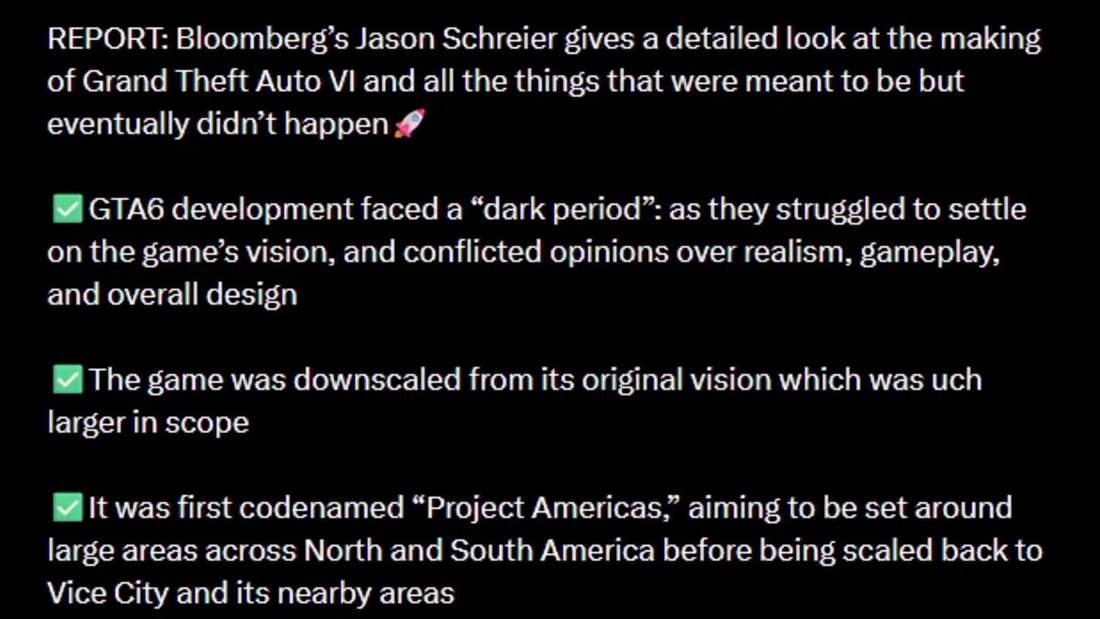
Reporting attributed to Bloomberg’s Jason Schreier describes an ambitious project that struggled to settle on a clear vision. Questions about realism, gameplay and overall design reportedly contributed to major setbacks, and the geographical scope eventually shrank to Vice City and its surrounding areas.
There is an important timing distinction here, too. Early planning is not the same thing as thousands of people building the final game. Substantial development followed Red Dead Redemption 2, with reports placing the move into true production around 2020. Counting the entire gap since GTA 5 as one uninterrupted production sprint misses that difference.
Scaling back was probably necessary. I can accept that and still be a little disappointed by the possibilities. A playable Cuba or a giant São Paulo-inspired city sounds right up Rockstar’s alley. Those are enticing what-ifs, though, not confirmed locations that were cut.
9. The CyberLeak Saga Turned GTA Hype into a Crypto Warning
The later CyberLeak episode combined two things that really did not need combining: an appetite for stolen GTA 6 footage and a cryptocurrency promotion.
The reported August 2026 leak involved almost 20 clips, arriving during intense anticipation for an extended Netflix look at the game. The footage was described as revealing activities, map information and mechanics that had not previously been shown.
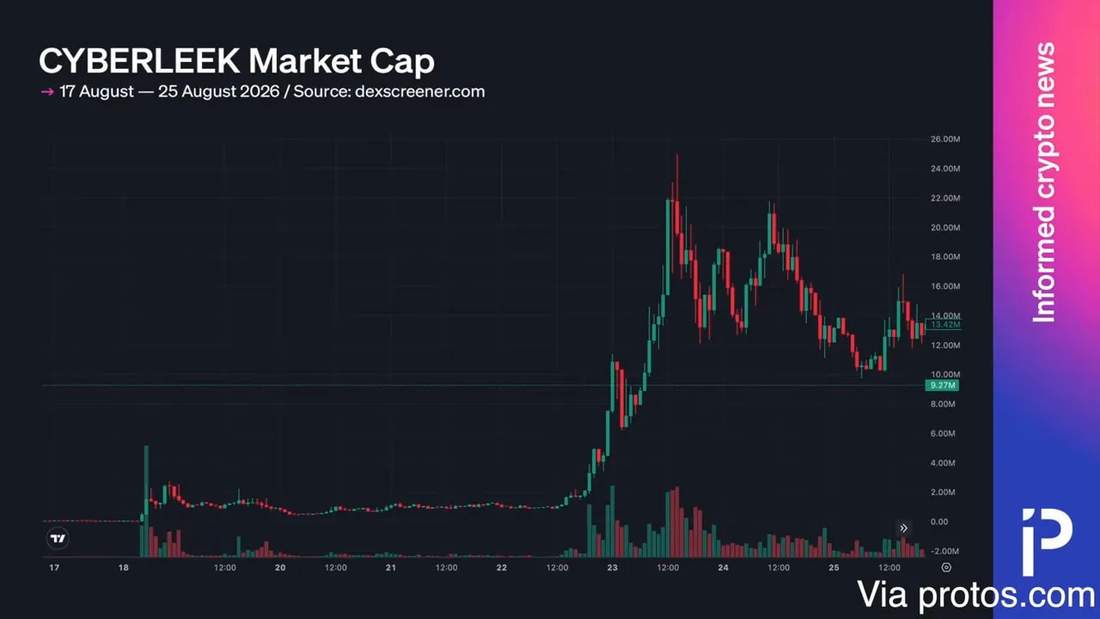
Then came the hook. The person or group behind the leak claimed they would release a complete build of GTA 6 if a related cryptocurrency reached a $30 million market capitalisation.
That is not the same as collecting $30 million in donations. Market capitalisation is a token valuation measure. But the practical pitch was still obvious: buy into this coin, increase its value and supposedly receive access to an unreleased game.
The promotion also leaned on physical game ownership and anti-DRM arguments. I understand why those subjects get people worked up. What I do not understand is treating agreement on game preservation as evidence that a stranger’s financial scheme is trustworthy.
My position was simple: do not put money into it. The account of what followed describes the token reaching roughly $250,000 in market value before the promoter sold out. That figure should not automatically be treated as a verified cash profit, but it hardly makes the campaign look more credible.
Afterwards came threats to release the game if lawyers or law enforcement intervened. For Rockstar, that was not exactly a terrifying new bargaining position.
Someone can say something I agree with and still be trying to take my money. That is the useful lesson here. The FTC’s guidance on cryptocurrency scams is a better starting point than an anonymous promise involving the most sought-after game on the internet.
8. Dan Houser Left Rockstar
Dan Houser’s departure in 2020 was a major creative turning point. He co-founded Rockstar with his brother Sam, but his importance was not limited to having his name near the top of the company.
He was deeply involved in writing the games.
GTA 5 and Red Dead Redemption 2 require enormous scripts, with tens of thousands of lines of dialogue. Houser helped write and oversee the material that gave those worlds their personalities. Losing someone with that level of influence naturally raises questions about what comes next.
I also think Red Dead’s influence matters here. Rockstar had increasingly demonstrated an interest in mature, grounded storytelling, and GTA 6 appears to carry some of that DNA. The question is not simply whether it can deliver outrageous satire. It is whether it can combine that with characters worth caring about.
A founder leaving does not automatically mean a studio has lost its way. Sam Houser remains, and making games on this scale has always required far more than one writer or executive. Still, Dan’s exit belongs on any serious list of GTA 6 development milestones.
As for Dan himself, the picture is hardly one of hardship. His property interests reportedly include Truman Capote’s former New York home and Conan O’Brien’s former Los Angeles home. I suspect he has found a way to keep busy.
7. NPC Dialogue Became an Emergency
Rockstar’s obsession with background characters is both one of its greatest strengths and, apparently, a spectacular way to create more work.
The reported explanation for GTA 6 moving from May to November 2026 is not just that the main story needed more time. It is that the sheer number of non-player characters created an overwhelming dialogue workload.
Co-head of development Rob Nelson reportedly described a situation that required a dedicated writers’ room for NPC dialogue. When the shortfall became clear, Rockstar established what was effectively an NPC emergency room: a Los Angeles writing operation focused on filling those gaps.
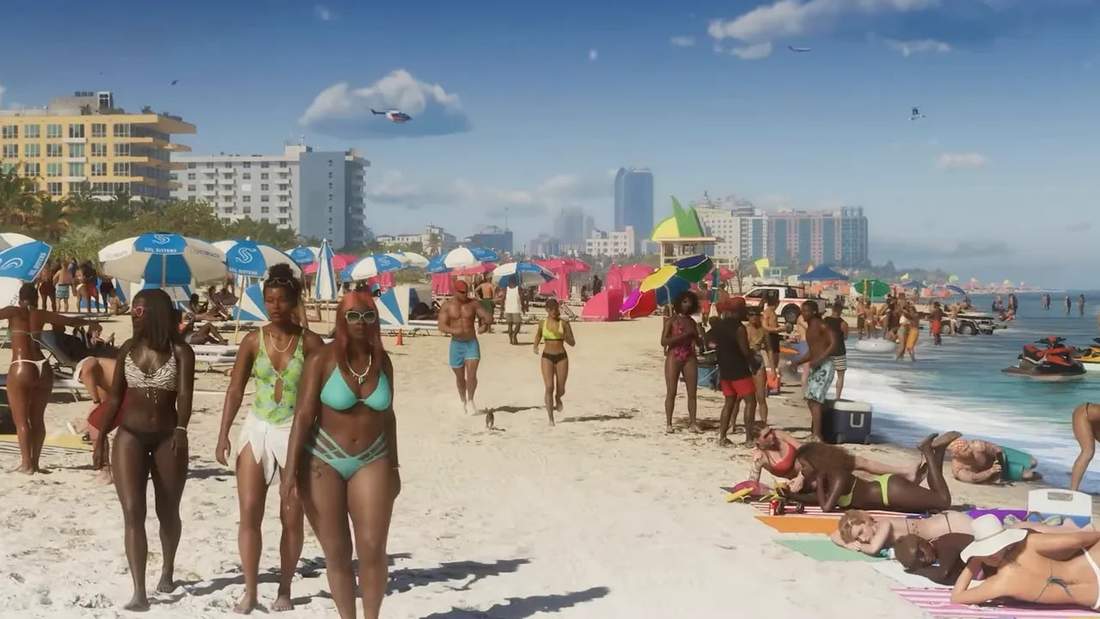
This is why crowd size is not just a graphics question. A beach full of people can look impressive in a still image. Making those people feel as though they belong there requires writing, performances and implementation, not merely more bodies on the sand.
The development account suggests the game was close to releasable in March, but not at the standard Rockstar wanted. That distinction explains a lot about the studio. A game can function without being the game its creators are willing to put their name on.
I admire the commitment. I can also see how it becomes a scheduling nightmare. There is always another interaction to improve, another line to write and another tiny detail that suddenly feels essential.
6. GTA 6 Became a US Army Re-enlistment Incentive
Some stories are so strange that embellishing them would only make them less interesting.
A reported incentive for soldiers in the US Army’s Third Infantry Division at Fort Stewart, Georgia, offered a four-day pass to play GTA 6 around launch. The catch was a minimum two-year re-enlistment commitment.
To be clear, this was not a blanket offer to every US soldier. It was a specific incentive available to some personnel within that division.
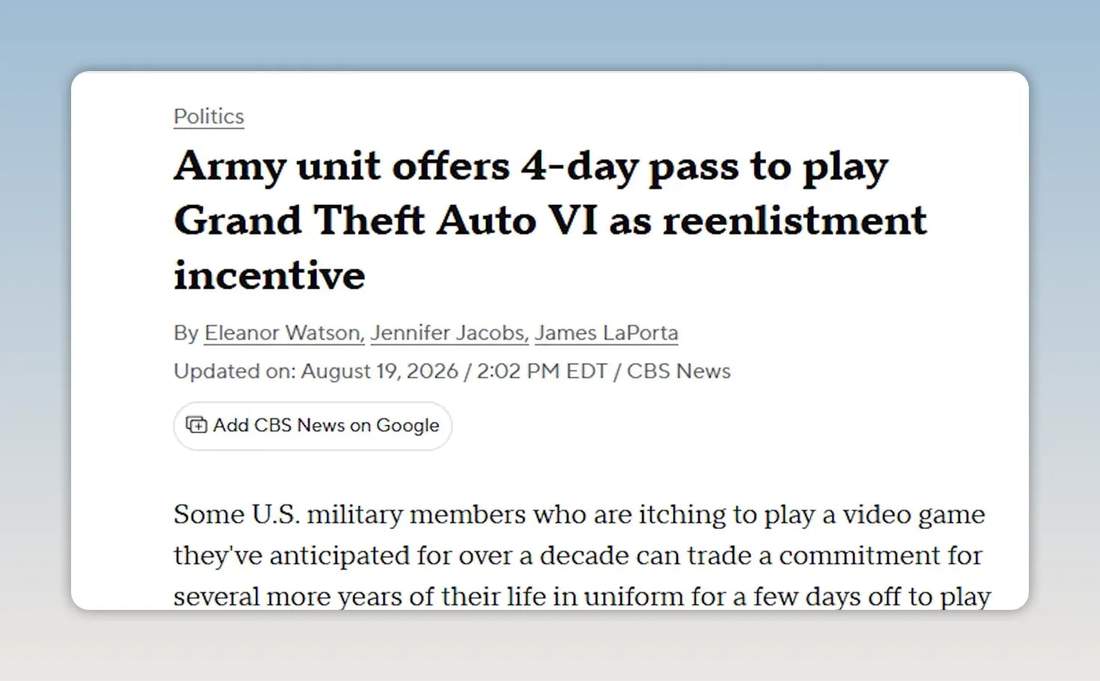
I would not put four days with a video game on the same decision-making level as two more years of military service. But as a measure of how far GTA 6 anticipation travelled beyond ordinary games marketing, it is hard to beat.
Rockstar did not need to invent a military recruitment parody. Reality apparently handled that part.
5. MindsEye Brought Former Rockstar Leadership and Sabotage Claims into the Story
MindsEye is one of the strangest side stories orbiting GTA 6. Its connection to Rockstar starts with Leslie Benzies, the former president of Rockstar North, who later founded Build a Rocket Boy.
A new game associated with someone that important to GTA was always going to attract attention. I understand the expectation: this is somebody who helped lead the creation of those games, so surely the new project will capture some of that magic.
My assessment of MindsEye is considerably less charitable. It was a mess, and one of the weakest games of 2025. A famous development history does not automatically produce a good new game.
Then the discussion became even stranger. Build a Rocket Boy leadership alleged that internal and external saboteurs had contributed to its problems. Accusations involving Rockstar also became part of the surrounding story.
Those are allegations, not established explanations for the game’s quality. I do not find sabotage a persuasive substitute for looking at the game that actually shipped. Rockstar was already occupied with an enormous project of its own.
The creator-platform connection is more interesting
The part that genuinely interests me is the emphasis on creation tools. MindsEye was connected to a broader ambition in which players could build experiences and potentially earn money from them.
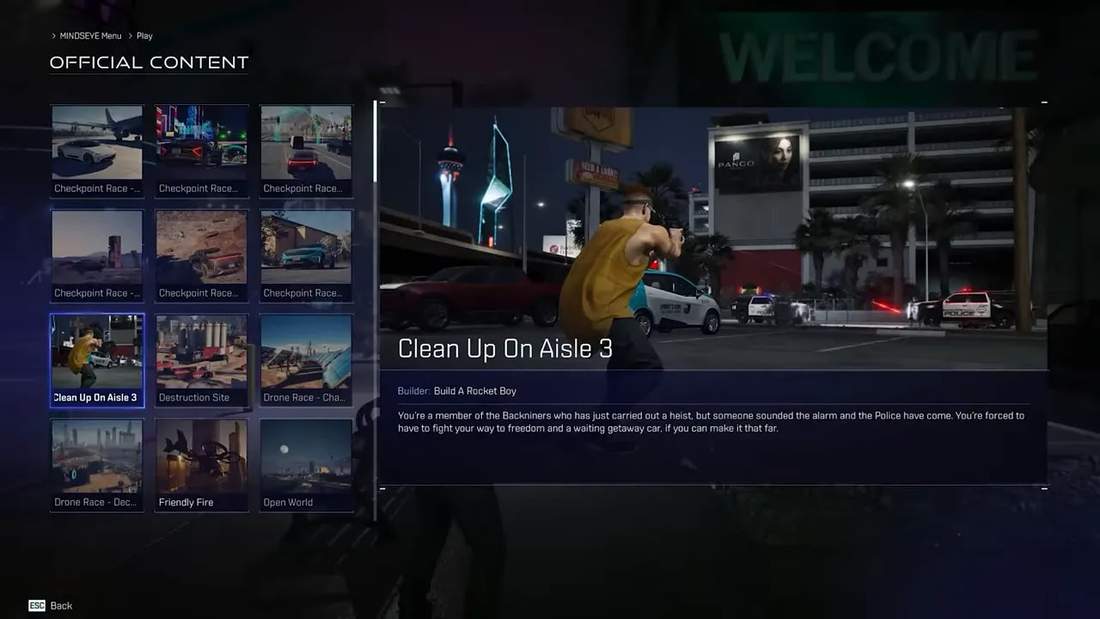
I found the offering limited, especially compared with the breadth of tools associated with Roblox. But the ambition helps explain why MindsEye belongs in a conversation about the possible future of GTA Online.
Benzies was leading Rockstar North during GTA Online’s development and left in 2016. It is reasonable to wonder whether some broad ideas discussed during that period influenced what he later pursued independently.
That is where I stop short of claiming knowledge. The idea that he wanted to get ahead of Rockstar with a creator-driven platform is speculation, not proof of GTA 6’s online feature set. It certainly is not evidence of sabotage.
The useful distinction is between the implausible corporate conspiracy and the much more ordinary possibility that experienced developers leave companies with ideas they still want to build.
4. The New GTA Online Reportedly Lost Its Near-Launch Slot
GTA 6 originally targeted autumn 2025. Keeping that date became impossible, but the single-player game’s schedule was not the only thing reportedly reshaped.
As recently as 2023, the plan was said to involve launching the new online component a few weeks after the main game, echoing the staggered arrival of GTA 5 and GTA Online.
By 2025, the reported problem was resources. Even Rockstar did not have enough people available to deliver both projects at the scale it wanted on that timetable.
Something had to give. The new online experience was reportedly pushed back without a firm replacement date.
That needs a clear distinction: a delay to GTA 6’s online component is not the same thing as the existing GTA Online shutting down. They are separate questions, even if the naming makes them frustratingly easy to blur together.
Rockstar publishing head Jennifer Kolbe’s reported comments capture the underlying tension: developers could keep improving this game almost indefinitely if nobody forced a stopping point. Creative ambition is useful right up until finishing becomes a separate production challenge.
Rumours have linked the new online launch to future hardware, including a possible PlayStation 6 era. I can see why people make that connection, given Rockstar’s history of releasing games across hardware generations. But it remains a rumour. The same applies to guesses that a PC announcement might arrive around that time.
I would not plan a hardware purchase around any of it.
3. The 2022 Hack Changed More Than Rockstar’s Marketing Plans
The earlier and much better-known leak came in 2022, when a user calling themselves teapotuberhacker released roughly 90 videos of early GTA 6 development footage.
The material was reportedly taken from internal Slack communications. It appeared before the game’s formal trailer reveal, giving the public an unauthorised look at work that was nowhere near a finished presentation.
The hacker was subsequently caught and sentenced in the UK. Inside Rockstar, the consequences extended far beyond removing clips from websites.
Reported security measures included:
- A return to office-based work to strengthen control over development access.
- Restrictions on personal laptops and other devices connecting to company servers.
- Blocks on external storage devices.
- A ban on photography.
- Privacy film on office windows to obstruct outside photography, including drone photography.
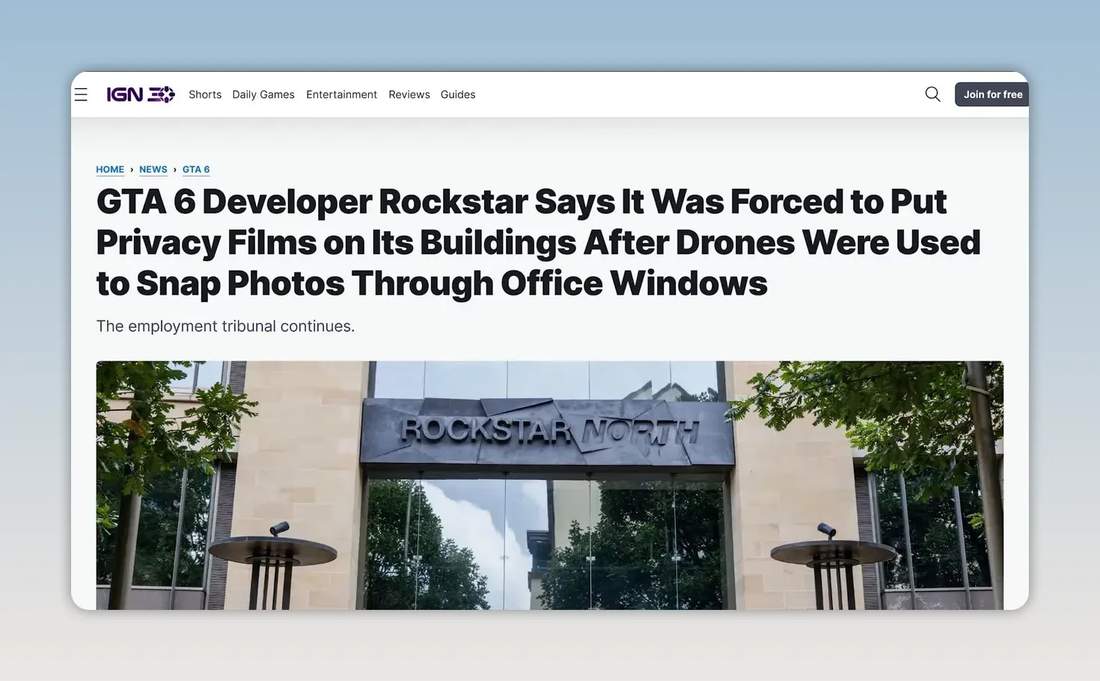
That final detail says a lot about the atmosphere around this game. When office windows become part of the information-security discussion, anticipation has gone well beyond enthusiastic speculation.
The broader security climate also sits alongside a dispute involving 34 dismissed employees. The employees alleged union-busting; Rockstar maintained that the dismissals concerned confidential information and security breaches.
I would not collapse those competing accounts into a settled conclusion, or suggest that one hacker alone explains every subsequent management decision. But the breach clearly belongs in the development story as more than an embarrassing interruption. Its aftermath affected how people worked.
2. GTA 6 Reshaped Rockstar’s Entire Project Slate
The scale of GTA 6 is not just visible in its map. It is visible in the size of the organisation building it.
Reported staffing figures put Rockstar at 2,441 employees around Red Dead Redemption 2’s 2018 release, rising to 4,711 by 2026. That is almost double.
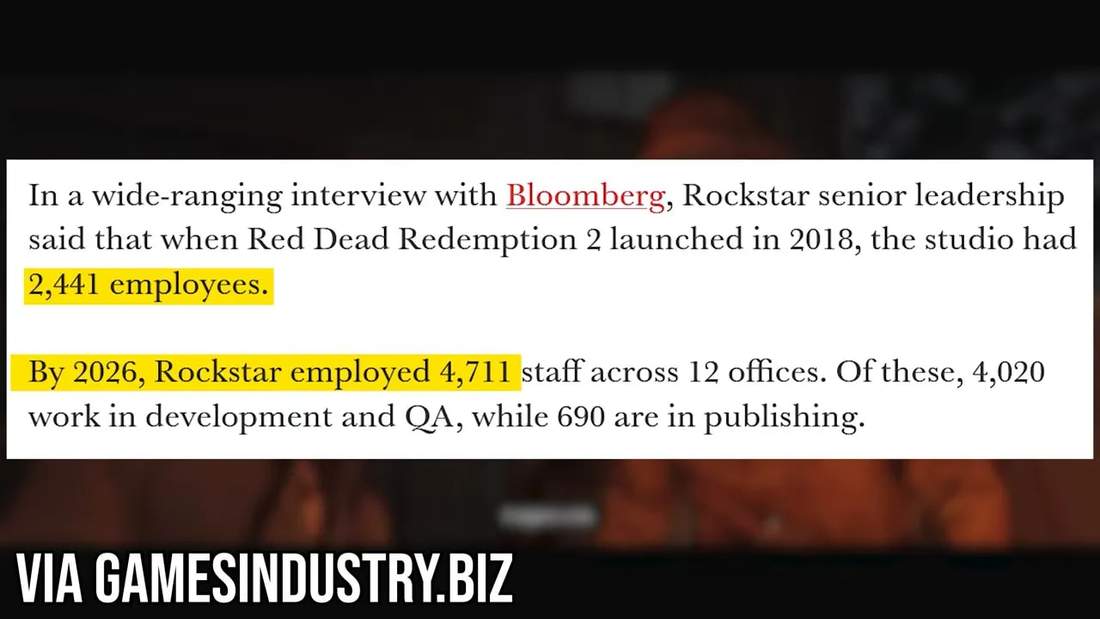
Those are company-wide figures, not proof that every employee spent every working hour on GTA 6. Even with that qualification, they show the organisational expansion surrounding the project.
Budget estimates are much less solid. Rockstar has disputed the roughly $1.5 billion development figure circulating around the game. I can believe the cost is extraordinary without treating any particular billion-dollar estimate as a confirmed budget.
The more tangible consequence is what happened to other projects. Staff and attention reportedly moved away from Red Dead Online as GTA 6 became the priority. Given the former’s difficult reception, I understand the business logic. That does not make it less disappointing for people who wanted it to grow.
Reports also described plans for GTA 4 and Red Dead Redemption remasters in the mould of the Definitive Edition releases. The hostile response to that collection reportedly helped derail those plans. Red Dead Redemption eventually received another release, but not the sweeping overhaul that “remaster” might suggest.
Meanwhile, Remedy’s Max Payne 1 & 2 remake project is a separate development effort associated with Rockstar. I remain protective of that one. GTA 6 consuming resources is understandable; the prospect of every other interesting project disappearing into the same production machine is considerably less appealing.
1. The Launch Became an Industry-Wide Scheduling Event
The biggest moment is the one all the others lead towards: getting GTA 6 out of development and into people’s hands.
Reports near the finish line describe employees taking time off as development work wound down. After years of leaks, scope changes and delays, that is a refreshingly ordinary detail. People finishing a massive job and getting a break should not sound surprising, but here it does.
The launch itself is anything but ordinary. GTA 6 is the kind of release that reaches far beyond the people who follow gaming news every day. I would not seriously attempt to rank it against every cultural event in human history, but its reach is obviously enormous.
That reach makes the release date valuable information for almost every other major publisher. Launching near GTA 6 means competing for attention, money and time with a game that can dominate all three.
The surrounding scheduling discussion has included Fable moving away from the collision, Marathon and Crimson Desert adjusting plans before GTA shifted again, and questions about whether an earlier slot helped Marvel’s Wolverine avoid the worst overlap. A November Zelda release was also presented as one of the few heavyweight competitors capable of operating nearby, while still leaving breathing room.
I would separate specific claims about why individual games moved from the broader, much clearer point: GTA 6 is big enough that changing its date can disrupt other companies’ plans. Avoiding it is difficult when the thing being avoided keeps moving.
That is what ties this development history together. Rockstar’s ambition affected its writers, security policies, staffing and other games. Public anticipation produced scams, bizarre promotions and endless speculation. The release calendar felt the consequences before the game even arrived.
There will almost certainly be more development stories to uncover. For now, I am ready for the part where the most interesting thing about GTA 6 is finally the game itself.