Classic does not automatically mean timeless. A game can change the entire industry and still be a complete pain to play today. Those two things are not mutually exclusive.
I can respect a groundbreaking interface without wanting to wrestle with it. I can remember a multiplayer shooter fondly without pretending its original frame rate was acceptable. And I can love an RPG while admitting its characters look like somebody left their faces too close to a radiator.
These are 20 legendary games that have become difficult to revisit, whether because of awkward controls, repetitive design, primitive visuals or sequels that did the same thing much better. In several cases, the version matters enormously. My problem with an original release does not necessarily apply to its remake, remaster or a modern version with sensible controls.
Key Takeaways
- A game can be historically groundbreaking while remaining awkward or frustrating to play today.
- Original versions matter: GoldenEye’s hardware limitations and Donkey Kong Country Returns’ Wii controls are specific obstacles.
- Clumsy interfaces, repetitive missions and punishing restarts can age games more severely than dated graphics.
- Sequels and thoughtful remakes can make a classic’s original appeal much easier to enjoy.
Table of Contents
- 20. The Witcher: Enhanced Edition
- 19. The Elder Scrolls II: Daggerfall
- 18. Hitman: Codename 47
- 17. Assassin’s Creed
- 16. System Shock
- 15. GoldenEye 007
- 14. Armored Core
- 13. Ultima VII: The Black Gate
- 12. Medal of Honor
- 11. Monster Hunter
- 10. Battlefield 1942
- 9. Dragon Age: Origins
- 8. Panzer Dragoon Saga
- 7. Resident Evil: Code Veronica
- 6. Tom Clancy’s Rainbow Six
- 5. Syphon Filter
- 4. Donkey Kong Country Returns
- 3. Tomb Raider
- 2. Wolfenstein 3D
- 1. EverQuest
- A Legendary Game Can Still Be Hard to Recommend
20. The Witcher: Enhanced Edition
The original Witcher is practically the poster child for the abandoned series replay. I understand the impulse to start Geralt’s story from the beginning. I also understand getting a few hours into this thing and suddenly finding something else to do.
The character models are rough, and Geralt himself is a particularly unfortunate introduction. This is not simply a case of old graphics failing to match modern technology. I thought parts of it looked awkward even at the time.
More importantly, the friction goes well beyond appearances:
- The combat takes considerable adjustment.
- Important mechanics can feel confusing and poorly explained.
- The controls are awkward enough to become a barrier of their own.
- Some quests involve painfully mundane errands.
There is still a playable RPG underneath all that, provided I am willing to meet it on its own strange terms. But if any game could benefit from a complete rebuild rather than a prettier coat of paint, it is this one. The planned remake makes a lot of sense.
19. The Elder Scrolls II: Daggerfall
I have enormous respect for Daggerfall’s ambition. A first-person, open-world RPG of this scale in 1996 was a ridiculous undertaking. With more than 15,000 towns, villages, caves and dungeons, its sheer size remains impressive.
Then comes the awkward question: what is all that space actually doing?
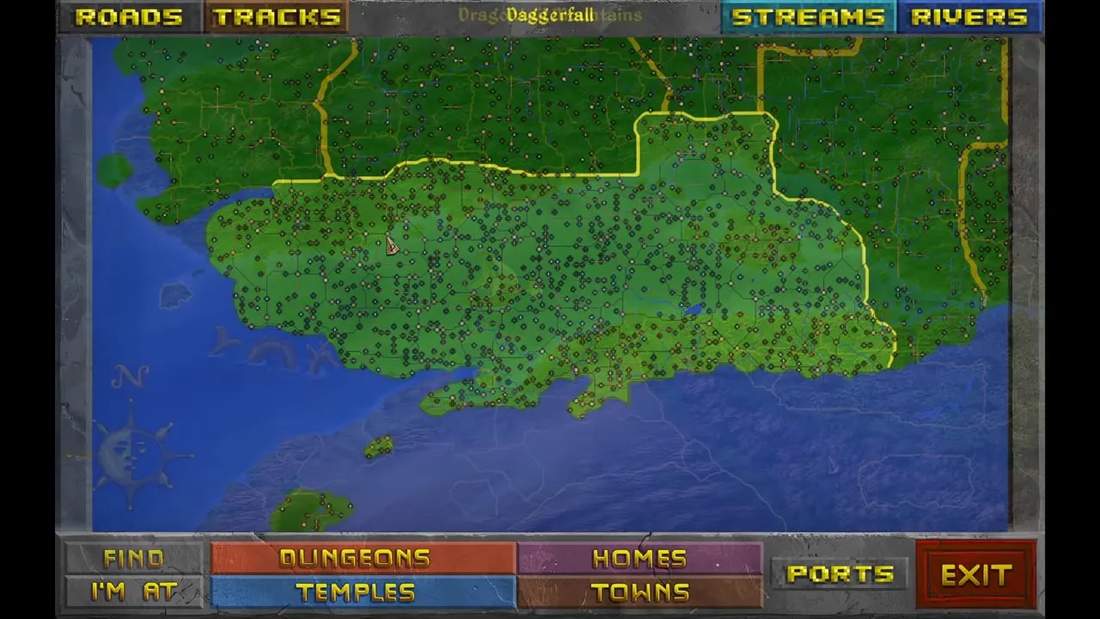
Too many settlements feel interchangeable. Navigation is confusing, conversations repeat, and the enormous dungeon layouts can turn exploration into an endurance test. A huge world loses some of its magic when getting between interesting places mostly means spending more time in the fast-travel menu.
At release, the scale itself was enough to make those compromises easier to forgive. Today, I want more than acreage. Smaller, more detailed spaces can deliver considerably more satisfying exploration.
If I want to return to classic Elder Scrolls, I would rather play Morrowind. It establishes the template Bethesda would keep developing, and I find it a much more rewarding game to revisit.
18. Hitman: Codename 47
Hitman: Codename 47 is more important for being the first Hitman than for being a particularly good expression of what Hitman became.
The assassination systems feel undercooked, and entire missions lean towards straightforward third-person shooting rather than the elaborate stealth that defines the series. Add awkward controls, rough visuals even by 2000 standards and technical problems, and I have a difficult time recommending it over its successors.
I would generally start with the second game instead. It does a much better job of delivering the fantasy the original was reaching for.
Still, there is a lesson here that I wish modern publishers would take seriously. An imperfect first attempt can become an exceptional series. If every promising but messy idea gets abandoned before its sequel, something like the Hitman I love might never happen.
17. Assassin’s Creed
The first Assassin’s Creed was genuinely exciting in 2007. Its historical cities, climbing and assassination premise felt fresh. Going back after Assassin’s Creed II, III or especially Black Flag, though, makes the original feel surprisingly bare.
Its visual presentation belongs firmly to the era when desaturation and excessive bloom were apparently compulsory. I find the washed-out image tiring, but the bigger issue is the mission structure.
Each target involves another round of familiar investigation activities before a more heavily scripted assassination. The assassinations themselves can still be interesting. Getting to them means repeating the same limited collection of tasks until the novelty wears right off.
I would not call it a failed game. It was successful for good reasons. But its successors make it feel closer to a promising prototype than the fully realised version of its own idea.
16. System Shock
System Shock deserves its place in gaming history. Looking Glass’s 1994 release helped establish the immersive sim alongside games such as Ultima Underworld, and its cyberpunk identity influenced plenty of games that followed.
I just wish interacting with it did not feel like operating unfamiliar industrial equipment.
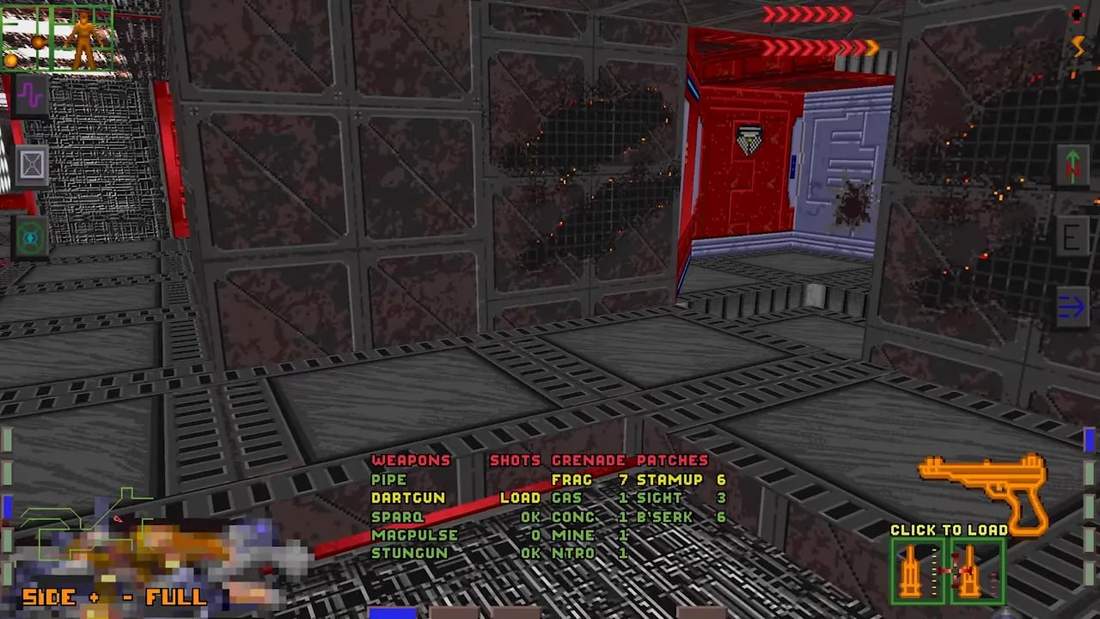
The original arrived before first-person interaction had settled into familiar conventions. Its solution mixes movement and combat with an adventure-style cursor interface for manipulating objects. Something as basic as picking up and equipping a weapon can become a surprisingly awkward process.
The visuals create another hurdle. Doom’s stylisation still reads clearly to me. System Shock’s attempt at a believable space station often looks more like a violently coloured maze whose architecture I am supposed to accept on faith.
This is where a remake can do real good. I genuinely enjoy Nightdive Studios’ work on System Shock. It preserves the original’s identity while rebuilding the visuals and, crucially, making the controls functional. That is a substantial achievement, not a minor convenience.
15. GoldenEye 007
Before anybody starts defending their childhood, I need to make the distinction clear: I mean the original GoldenEye on original Nintendo 64 hardware. Not a modernised version with improved performance and controls.
That original experience is blurry, sluggish and capable of spending ordinary gameplay around 10 to 15 frames per second. Nostalgia remembers the friends, the basement and the ridiculous multiplayer arguments. It tends to leave out the part where the console was fighting for its life.
At those frame rates, even straightforward actions feel laborious. The older gameplay conventions are easier to forgive than the constant sense that the game cannot keep up.
I can still have a lot of fun with GoldenEye through modern options. In fact, that is what makes this example so revealing: improve the presentation and responsiveness, and its appeal becomes much easier to understand. Going back to the original hardware is the real shock.
It also explains why I can tolerate a steady 30 frames per second. After growing up with this, a consistent 30 does not exactly strike me as the end of civilisation.
14. Armored Core
The original Armored Core established a concept that still works: build a mech, choose equipment and take it into distinct missions. I do not need that basic idea reinvented.
I do need controls that do not make piloting the machine feel like the hardest part of every encounter.
The early games lack the familiar twin-stick setup, and fan-made control patches can make an enormous difference. Without those improvements, the original is particularly difficult to approach.
Its environments are frequently plain grey rooms connected by plain grey corridors. I can appreciate a certain low-fi charm there. What I struggle to appreciate is the combination of awkward inputs, brutal mid-mission surprises and no mid-mission checkpoints.
Armored Core VI: Fires of Rubicon can be tough, but I usually understand what it is asking of me. The original is more willing to throw a lethal curveball and send me back through the whole mission. The controls remain my biggest complaint, but the punishment certainly does not help.
13. Ultima VII: The Black Gate
Ultima VII is a landmark RPG and, for many fans, the high point of the series. Its influence on Larian’s Divinity games gives some idea of how important its interactive world became.
I can admire that achievement while finding the actual business of playing it exhausting.
Movement feels jerky and oddly slippery. Party management is cumbersome. Combat becomes a cluttered scramble that can end in an easy victory or a baffling defeat without making the difference especially clear.
Then there is the inventory. Oh, the inventory.
Items sit in messy piles inside bags, and finding one object for a door or puzzle can mean digging through several containers. I already have a desk organised according to this exact system. I do not need a fantasy adventure that recreates its worst qualities.
Sorting everything out takes time, and the mess returns almost immediately. Add the bugs, and I am left with one of the most important RPGs ever made wrapped in a considerable amount of daily administrative misery.
12. Medal of Honor
The original PlayStation Medal of Honor matters partly because of what followed. Allied Assault built on that foundation, and developers associated with that later game went on to form Infinity Ward and create Call of Duty.
As an early console first-person shooter, the original holds up reasonably well. Unfortunately, that is a very specific compliment.
Measured against shooters more broadly, I find its basic gunplay, confusing mission design and characteristic PlayStation texture warping difficult to overlook. Much of the campaign involves moving through warehouses and isolated bases, rather than conveying the large-scale conflict that Allied Assault and later Call of Duty games captured so effectively.
The soundtrack does plenty of heavy lifting for the atmosphere. The rest can feel surprisingly disconnected from the World War II experience its descendants made familiar.
I would still put it among the strongest PlayStation shooters. I just would not confuse that with being an easy recommendation today.
11. Monster Hunter
If Monster Hunter: World made me want to investigate the series’ beginnings, the 2004 original would be a pretty rude welcome.
The earliest Monster Hunter games operate on their own terms, and the first is especially reluctant to explain those terms. Menus are clunky, controls are stiff, and even basic procedures can be obscure.
I am not talking about mastering a weapon or learning a monster’s behaviour. I mean figuring out how to start a hunt.
There is a difference between demanding combat and making the surrounding systems unnecessarily difficult to understand. The original frequently crosses that line, lacking conveniences that would have been welcome even at release.
I would point somebody interested in the older, more demanding style towards Freedom Unite or Monster Hunter Tri instead. The first game established something important, but later entries make that same appeal considerably easier to enjoy.
10. Battlefield 1942
I remember having an absolute blast with Battlefield 1942. In 2002, the scale of its battles was something special, even if its graphics were more functional than spectacular.
There is also something refreshing about returning to a multiplayer game without a battle pass, a pile of piecemeal DLC or a progression system that behaves like a second job. The reason to play was that playing was fun. Imagine that.
My issue is that Battlefield kept developing essentially the same large-scale shooter formula for years. There were wrong turns and disappointing entries, certainly, but there were also substantial improvements.
The original remains a PC gaming classic. I just find it difficult to separate the reasons to return from the nostalgia surrounding it. Its successors have done so much with the same concept that historical importance becomes a stronger argument than the moment-to-moment experience.
9. Dragon Age: Origins
I am inclined to agree that Dragon Age: Origins is the best game in its series. It is also, to put this kindly, not an attractive game.
The faces are awkward, the environments are low-detail, and the armour can look as though it belongs to someone several sizes larger. The blood that constantly coats the party does not exactly improve matters.
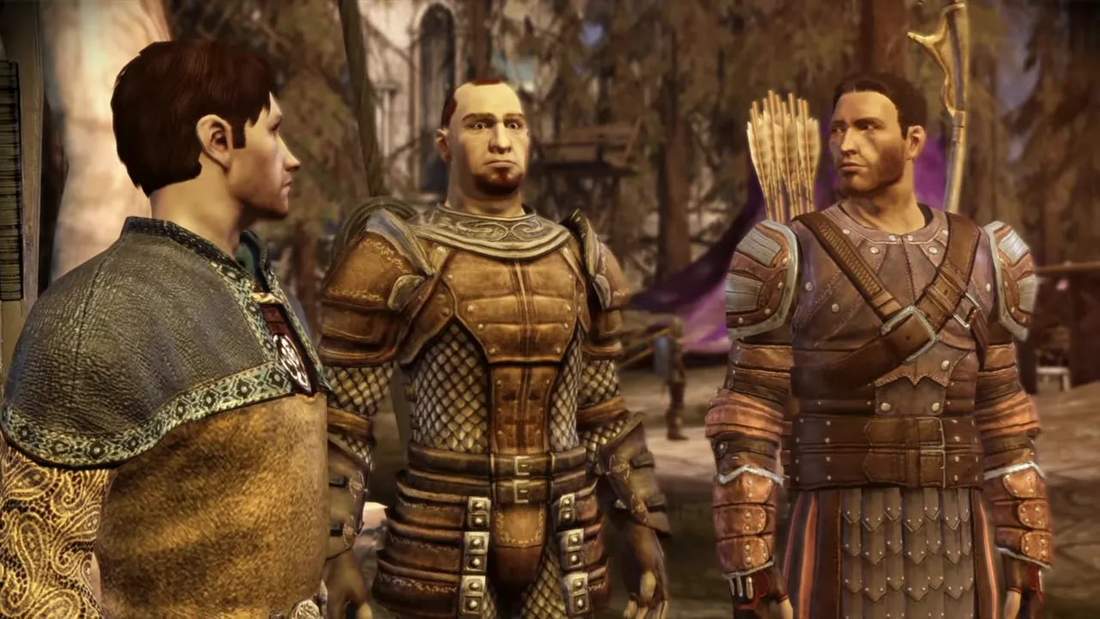
Some of that presentation makes more sense from the distant tactical perspective on PC. Oversized armour is easier to distinguish when the characters are small. Bring the camera down for the console experience, and the compromises become much harder to ignore.
I also find the console controls and performance a bigger obstacle than the PC version’s mechanics. On PC, this holds up better than plenty of other games here.
That qualification matters. Origins is one of BioWare’s best, and releasing a substantial traditional RPG when that style was supposedly out of fashion deserves credit. This is a great game with an ugly presentation, not a bad RPG hiding behind a good reputation.
8. Panzer Dragoon Saga
Panzer Dragoon Saga has a fascinating reputation, particularly among Sega Saturn fans. Its limited US availability adds to the mystique, but the game itself has an unusual identity worth respecting.
Taking a series associated with 3D shooting and turning it into an RPG produced a genuinely distinctive combat system. I think that part works. The quiet, mysterious music and strange world also create an ethereal atmosphere that few games resemble.
The problem is patience. A lot of patience.
Compared with the dramatic opening hours of Final Fantasy VII, Saga is a much more sedate experience. Sometimes that slowness feels meditative. Sometimes a battle simply takes too long, with extended stretches of waiting for enemies to finish moving around.
The Saturn’s primitive 3D presentation is another adjustment. I would not dismiss every visual choice as ugly, but the execution does not always match the ambition.
I would love to see a remake reconsider the pacing and rebuild the visuals without sanding away the weirdness. There is a potentially compelling rediscovery here. The original just asks for considerable commitment before its appeal becomes apparent.
7. Resident Evil: Code Veronica
Of the mainline Resident Evil games, Code Veronica is the one I find hardest to revisit.
The earlier PlayStation entries used pre-rendered backgrounds, which let them fill rooms with visual detail and personality. Code Veronica’s fully 3D environments were a technical step forward, but I do not think they were consistently an artistic improvement.
I like aspects of its camera work. The spaces themselves, though, often feel barren, drab and short on the lived-in detail that made exploration so engaging in the previous games.
Some goofy cutscenes and obnoxious characters do not help. Resident Evil has always had room for absurdity, but not every flavour of absurdity improves with age.
There is still a baseline satisfaction to classic Resident Evil, even here. That is why I want this particular entry rebuilt rather than forgotten. For me, it is one of the clearest candidates for the remake treatment.
6. Tom Clancy’s Rainbow Six
The original Rainbow Six has an idea I would still love to see explored more often: detailed planning before a tactical operation.
That preparation gives the 1998 game an identity beyond simply moving through rooms and shooting enemies. At the time, it felt layered, intricate and refreshingly different.
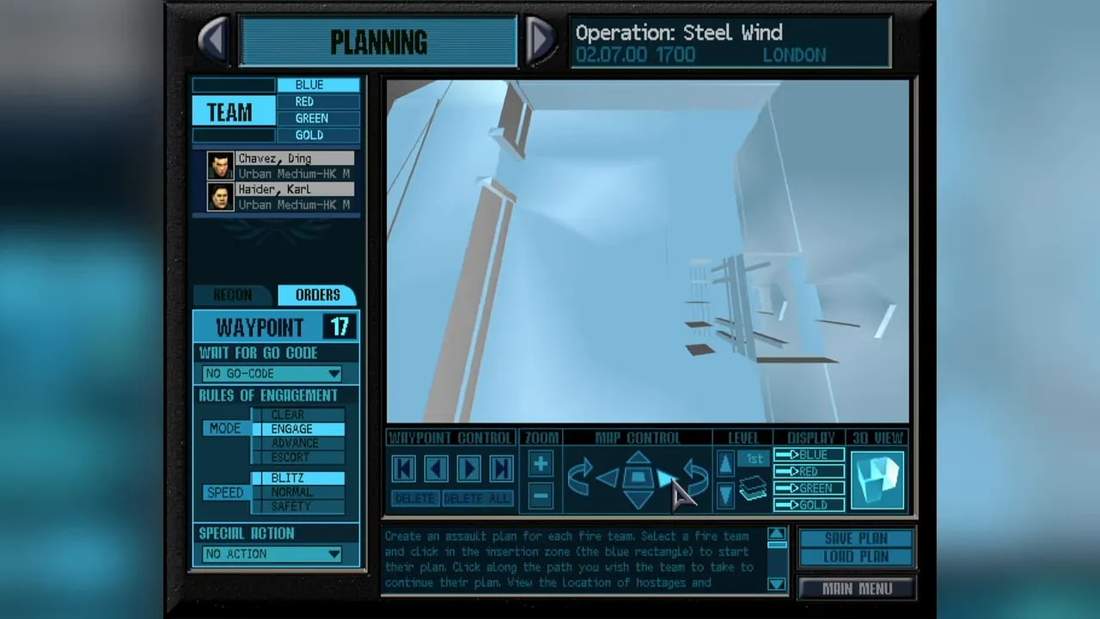
The problem is execution. Its simple visuals were not especially impressive even then, and the interaction now feels fiddly enough to obscure what makes the premise interesting.
I can appreciate the underlying design without wanting to fight the interface to reach it. That is a recurring problem with pioneering games: inventing a system and making it comfortable to use are separate achievements.
Rather than returning to the original unchanged, I would love a modern Rainbow Six to revisit these roots. A full remake could preserve the planning and tactical identity while finally giving the idea the presentation and usability it deserves.
5. Syphon Filter
Syphon Filter seems to live in popular memory as one very specific activity: play the opening level, electrocute an enemy until they catch fire, then move on with the day.
I understand why the rest gets less attention. The controls are stiff, the objectives can be confusing, and the dark, murky visuals sometimes make it difficult to understand what is happening.
Once I do understand what is happening, the game can be relentlessly difficult anyway.
That combination is what really hurts. Later sections demand something close to perfect execution, and a single mistake can mean restarting the mission. Without mid-mission checkpoints to soften the blow, awkward movement becomes much more than a minor annoyance.
I can forgive dated graphics and a goofy spy story. I have a harder time forgiving repeated full-mission retries made worse by poor visibility and cumbersome controls. That is what keeps me from coming back.
4. Donkey Kong Country Returns
This one needs a giant qualification: my complaint is with the original Wii version’s controls. The game itself looks terrific and has the foundations of an excellent platformer.
For some reason, basic actions such as rolling and ground-pounding require shaking the Wii Remote. In a side-scrolling platformer built around precise actions, I find that decision maddening.
I do not object to motion controls simply for existing. Super Mario Galaxy gives its pointer a clear purpose. Donkey Kong Country Returns splits ordinary actions between buttons and compulsory waggling, and I struggle to see the benefit.
Yes, I can get used to it. That is not the same as thinking I should have to.
The later versions are the sensible answer. The 3DS release offers an alternative, although obtaining the hardware and an out-of-print game can be inconvenient. I would choose the accessible Switch release for a straightforward way to enjoy the platforming without the original control frustration.
This is not a game that needed its whole identity replaced. It needed to let me press a button.
3. Tomb Raider
The original Tomb Raider can be a shock for anybody approaching it through the modern games. This is not an uninterrupted action spectacle. It is quiet, often sparse and built around slow, deliberate exploration and platforming.
The tank controls are only part of the adjustment. The environments can be difficult to read, and understanding a route often requires patience before I even attempt the movement.
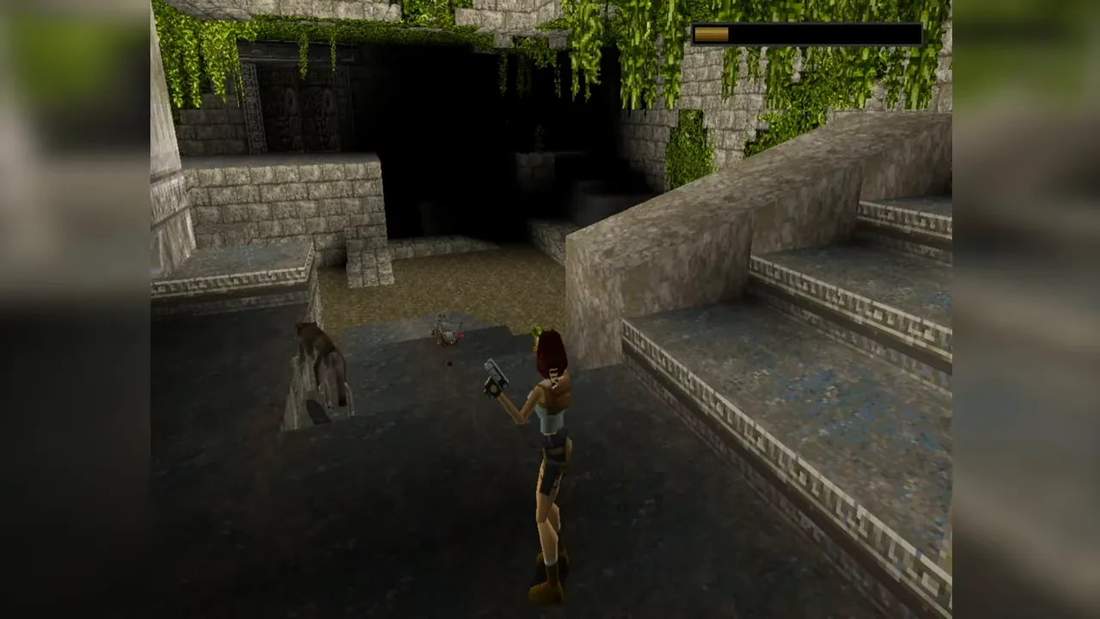
I do want to give the controls their due. Once learned, they are consistent. The platforming is not simply random or broken. There is a deliberate logic to what Lara can do.
But consistent does not mean intuitive, and good within an archaic framework does not make that framework easy to recommend today.
I can understand why someone who played it at release would slip back into its rhythm. For a newcomer, the amount of adjustment is substantial. There is a classic here, but getting comfortable enough to appreciate it takes real commitment.
2. Wolfenstein 3D
Doom still feels alive to me. Its design supports replaying, experimentation and an enormous creative community. Wolfenstein 3D is an important ancestor, but I find its limitations much harder to escape.
The weapon selection largely amounts to increasingly powerful versions of the same basic tool. Levels are flat arrangements of rooms and corridors connected by doors. Treasure adds little to the immediate action, and the overall variety runs out quickly.
Doom expanded that foundation in so many directions:
- More varied enemies and projectile behaviour.
- Weapons with more distinct roles and different ammunition types.
- Power-ups that change the immediate situation.
- Textured floors and ceilings, stairs and more varied spaces.
I can still enjoy a level or two of Wolfenstein 3D as uncomplicated shooting. A full playthrough is another matter. After the first episode, I feel I have already experienced most of what makes the game tick.
It was a necessary evolutionary step. Doom made that step feel old remarkably quickly.
1. EverQuest
When EverQuest launched in March 1999, its appeal was extraordinary. Here was a huge, interconnected 3D world shared with thousands of other people. Its cities felt enormous, and the world did not seem designed solely around my presence.
That last part mattered. It felt like entering somewhere that already existed rather than arriving at an attraction waiting for its only customer.
Actually figuring out how to live there was a different story.
My early experience largely involved wandering around, dying, creating another character and trying again. The initial wonder could very quickly turn into a much simpler question: what on earth am I supposed to do?
Its awkward interface, primitive presentation and brutal introduction make returning difficult. World of Warcraft, whatever else I might say about it, makes a clearer effort to smooth out those first steps. EverQuest is much happier to let those first steps lead directly into disaster.
The game continues through official EverQuest servers, though that evolved experience is not the same thing as the original 1999 release. Attempts to recreate the early experience preserve its particular appeal, but they also preserve a lot of the friction.
I understand why those memories mean so much. A world like that could make an enormous impression. I am just not convinced that returning to its earliest form is the best way to protect them.
A Legendary Game Can Still Be Hard to Recommend
I am not arguing that these games should disappear, or that their influence somehow stops counting because their controls are awkward. Quite the opposite. Their history is worth preserving, including the experiments that did not quite work.
But historical importance and present-day enjoyment are different judgements. Sometimes a sequel delivers the original idea better. Sometimes a remake removes the barriers without losing the soul. Sometimes the original remains rewarding, provided I know exactly how much patience it will demand.
I can celebrate what a game accomplished without pretending that every frustrating part of it was secretly brilliant. Nostalgia is great. It just does not improve a frame rate.