
Remaking Ocarina of Time is a pretty intimidating assignment. This is a formative game for a lot of people, one of the highest-rated games of all time, and an adventure that helped establish what 3D Zelda could be. I don’t need a remake to pile on new stuff just to justify its existence. I need it to understand why the original worked.
That’s what I like about The Legend of Zelda: Ocarina of Time remake on Nintendo Switch 2. It’s a faithful recreation with a massive presentation upgrade and some smart changes to how it feels to play. It doesn’t seem interested in replacing the original’s personality or rearranging its tightly constructed adventure.
These are my first impressions, not a completed-game verdict. I had a little time with it before release, and I’m keeping the specifics spoiler-free. So far, though, I’m having a damn good time. Returning fans get a lovely hit of nostalgia, while newcomers get a much smoother way to experience a game that helped set the standard.
Key Takeaways
- My early impressions are positive: the remake preserves the original adventure while substantially upgrading its presentation.
- Smoother movement, camera control, targeting and item swapping remove much of the original’s friction.
- The dungeons remain tightly designed, although some puzzles may feel simple to modern players.
- Full price and a few visual and voice-transition quirks are the main caveats to my enthusiasm.
Table of Contents
- A Familiar Hyrule With a Huge Visual Upgrade
- Voice Acting and Music That Keep the Original’s Spirit
- Traditional Zelda, With Much Smoother Controls
- The Dungeons Still Work, Even When They Feel Easier
- New Extras and Useful Interface Options
- Is the Ocarina of Time Remake Worth Buying?
A Familiar Hyrule With a Huge Visual Upgrade
The visuals are the obvious place to start, because this is primarily a visual remake. When it was revealed, I understood the debate about its busier, more elaborate appearance. There was that question of whether everything looked a little too much like the glossy, maximalist style people associate with Unreal Engine 5.
That isn’t a statement about the engine it uses. It’s about the look. And after spending time playing, most of those concerns faded for me.
At first, the sheer amount of detail really hits. Then I settle into the world, and it starts feeling natural. The spectacle doesn’t disappear. I just stop analysing every redesigned surface and start enjoying being back in Hyrule.
There’s a lot going on here: ground fog, atmospheric effects, detailed walls and textures, more elaborate character models, and impressive lighting. The full day-night cycle gives familiar places different moods, rather than making them feel like static recreations of old locations.
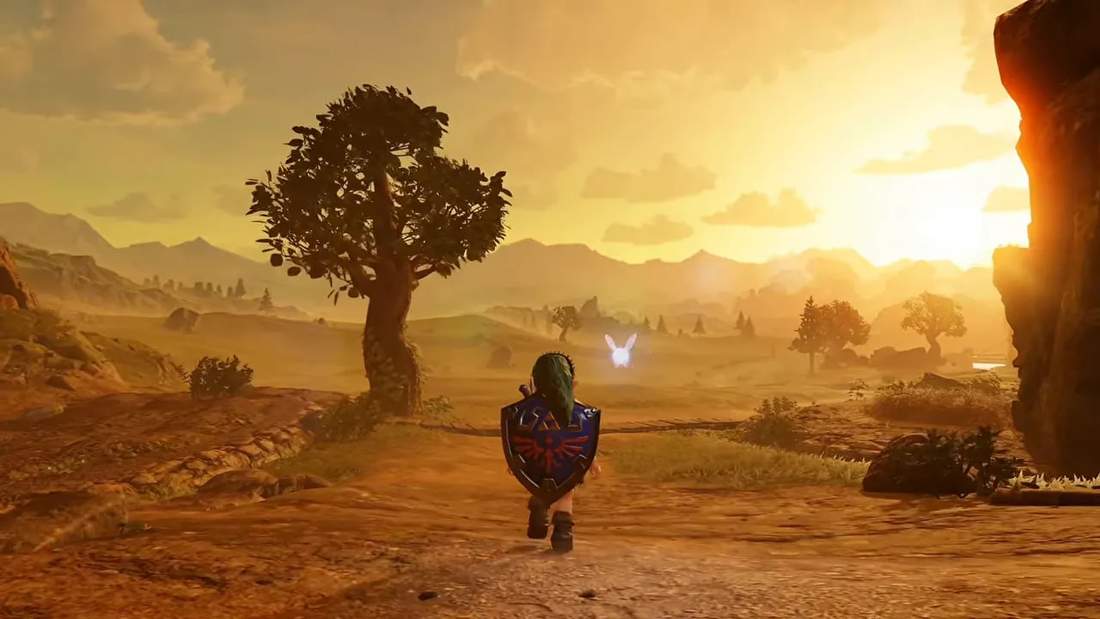
Hyrule Field looks incredible. Hyrule Castle Town is packed with colour, detail and life. I love the palette, and seeing these places at different times of day does a lot to elevate the whole thing. Even within the hardware’s limitations, I think the result looks really damn good.
My biggest visual complaint is that some characters occasionally have too much sheen. There’s a slightly awkward shininess that can make them look less convincing than the environment around them. It isn’t enough to spoil the presentation, but it does stand out.
The creature redesigns are a particular highlight. The skeletons and zombies look fantastic, and the lighting and atmosphere give those encounters a lot of character. Rediscovering how familiar enemies, bosses and locations have been recreated is a big part of the fun.
Performance and a Capture Caveat
During my play on a television, the game ran at 60fps. My capture card broke partway through recording, so my captured material includes a mixture of 30fps and 60fps. The 30fps portions were a recording limitation, not how the game was running on my TV. I want to keep that distinction clear rather than imply a performance issue I wasn’t experiencing.
Voice Acting and Music That Keep the Original’s Spirit
The cutscenes are another big step up. I think the added voice acting is solid, and it helps the adventure feel like classic fantasy with that particular Zelda flavour.
There is a slightly jarring transition between voiced scenes and conversations that return to text dialogue. It’s not a major complaint, but the difference is noticeable. The presentation isn’t completely seamless in that respect.
Navi’s voice took me the longest to get used to. Hearing her speak properly is just a little strange at first. On the other hand, I find her less intrusive during ordinary gameplay. There’s less of that constant Navi interruption, which I appreciate.
The music might be my favourite part of the presentation upgrade. The classic songs have been recreated and reorchestrated, with fuller arrangements and more layers, but their identity is still intact.
These are more elaborate versions of the songs I love, not replacements that have forgotten why those songs were memorable. I can imagine an individual arrangement or two sounding too different for someone’s taste. Overall, though, I think the original soundtrack is represented beautifully.
There are also smaller additions: extra musical passages between moments, new layers within familiar compositions, and music that changes in certain situations in ways it didn’t before. I don’t want to give those moments away. Hearing an unexpected variation while playing has been a genuine delight.
Traditional Zelda, With Much Smoother Controls
Underneath the new presentation, this is still an old-fashioned Zelda game. I mean Zelda before Breath of the Wild and Tears of the Kingdom. Anyone coming from those games should expect a different kind of adventure, not the same approach to exploration and problem-solving.
What makes the remake feel modern is Link himself. He’s effortless to control. Running, targeting enemies, hopping around them and moving the camera all feel much smoother. The animations connect nicely, and I spend far less time thinking about the controls.
There’s even a dedicated jump button. That sounds like a pretty significant change given that the Nintendo 64 original didn’t have one, but in practice it fits comfortably. Link also has a roll-to-sprint move that feels nice without fundamentally changing the adventure.
The menu and equipment improvements matter just as much. Switching items is handled through a horizontal selection strip, letting me scroll through equipment and swap quickly rather than constantly interrupting the flow.
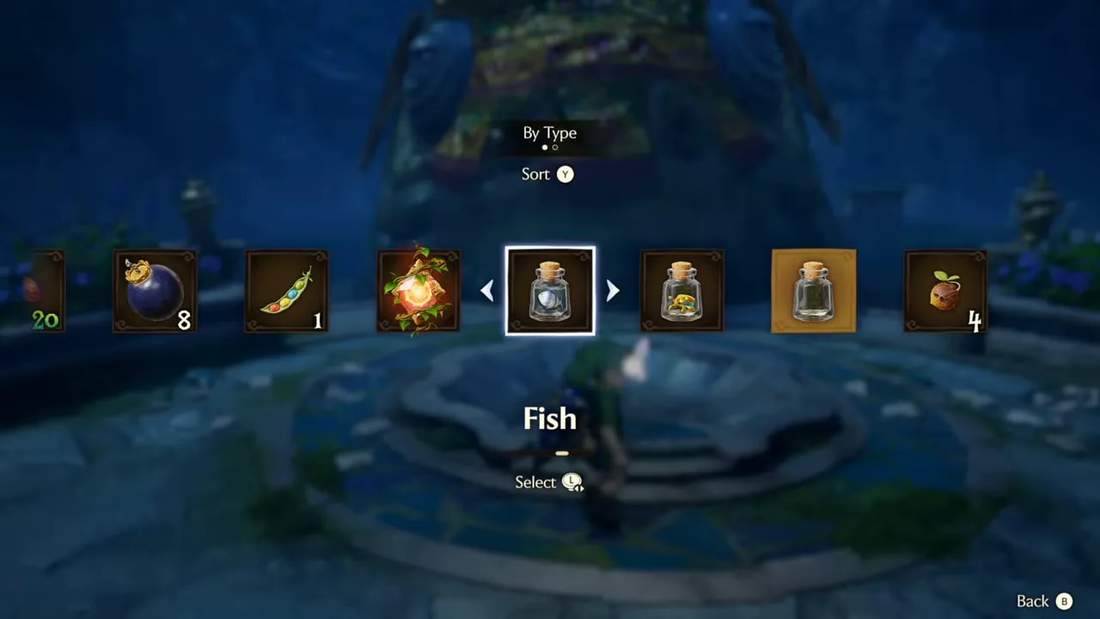
That might sound like a small quality-of-life adjustment. If I compare it with the original’s stop-start equipment management, though, the difference is immediately noticeable. The game moves along more comfortably because those little interruptions aren’t getting in the way.
The important changes are straightforward:
- Smoother movement: Link feels responsive, with animations that flow together well.
- Easier targeting and camera control: Combat and navigation involve less wrestling with the interface.
- A dedicated jump button: The addition feels natural within the existing adventure.
- Quicker item swapping: Equipment is easier to access on the fly.
I think this is where the remake does its smartest work. It removes friction without deciding that everything underneath needs rebuilding.
The Dungeons Still Work, Even When They Feel Easier
I notice those control improvements most inside the dungeons. Areas I remember feeling arduous are easier to move through now, partly because I’m not fumbling with movement, targeting or equipment.
That leaves more room to enjoy the puzzles and the way each space fits together. I can settle into the rhythm instead of fighting the mechanics.
There is a fair caveat for newcomers: some of this is going to feel simple. Ocarina of Time helped translate Zelda’s established 2D dungeon and puzzle ideas into 3D. Things that once felt revelatory might now feel familiar, especially after decades of games building on similar foundations.
But simple doesn’t automatically mean weak. I still find these dungeons tightly designed. Their ideas flow together nicely, the boss battles remain thrilling, and there are plenty of satisfying moments when a solution clicks and I feel clever.
For me, that’s the argument for preserving the original’s construction. Better controls don’t expose an empty adventure. They let its strengths come through more clearly.
It’s also easy to forget how much stuff Ocarina of Time contains. There are hidden corners, vendors, little rewards and optional pursuits all over the place. This isn’t just a straight march between the major dungeons. I keep finding reasons to poke around, speak to someone or investigate something off the main route.
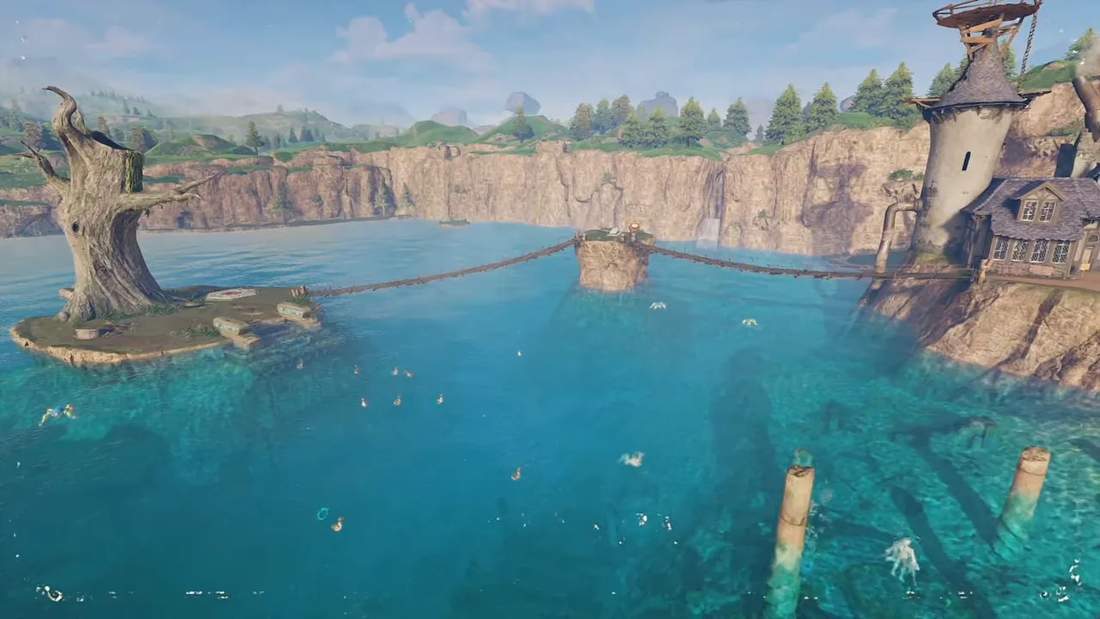
There are a few small surprises and additions, too. I’d rather leave those alone than turn every discovery into a checklist before someone has a chance to find it.
New Extras and Useful Interface Options
The larger additions include a boss viewer mode and the Tapestry of Time. The tapestry is a particularly charming idea: a woven image gradually fills with moments from the adventure as I progress.
It isn’t purely decorative. It also works as a place to keep track of certain quests and activities. I like having that information presented in a way that belongs to the world, rather than feeling like an unrelated administrative screen.
I don’t find myself spending much time buried in it, either. Not being trapped in menus is part of this game’s charm, and the tapestry doesn’t seem to undermine that.
There are a couple of options I’d recommend checking early:
- Jump-button assignment: I can move jump to a different button if the default fights my muscle memory.
- Pro HUD: A more minimal interface, which is the option I’ve been using.
- HUD off: The interface can be removed completely for a cleaner, more immersive presentation.
The HUD options are especially welcome with environments this attractive. I like being able to reduce the amount of information sitting over the scenery without needing the entire game redesigned around that preference.
Is the Ocarina of Time Remake Worth Buying?
This is a full-price Nintendo game and a remake of an old adventure. I understand why that combination will be an immediate no for some people. A beautiful recreation doesn’t erase the question of whether someone wants to pay full price to revisit familiar ground.
I’m also sympathetic to remake fatigue. There are a lot of remakes and remasters, and nostalgia alone isn’t enough to make every one of them worthwhile.
But if a company is going to revisit something this important, I want it to receive the right amount of care. My issue with the launch of the GTA Definitive Trilogy was that it felt like the games hadn’t received that care. My experience with this Zelda remake has felt like the opposite.
I get the sense of a project that celebrates the original, enhances it and respects how it was built. The presentation gets a substantial overhaul. The controls remove barriers. The underlying adventure is allowed to remain itself.
For returning fans, I think the appeal is rediscovering familiar places, music and creatures through a much richer presentation. For newcomers, I think it’s an inviting way to understand why Ocarina of Time mattered, provided the expectation is a traditional Zelda adventure with some relatively straightforward puzzles.
My first Zelda was Link’s Awakening. Not long afterwards, the original Ocarina of Time blew my mind. That history obviously gives this game a personal pull, but nostalgia isn’t the only reason I’m enjoying it. I’m enjoying how it moves, how its dungeons fit together, and how confidently it lets a great adventure speak for itself.
My first-impressions verdict is enthusiastic: this is a faithful remake that makes meaningful improvements where I want them most. It has a few presentation quirks, and the full-price proposition won’t work for everyone. For me, though, it’s been a joy. Sometimes I’m happy to spend time with something that reminds me why I love these damn games in the first place.