
A game doesn’t have to switch its servers off to lose what made it worth playing. Sometimes it just needs another premium currency, another expansion, another shop button, and another executive asking why it isn’t making as much money as GTA Online.
I’ve seen brilliant ideas slowly buried under business models that work against them. A charming tower defence game becomes a collection of paywalls. A cowboy simulation gets judged against a flying-car crime circus. A fantastic action game saves its most miserable grind for the people who want to finish the story.
These ten games and franchises illustrate different versions of that problem. Some lost support. Some lost momentum. Others remain popular and profitable, but, for me, have lost much of their appeal. This is a countdown of declining goodwill as much as declining player counts. And no, I don’t think every failure here can be blamed on monetisation alone. It certainly didn’t help.
Key Takeaways
- A game’s downfall can mean lost identity or goodwill, even while it remains profitable.
- Paywalls, random rewards and excessive grind can undermine otherwise strong game design.
- Red Dead Online and Pokémon Go show how support and community affect the experience itself.
- Removing monetisation or reducing friction can improve a game without immediately restoring trust.
Table of Contents
- 10. Plants vs. Zombies: A Great Idea Buried Under Monetisation
- 9. Red Dead Online: Not Everything Can Be GTA Online
- 8. The Sims 4: Forget Microtransactions, These Are Macrotransactions
- 7. Angry Birds: Selling Everything Except the Simple Game I Liked
- 6. Shroud of the Avatar: When the Virtual Property Market Overshadows the RPG
- 5. Hearthstone: The Cost of Keeping Up Never Ends
- 4. Middle-earth: Shadow of War: A Brilliant System Meets a Miserable Endgame
- 3. Command & Conquer: A Strategy Franchise Reduced to a Mobile Business Model
- 2. Pokémon Go: Losing Players Makes the Game Worse for Everyone Else
- 1. Destiny 2: The Redemption Story That Leaves Me Suspicious
- The Common Problem: Charging for Relief Instead of Creating Value
10. Plants vs. Zombies: A Great Idea Buried Under Monetisation
The original Plants vs. Zombies was one of those games that seemed to be everywhere. PopCap took tower defence, gave it an immediately recognisable personality, and made something accessible without making it boring. It helped turn a fairly specialised strategy format into a casual gaming phenomenon.
Then EA bought PopCap in 2011 for $750 million. Apparently, a successful game wasn’t enough. It needed to become a release pipeline.
The franchise expanded rapidly, with eight games arriving across roughly nine years. To be fair, that wasn’t all rubbish. Garden Warfare was a genuinely inventive move into 3D shooting, and I don’t want to pretend there wasn’t real effort behind it.
My problem is what happened to the underlying relationship between strategy and spending, particularly in Plants vs. Zombies 2. Premium plants and layers of microtransactions interfere with the very thing a tower defence game is supposed to reward: figuring out an effective defence.
When desirable defensive tools sit behind purchases, solving the game starts competing with paying your way past it. That is a fairly spectacular way to undermine the appeal of placing cartoon vegetables on a lawn.
Fans recommending mods that remove purchases and rebalance progression tell their own story. People still like the foundation. They just want the commercial machinery pulled out of it.
Meanwhile, Plants vs. Zombies 3 went through repeated soft launches, withdrawals and reworkings over several years. At some point, another relaunch stops sounding like a fresh start and starts sounding like nobody can agree on how to make the thing enjoyable.
9. Red Dead Online: Not Everything Can Be GTA Online
Red Dead Online had a strong pitch: take Red Dead Redemption 2’s enormous world, its deliberate pace and its outlaw fantasy, then share it with other people. Add a separate story, the wider map, and the possibility of building a life on the frontier. That should have been its own thing.
Instead, it existed in the shadow of GTA Online, a game so absurdly profitable that almost anything beside it was going to look disappointing.
I think that comparison was a fundamental mistake. Red Dead’s appeal comes partly from slowing down. It is horses, wilderness, survival mechanics and atmosphere. GTA Online can sell increasingly ridiculous vehicles and weaponry because ridiculous excess fits the playground.
A flying car with an automatic grenade launcher is a fairly easy proposition in Los Santos. In a cowboy simulation? Slightly harder to work into the historical setting.
Cosmetics presented a similar identity problem. Flashy outfits might provide something to sell, but they don’t necessarily serve the fantasy that brought people into the world in the first place.
The unfinished story campaign made the neglect especially frustrating. There was a sense of waiting for the experience to become what it could have been, without a convincing commitment to getting it there.
In 2022, Rockstar announced that Red Dead Online would no longer receive major themed content updates. That wasn’t the same as shutting the servers down, but it was the end of the ambitious future many people had imagined.
My complaint isn’t that Red Dead Online failed to become GTA Online. It’s that it deserved support on its own terms.
8. The Sims 4: Forget Microtransactions, These Are Macrotransactions
I have a lot of affection for the strange, charming nonsense of The Sims, even if SimCity is more my personal territory. Earlier Sims games could turn managing a household into a wonderfully unpredictable comedy.
The Sims 4 increasingly feels like that household has been converted into a sales office.
The issue isn’t just one expensive purchase. It’s the accumulation of expansions, content packs and smaller add-ons, combined with a game that keeps reminding me that more things are available to buy. The base game becoming free removes the entry price, but it doesn’t remove the commercial pressure. It puts that pressure in front of more people.
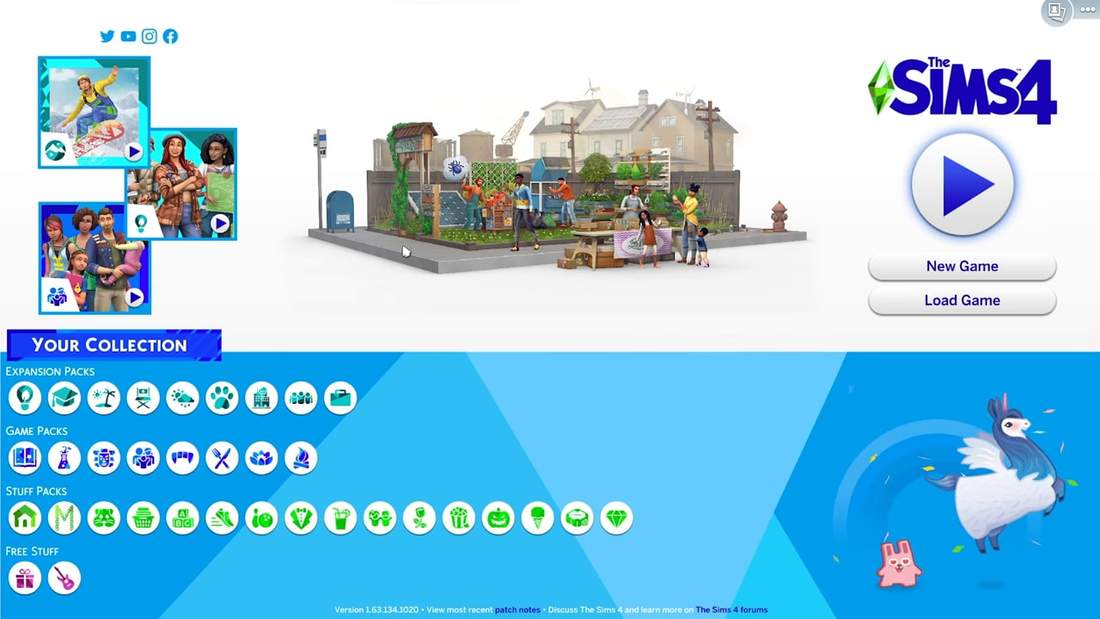
I think of it as the nightmare shop tab escaping its enclosure. Instead of keeping the sales pitch in one place, the surrounding menus start feeling like extensions of the storefront.
Expansions aren’t inherently bad. The frustrating part is seeing more products accumulate while longstanding bugs, uneven systems and a lack of meaningful depth remain sources of irritation. More stuff isn’t automatically a better simulation.
To be clear, The Sims 4 isn’t commercially dead. It remains profitable. Its place here is about creative stagnation and the feeling that ordinary players are being worn down while the business continues to serve its biggest spenders.
The growing interest in independent life simulation games makes sense to me. There is room for something that prioritises the simulation rather than the next thing attached to its checkout.
7. Angry Birds: Selling Everything Except the Simple Game I Liked
I love the basic idea of Angry Birds. Pull back a slingshot, launch a bird, knock down a ridiculous structure and work out how to do it better. Simple physics puzzles, clear feedback, no complicated explanation required.
That formula worked on phones, computers and even consoles. It didn’t need to become an elaborate exercise in keeping a shop busy.
Rovio expanded the brand aggressively, releasing a flood of games and spin-offs. The problem wasn’t merely that there were lots of Angry Birds titles. It was that the straightforward appeal of the original became tangled up with the freemium model: premium currencies, offers and repeated prompts to spend.
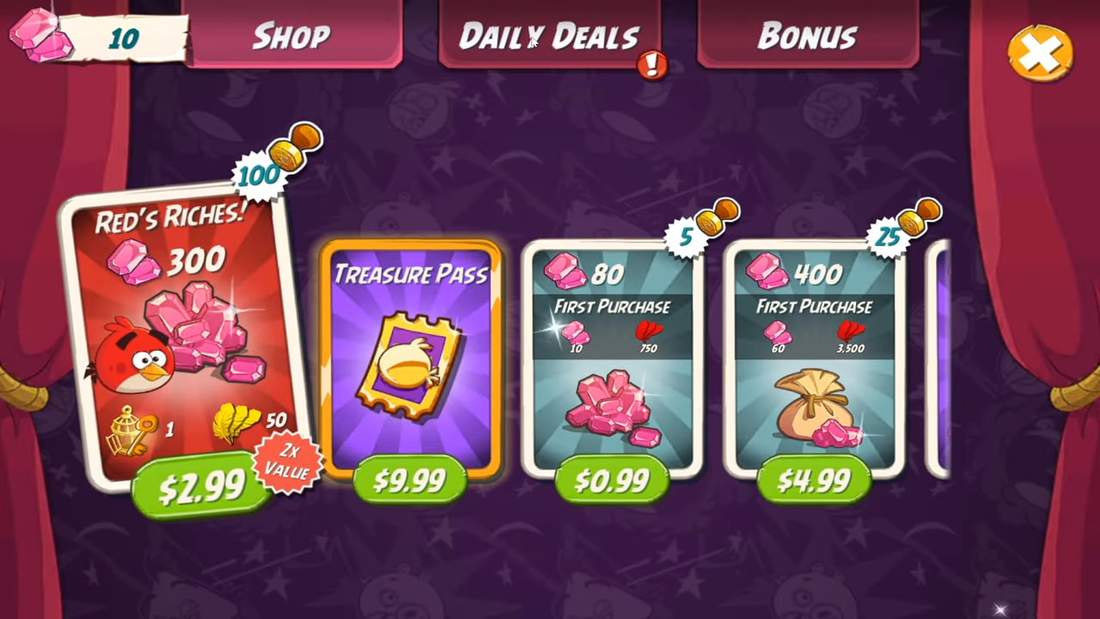
The decision to remove the original paid game from sale was particularly irritating. That was the version people remembered liking: buy a game and play it. Steering people towards free-to-play alternatives did not feel like an improvement when those alternatives were constantly asking for money.
Free entry and a better experience are not the same thing. Sometimes I would rather pay once than have every session interrupted by another attempt to sell me something.
Sega bought Rovio in 2023 in a deal valued at around $775 million. I remain sceptical about that price, given how far the franchise had drifted from its original cultural dominance.
Could a quieter period and a return to that original simplicity help? Maybe. But the appeal was never especially mysterious. It was a good little puzzle game. That should not have been so difficult to preserve.
6. Shroud of the Avatar: When the Virtual Property Market Overshadows the RPG
Richard Garriott’s history with Ultima gave Shroud of the Avatar: Forsaken Virtues a considerable amount of inherited goodwill. A fantasy RPG from someone associated with such influential games was naturally going to attract interest.
The eventual game, released in 2018 after crowdfunding, didn’t inspire anything like the same enthusiasm. Its sparse world, slow progression and poor critical reception were problems before the property market even entered the conversation.
But the property market is why it belongs here.
Virtual land and housing became a major part of the financial proposition. Expensive pledge tiers offered increasingly grand property options, including castle-scale holdings. The surrounding pitch encouraged the idea that scarce digital property could become valuable as the world grew.
I see two enormous problems with that logic:
- The game has to attract enough people to create demand. Expensive land doesn’t become desirable merely because a famous developer is involved.
- That demand has to last. Even a successful online world offers no guarantee that its virtual property will retain value for years.
The promise of future episodes, new areas and more opportunities to build made the ecosystem sound bigger than what ultimately materialised. The anticipated continuing expansion didn’t arrive as originally envisioned, and the idea of property as an investment lost its foundation.
The game remained playable under different management, but that doesn’t rescue the speculative pitch. I wouldn’t confuse an expensive in-game home with a dependable asset.
If I’m choosing between virtual land priced like a used car and an actual used car, I’m taking the one that can get me to the supermarket.
5. Hearthstone: The Cost of Keeping Up Never Ends
Hearthstone made a collectible card game feel approachable. That was a big part of its appeal. It was polished, easy to understand at a basic level, and capable of drawing in people who didn’t normally spend their evenings assembling competitive decks.
Then comes the part every collectible card game eventually has to answer for: how much does staying involved cost?
Random card packs are already a spending model built around uncertainty. I understand that collecting cards is part of the genre. My objection is what happens when frequent expansions and an evolving competitive environment turn collecting into a treadmill.
With at least three major expansion sets in a year, the pressure to keep a useful collection current can become exhausting. New cards change the strongest decks, and players who want to remain competitive feel pushed to acquire the relevant pieces quickly.
That is where power creep becomes an important part of the criticism: newer options can make previous investments feel less useful. Even when a new set doesn’t replace everything, repeatedly adapting to the meta requires time, resources or money.
The purchase is not necessarily the card I need. It can be another chance at getting it. That is why I compare random packs with loot boxes. The mechanism turns uncertainty into a reason to keep spending.
This isn’t unique to Hearthstone. I have similar concerns about the relentless expansion and crossover churn surrounding Magic: The Gathering.
Hearthstone still has an audience and still makes money. I don’t think pretending otherwise strengthens the argument. But its reduced momentum and diminished esports presence make the long-term strain hard to ignore. A game can remain viable while becoming less welcoming to the people who once found it easy to get into.
4. Middle-earth: Shadow of War: A Brilliant System Meets a Miserable Endgame
Shadow of War has something I wish more games could offer: enemies who feel as though they have a history with me.
The Nemesis system generates orcs with distinct traits and lets encounters shape their ongoing relationship with the player. Defeats, weaknesses, personality quirks and unexpected ambushes turn ordinary enemies into recurring characters.
It is a terrific idea. Unfortunately, the combination of substantial development effort and Warner Bros.’ Nemesis-related patent makes it far from a straightforward feature for another studio to reproduce.
That is the good part of Shadow of War. The launch-era monetisation was the part that got in the way.
Chests could provide equipment and orc followers, introducing paid advantages into a game built around developing an army. For most of the main story, those purchases could be ignored. Then the endgame arrived.
The Shadow Wars stretched the route to the final ending through repeated fortress battles, army management and grinding. High-level enemies and recurring struggles over territory made progress feel like work.
The true ending wasn’t literally something I had to buy. The problem was that the grind made spending money look like an escape route. That distinction matters, but it doesn’t make the design any less frustrating.
Monolith removed microtransactions in 2018, substantially improving the situation. That is worth acknowledging. The trouble is that removing a bad system doesn’t instantly remove the reputation it created.
Monolith’s closure in 2025 was a separate, broader tragedy involving more than one game. I wouldn’t pin the studio’s fate entirely on Shadow of War. I would, however, call this a particularly depressing example of a genuinely imaginative game carrying baggage it never needed.
3. Command & Conquer: A Strategy Franchise Reduced to a Mobile Business Model
Command & Conquer makes me especially cranky because the appeal of the series was not difficult to understand. Build a base, manage resources, assemble an army and make strategic decisions. There is still an audience for that.
The success and visibility of smaller strategy developers on Steam make the idea that nobody wants these games rather hard to swallow. City-building games tell a similar story. When an established publisher stops serving an audience, somebody else often notices the gap.
EA’s handling of Command & Conquer felt less like adapting to that audience and more like steadily walking away from it.
Command & Conquer 4 represented a severe low point for the main series. I regard it as a cheap, unsatisfying departure from what made the earlier games enjoyable, following upheaval around the original development teams.
Then there was Generals 2. A promising name became a rebranded free-to-play Command & Conquer project, which was subsequently cancelled.
The mobile releases that followed, particularly Command & Conquer: Rivals, did not feel like a satisfying replacement. Calling something an RTS doesn’t automatically mean it fulfils the strategic fantasy attached to this particular franchise.
I can criticise Diablo Immortal’s monetisation and still recognise a miniature version of Diablo underneath it. With Rivals, the distance between the familiar name and the experience I wanted felt much greater.
My issue is not that a strategy game exists on a phone. It’s that the monetisation model seemed to take priority over preserving the franchise’s identity.
2. Pokémon Go: Losing Players Makes the Game Worse for Everyone Else
Pokémon Go is an unusual case because even a substantial decline can leave it with an audience most games would envy. Its original peak was enormous. It doesn’t have to disappear to be a shadow of that phenomenon.
Following Scopely’s acquisition of Niantic’s games business in 2025, controversy around Pokémon Go’s direction became another reason for concern. Reported player estimates suggested significant losses, including a claimed 25% drop over one recent month. I would treat those figures as estimates rather than a definitive count of everyone playing.
The complaints are broader than one number. Players have reported more frustrating catches, Pokémon fleeing or attacking more often, fewer desirable opportunities for free users, and an event and raid rotation that feels less rewarding.
Some of those complaints concern suspected changes to underlying behaviour rather than clearly documented adjustments. I wouldn’t present every reported difficulty increase as a confirmed hidden change. The dissatisfaction itself, though, is central to the problem.
Pokémon Go depends on community in a way many mobile games don’t. Its appeal includes finding other people, organising raids and having a reason to go out together.
That creates a nasty feedback loop:
- Frustration gives people a reason to stop playing.
- Fewer active players make group activities harder to organise.
- A weaker local community makes the game less rewarding for those who remain.
- Those remaining players then have another reason to leave.
A shrinking community isn’t just a disappointing business metric here. It can directly damage the core experience. That is why I find the decline more concerning than a simple comparison with its launch-era popularity.
1. Destiny 2: The Redemption Story That Leaves Me Suspicious
Destiny 2 is my ultimate example of live-service overreach because its apparent improvement raises a deeply uncomfortable question: how much of the frustration needed to exist in the first place?
The story surrounding its slowdown in regular updates, Bungie’s attention shifting towards Marathon, and renewed interest in Destiny 2 has been presented as a kind of second chance. I’m much less interested in celebrating a comeback than in examining what people want to come back to.
The changes associated with that renewed interest targeted a long list of irritations:
- Removing the Portal menu that made the experience feel like a checklist of activities.
- Rebalancing systems and progression.
- Increasing vault capacity.
- Adding modes and updating the artifact system.
- Reducing some of the slow, repetitive friction surrounding the enjoyable parts.
The broader direction is what matters to me, even where the final rollout and future plans remain unsettled. Less time-consuming busywork makes the game easier to enjoy as a game, rather than as an ongoing obligation.
And that is precisely why I’m suspicious.
When reducing friction makes an ageing live-service game more appealing, it invites scrutiny of the incentives that kept that friction there. I don’t think this proves every live-service game must be badly designed. I do think it exposes the conflict between respecting someone’s time and stretching their engagement indefinitely.
The storefront is another visible part of that relationship. A game can have excellent combat while surrounding that combat with a persistent commercial layer.
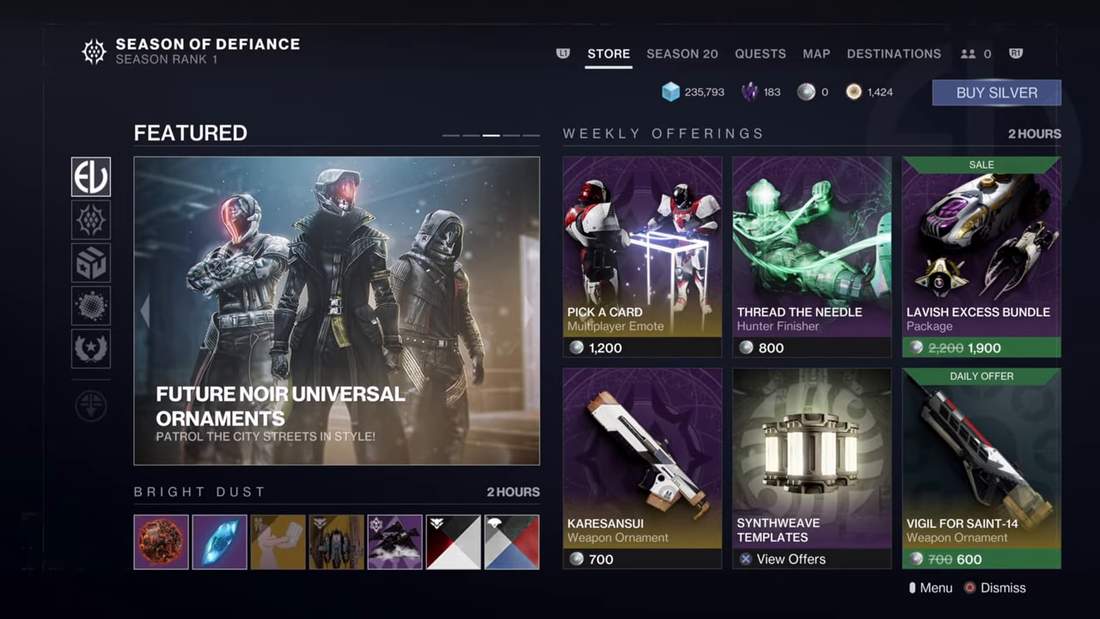
Bungie has also been through the familiar cycle of unpopular decisions, apologies and promises to improve. That history makes it difficult for me to treat another change of direction as a clean break.
Sony still sits behind the business, and the shape and timing of a fuller revival remain uncertain. A discounted collection can make Destiny 2 feel closer to the straightforward proposition I prefer: buy a substantial amount of content and enjoy it. But a temporary offer isn’t a guarantee about the future.
My question isn’t simply whether Destiny 2 can return. It’s whether it can return without rebuilding the same systems that made people tired of it.
The Common Problem: Charging for Relief Instead of Creating Value
I don’t object to developers earning money. I object when making money starts undermining the reason anyone wanted to play.
These examples take different routes. Plants vs. Zombies and Angry Birds bury simple pleasures under mobile monetisation. The Sims 4 piles products onto an ageing foundation. Hearthstone makes keeping up feel expensive. Shadow of War turns the final stretch into a grind. Red Dead Online shows what happens when a distinctive experience appears unable to satisfy expectations shaped by a much bigger money-maker.
The most frustrating cases are the ones where the good game is still visible underneath everything else.
I want to pay for something worth playing, not pay to make something less irritating. When a publisher forgets the difference, the downfall can begin long before the revenue dries up.