
Some older games hold up when I revisit them. Others make me wonder whether newer games have actually moved things forward.
I can spend ages planning an infiltration in Metal Gear Solid V, throw the plan away the second something goes wrong, and have a better time improvising. I can return to Arkham Knight and find a Gotham that still looks absurdly good. Or I can explore Dracula’s castle, learn its layout, and then discover that turning the whole place upside down changes practically everything.
That is what I mean by ageing like fine wine. Not flawless games. Not games whose technical limitations have somehow become virtues. These are games whose best ideas, distinctive worlds and satisfying systems still make them worth playing.
Key Takeaways
- Strong art direction helps games such as BioShock, Borderlands 2 and Symphony of the Night outlast ageing technology.
- Bloodborne and Assassin’s Creed Origins remain compelling because their worlds reward curiosity and exploration.
- Burnout and The Phantom Pain still excel through responsive controls and systems that encourage experimentation.
- Technical flaws remain, but Arkham’s superhero fantasy and San Andreas’s possibilities still make them worth revisiting.
Table of Contents
- 10. Bloodborne
- 9. The BioShock Series
- 8. The Burnout Series
- 7. Borderlands 2
- 6. Castlevania: Symphony of the Night
- 5. Metal Gear Solid V: The Phantom Pain
- 4. Assassin’s Creed Origins
- 3. Sleeping Dogs
- 2. The Batman: Arkham Series
- 1. Grand Theft Auto: San Andreas
- What Makes These Games Worth Returning To?
10. Bloodborne
There is a particular combination of combat and horror in Bloodborne that even FromSoftware’s other games do not quite provide. I love how aggressively it changes the habits that Dark Souls encourages. Shields exist, technically, but treating one as the centre of a defensive strategy makes a lot less sense here. Bloodborne wants commitment.
The weapons and aggressive combat are a huge part of its appeal. But if difficult fights were the only interesting thing about Soulslikes, I doubt the genre would have the staying power it does. Exploration deserves far more credit than it usually gets, and Bloodborne is one of my favourite examples of why.
Yharnam sticks with me. Its elaborate Gothic architecture is beautiful, oppressive and deeply wrong, even before the game starts changing my understanding of the place.
At first, hunting beasts through a ruined city seems like enough of a premise. Bloodborne could have stopped there and still been a good game. Instead, it keeps pulling at that thread until Gothic horror opens into cosmic horror. Progress does not just reveal another area. It makes earlier discoveries feel different.
I also find something compelling in its depiction of a society dependent on the circulation and exchange of literal blood. There is more going on than monsters hiding around corners.
The technical presentation is showing its age. The official console version’s 30fps limit is a frustration, and I am not going to pretend that makes the atmosphere better. But it has not worn away the things that matter most: the weapons, the aggression, the exploration and that gradual realisation of just how badly something has gone wrong.
9. The BioShock Series
The original BioShock arrived in 2007, and I still think its descent into Rapture is one of gaming’s great introductions. An underwater city full of Art Deco skyscrapers appears outside the window while Andrew Ryan delivers what amounts to a sales pitch. Here is his magnificent society. Here is why it is supposedly better.
Except the dream has already collapsed. Exploring Rapture means investigating that collapse while trying to understand where I fit into it.
Specific art direction has done these games an enormous favour. Rapture’s extravagance remains striking because it has such a strong identity. Some character models look rudimentary now, but their stylisation fits the world. Frankly, the atmosphere is too thick for those limitations to dominate my attention.
Then there are the plasmids. Electricity, fire, bees. There is something wonderfully ridiculous about having that range of possibilities in such a grim place. Those powers also provide useful advantages against Big Daddies, enormous figures in diving gear carrying drills I would rather keep away from my internal organs.
The first game’s shooting can feel dated. I notice it, but shooting was never the whole point.
Why Infinite and BioShock 2 belong here too
BioShock Infinite goes in almost the opposite visual direction. Columbia is bright, colourful and sunny, with a functioning society that unravels over the course of the story. Its exaggerated character designs have aged well, its Sky-Lines are great fun, and its shooting feels like a substantial step forward from the original.
Elizabeth also remains a standout. I still think the balance the game finds with its companion character is something other games struggle to match.
And I have to give BioShock 2 some credit. It gets left out of these conversations far too often. I do not think its story comes together as coherently as the other two, but that does not stop it being a damn good time. The BioShock collection is worth considering as a series, not just a way to revisit the first game.
8. The Burnout Series
Returning to Burnout 3: Takedown, Burnout Revenge or Burnout Paradise takes about half a minute to remind me what I miss about these games.
I weave through traffic, narrowly avoid a head-on collision, earn boost for nearly destroying myself, and then use that boost to make the next near-disaster happen even faster. These games are freaking nuts.
But raw speed is not the whole explanation. The handling, road design and rewards all encourage the same behaviour. Dangerous driving earns boost. Boost enables more dangerous driving. Getting better means becoming comfortable with actions that, in almost any other context, would be terrible ideas.
Eventually, I develop a feel for how far a drift will carry, how narrow a gap can be and when I can squeeze past oncoming traffic. The danger does not disappear. I just get better at operating inside it. And when a takedown lands, the physical payoff is tremendous.
The variety helps too. Racing and takedowns provide one kind of chaos; Crash mode turns destruction into its own challenge. Paradise takes the idea further by making the city a playground full of shortcuts, jumps and smashable billboards. Learning the world becomes enjoyable even when I am not following a race route.
Yes, the older games look older. Revenge is absolutely drenched in that mid-2000s bloom. But responsive handling, a convincing sense of speed and an almost unreasonable enthusiasm for smashing cars have not lost their appeal.
7. Borderlands 2
Parts of Borderlands 2’s personality are very obviously preserved specimens of early-2010s internet humour. Whether that is charming or exhausting is going to depend on the person. I am not going to pretend every joke has become timeless.
The actual game underneath it, though? Finding a ridiculous gun, discovering what it does and changing my approach around it still works brilliantly.
The important distinction is that weapons have identities beyond their damage numbers. Manufacturers establish expectations, but there is still room for surprises. A gun might become a grenade when discarded, or its elemental properties might make it useful in a completely different situation.
That gives me a reason to be curious about the next drop rather than simply checking whether a number has gone up.
Character abilities add another layer. Salvador can pull out two guns, while Maya can suspend an enemy with Phaselock. Once equipment and skills start working together, the experience shifts from barely surviving encounters to actively hunting down the next fight.
Visually, the heavy outlines, exaggerated silhouettes and illustrated textures have also paid off. There is a consistency to the presentation that survives the technology underneath it.
Then there is Handsome Jack. Funny, petty and cruel, he gives the campaign a personality as strong as its art direction. A great villain can make an enormous difference, and he certainly does here.
Newer shooters offer smoother movement, and the later difficulty levels can turn the equipment grind into something much more restrictive than the early hours suggest. I still think the campaign’s progression, varied environments and excellent co-op make Borderlands 2 remarkably good at persuading me to keep playing.
6. Castlevania: Symphony of the Night
Symphony of the Night came out in 1997, and I think it remains a pretty convincing argument for 2D games as a medium.
Alucard’s flowing hair, his cape, the personality packed into his movement: all of it looks fantastic. The castle receives the same attention, from huge architectural backdrops to elaborate enemies and tiny animations that are easy to miss while passing through a room. The soundtrack lives up to the presentation too.
What keeps me playing, though, is how effectively the castle maintains my curiosity.
I find a passage I cannot reach or notice something behind a barrier. Later, a new ability makes that old obstacle click into place in my head. Suddenly, returning to an earlier room feels like an exciting discovery rather than an obligation.
That loop is familiar territory for the Metroidvania genre now. Symphony makes it satisfying because movement feels good, areas have distinctive identities, and there are enough discoveries away from the main route to keep me wondering what else is hidden.
The equipment and RPG systems give exploration another purpose. New weapons invite experimentation, levels provide strength, and bosses can turn out to be considerably nastier than expected.
The balance sometimes gets ridiculous. One boss can feel overpowered, then a discovery leaves me feeling overpowered against the next. I actually like that there is room for that kind of uneven, surprising progression.
And then there is the inverted castle. Under the right conditions, what appears to be the ending opens into an upside-down version of the place I thought I understood. Familiar architecture becomes strange again, which is a hell of a trick after spending hours learning it.
Some elements show their age, including the voice acting, depending on the version. Personally, I consider a fair amount of that part of the charm. The important stuff still holds up.
5. Metal Gear Solid V: The Phantom Pain
I can carefully observe an outpost, mark the guards, locate a target and work out an exact infiltration route. Then somebody spots me dragging an unconscious soldier around a corner, and all that preparation goes straight out of the window.
In a more restrictive stealth game, that might mean death or reloading a save. In The Phantom Pain, it can be the most entertaining part of the mission.
Getting discovered creates opportunities instead of simply cancelling the fun. Snake has enough tools, mobility and options that recovering from a mistake can be more satisfying than executing a perfect plan.
The controls are essential to that freedom. Going prone, crawling through cover and grabbing a guard connect so naturally that I can concentrate on what I want to do rather than how to make the character do it. Earlier Metal Gear games sometimes required me to become comfortable with unusual controls. The Phantom Pain makes that relationship much smoother.
It also pushes back against habits. Rely heavily on headshots and enemies start wearing helmets. That is a straightforward response, but it gives repeated approaches consequences and encourages adjustment.
The Fulton system captures the game’s sillier side beautifully. I can subdue soldiers without killing them, attach balloons and send them away to become recruits. That is an oversimplification, but honestly, not by very much.
I do have serious reservations about the campaign’s storytelling. I would not describe the narrative as neatly resolved or consistently satisfying, and the troubled circumstances surrounding Kojima’s departure from Konami are difficult to separate from that discussion.
Even with those issues, the game is an extraordinary achievement. Its visual presentation still impresses me, its infiltration is superb, and the interactions between its systems remain remarkably flexible. For a game released in 2015, that freedom is still something special.
4. Assassin’s Creed Origins
I know some people consider Origins the beginning of the wrong direction for Assassin’s Creed. I do not agree. I like the open-world RPG entries, even if Black Flag comes closer to my preferred balance.
Returning to Origins makes one thing particularly difficult to argue with: Egypt itself.
Busy settlements, farmland and desert give the journey a rhythm. A huge monument on the horizon invites me to travel towards it, but a stretch of striking rock formations can be enough on its own. Not every memorable landscape needs a giant landmark stamped on it.
The world remains beautiful, but beauty is only half of what makes it work. People work, pray, move goods and follow routines. I can stop to observe bread-making or cloth-dyeing, little activities that make the setting feel occupied rather than merely decorated.
That might sound like a strange thing to praise in a game substantially concerned with stabbing people. But those details give the stabbing context. They make the world feel like somewhere that exists beyond my current objective.
The everyday activity gives the adventure a stronger sense of purpose. A settlement feels more meaningful when it seems to have a life of its own.
There is still familiar open-world repetition. Camps need clearing, equipment needs comparing, and level numbers occasionally matter more than I would like. The RPG systems do not always cooperate with the assassin fantasy.
But Origins goes the extra mile in enough small ways that its world often makes those familiar activities feel more natural than they otherwise would.
3. Sleeping Dogs
Recommending Sleeping Dogs eventually starts to feel like an unpaid job. I keep doing it because this is exactly the sort of supposedly second-tier open-world game that punches miles above its weight.
The premise puts me in the role of an undercover police officer infiltrating the triads. That means getting involved in the lives of people I am ultimately supposed to betray, which gives the crime story a strong personal tension.
It also means getting into a lot of excellent martial arts fights. This is not simply another Grand Theft Auto-style crime sandbox. It is a Hong Kong action movie in playable form.
The hand-to-hand combat has a wonderful rhythm. I do not mean it is a rhythm game. I mean the grappling, positioning and environmental attacks connect in a way that gives fights a satisfying flow. The surroundings are part of the fight, not just scenery behind it.
Hong Kong is also a setting worth spending time in. Crowded markets, narrow passages, busy pedestrian areas and faster roads give it variety. I can get involved in a street race or take a break for karaoke.
That last detail might bring Yakuza to mind, but Sleeping Dogs has its own identity. I love Yakuza too. I just would not want that comparison to obscure what makes this particular combination of undercover drama, martial arts and city life so good.
2. The Batman: Arkham Series
Arkham Asylum deserves its reputation, but I want to focus on City and Knight here. The sequels took an already excellent foundation and developed different sides of it.
Arkham City gives Batman a whole district to glide around, packs it with interesting villains and captures the appeal of being out on patrol. Moving through the world feels like part of the fantasy rather than a journey between the interesting bits.
The combat remains excellent. Learning the basics is straightforward, but keeping a combo alive while responding to different enemy types requires attention. Once it clicks, it feels choreographed.
Predator encounters provide the other half of being Batman. Armed enemies are dangerous when they know where I am, so the objective becomes controlling that knowledge: staying hidden, separating them, picking them off and making them increasingly uncomfortable.
Arkham Knight still looks ridiculous
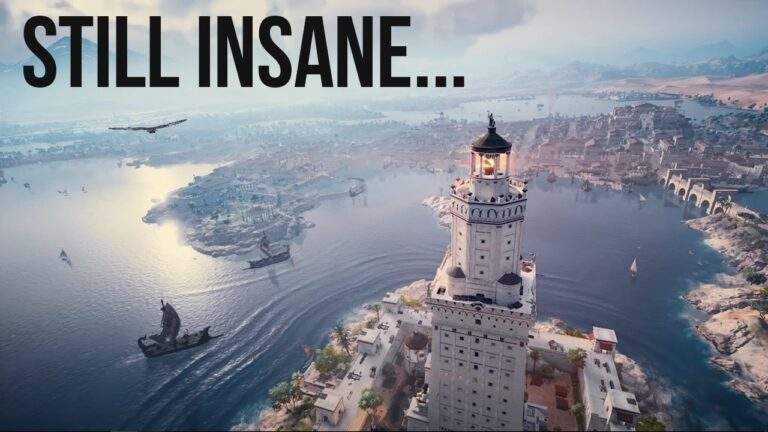
Knight adds an extraordinary level of visual polish. The rain, lighting, dense architecture and animation all reinforce one another. I still have to remind myself that this is a 2015 release.
Gotham is theatrical, exaggerated and perfectly suited to Batman. The movement abilities help show it off, while the city’s composition makes it look spectacular from practically any angle. I still find it one of the most convincing versions of Gotham in a game.
I have complaints. Knight asks me to spend an awful lot of time dealing with tanks, and my enthusiasm for Riddler trophies has limits across the series.
Those frustrations do not undo the quality of the combat, stealth and world design. The Arkham Knight store page might put a release date on it, but the game itself does a pretty good job of making me forget.
1. Grand Theft Auto: San Andreas
San Andreas might be the game here that looks the oldest while feeling the least constrained by its age.
The character models are unmistakably from the PlayStation 2 era. Put them into a new game without deliberately aiming for a retro look, and people would have questions. Start playing, though, and the possibilities become much more interesting than the polygons.
I begin with something as ordinary as riding a bicycle down an alley. Eventually, I am crossing the desert with a jetpack. The game keeps expanding my idea of what an adventure in this world can involve.
A lot of that comes from how distinct its regions feel. Los Santos, San Fierro and Las Venturas have different identities, and the countryside and desert between them matter just as much as the cities.
Leaving an urban area changes the atmosphere. Winding roads, small towns, forests and long stretches of quieter landscape make the world feel much bigger than its actual size suggests. Putting on the radio and driving up an unfamiliar road can be as enjoyable as pursuing a mission.
Then there is CJ himself. Clothes, haircuts, food and exercise let me change more than a cosmetic detail. I can turn him into a gym obsessive or send him enthusiastically in the opposite direction, and those choices affect how he handles.
The story is strong too. I find the Grove Street Families material especially compelling, even if the rest does not always hit quite the same level.
San Andreas came out in 2004, yet the whole package feels so ambitious that I sometimes mentally place it years later. Its technical shortcomings are obvious. They just do not matter nearly as much once all those possibilities start working together.
What Makes These Games Worth Returning To?
I am not interested in pretending that old games have no rough edges. Bloodborne’s frame-rate limit is not secretly wonderful. Borderlands 2’s grind can become restrictive. Arkham Knight really does have a lot of tanks.
What makes these games endure is that their strongest qualities remain powerful: distinctive art direction, places worth exploring, controls that feel good and systems that leave room for surprise.
A game does not need to look new to feel alive. Sometimes, the best reminder of that is loading up something old and discovering that it still does its particular thing better than almost anything else.