
Zombie games are a dime a dozen. At this point, another abandoned city, crafting bench and hungry horde aren’t enough to get me excited. I’ve played that game. Probably several versions of it.
But a zombie apocalypse on a boat? A medieval survival sim with properly physical combat? A strategy game that lets me manage an entire city’s war against the undead, then take control of a single vehicle? Now there’s something to talk about.
These 20 new and upcoming zombie games have ideas that could help them stand out. Some look genuinely scary, some look ridiculous, and a few are making promises big enough to set off alarm bells. I’m interested in all of them, even if interest isn’t the same thing as a recommendation.
A quick release-date warning: the dates below are the development targets discussed in these previews, not guarantees. Several projects have no firm launch date, and an early access release is not the same as a finished game. For that distinction, Steam’s early access guide is useful context.
Key Takeaways
- God Save Birmingham and Blight: Survival take medieval zombies in different directions, from hardcore survival to co-op action horror.
- Last Harbor, Ardem and Zeverland rethink survival through mobile homes, world restoration and achievable endings.
- Holstin, Parasite Mutant and Ebbtide stand out through perspective shifts, hybrid combat and city-scale strategy.
- Many projects have uncertain release dates or early access plans, so promising ideas still need to prove themselves.
Table of Contents
- 20. God Save Birmingham
- 19. Blight: Survival
- 18. Showa: American Story
- 17. Nakwon: Last Paradise
- 16. Zombies Aren’t Real
- 15. Mortus
- 14. The Road of Dust and Sorrow
- 13. Ardem
- 12. Beautiful Light
- 11. HUNGER
- 10. Zeverland
- 9. Holstin
- 8. Last Harbor
- 7. Canyons
- 6. Long Gone
- 5. Never Be Alone
- 4. Parasite Mutant
- 3. ILL
- 2. Mann Versus Zombie
- 1. Ebbtide
- Bonus: The Case for a Resident Evil Code: Veronica Remake
- The Zombie Games That Still Have Me Interested
20. God Save Birmingham
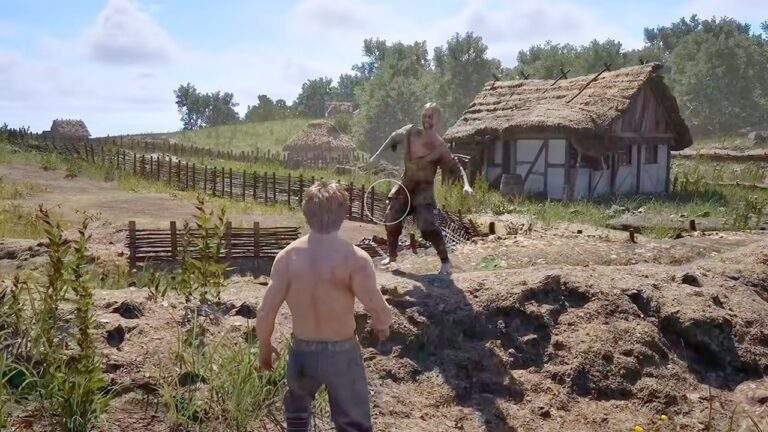
The easiest pitch for God Save Birmingham is Project Zomboid in a medieval world, rendered in Unreal Engine 5. Honestly, that’s already a pretty good pitch.
This looks like a hardcore survival game where death comes quickly and staying healthy matters just as much as winning a fight. What interests me most is the physicality. Objects and zombies appear to behave in tactile, physics-driven ways, giving combat more going on than simply swinging until a health bar disappears.
There’s also an encouraging amount of practical survival detail, including barricades, doors, weapon upkeep and treating wounds. It still resembles plenty of other zombie games, but the ambition seems to be in making those familiar interactions more convincing.
Early hands-on impressions have sounded increasingly positive. There is no firm early access date, and I’m fine with that. A game built around this much interconnected detail probably benefits from more time in development.
19. Blight: Survival
Apparently, making zombies medieval is becoming its own little movement. Blight: Survival takes a different route from God Save Birmingham, though: this looks more like a directed PvE action-horror experience than a hardcore survival simulator.
The brutal melee combat initially had me wondering whether this would simply be another Soulslike. But the actual gameplay suggests something closer to a medieval take on The Last of Us’s stealth and combat mechanics, not its story.
The character can sneak, crawl along the ground, approach human enemies quietly and use ranged weapons. That combination gives encounters a more deliberate feel than the usual dodge-and-counter routine.
Support for up to four players is another intriguing piece, although I still have questions about how co-op fits the encounters shown so far. There’s no firm release date, but the style and feel have kept this on my radar since its early reveal.
18. Showa: American Story
Showa: American Story is so strange that the zombies almost feel like an afterthought. Somehow, that’s a compliment.
Its alternate 1980s America has been taken over by Japan, creating a post-apocalyptic road trip built from exaggerated American and Japanese cultural imagery. Add flashy, Bayonetta-like combat, open-world traversal and absurd characters, and the result has that unpredictable Suda51 energy, despite coming from a different developer.
I get bits of Lollipop Chainsaw, No More Heroes and Killer7 from the overall attitude. That doesn’t guarantee a good game. It could be a mess. But it could be a genuinely interesting mess, which is more than I can say for another completely interchangeable survival sandbox.
A 2026 target has been attached to it, although 2027 seems a more plausible possibility based on the uncertainty surrounding its progress. I wouldn’t build a calendar around either. Whenever it arrives, the sheer weirdness is enough to make me curious.
17. Nakwon: Last Paradise
My slightly cheeky description of Nakwon: Last Paradise is The Day Before, except this one appears to be an actual functioning game. Closed tests and positive hands-on buzz make a considerable difference there.
This is a third-person PvPvE extraction game: enter the city, scavenge what you can and get out alive. The more distinctive part happens between runs, when you manage a shelter that is also your apartment. You can decorate it, craft, upgrade equipment and improve your character. You even have rent to pay. The apocalypse apparently doesn’t cancel that.
Improving the shelter feeds back into future expeditions, giving the home-management side a practical purpose.
The big unknown is the community. Will encounters lean towards immediate hostility, or will occasional cooperation emerge? Quest requirements that push players to kill one another suggest the developers definitely want PvP. How punishing that becomes remains unclear. The stated launch window is sometime in 2027.
16. Zombies Aren’t Real
First of all, excellent title.
Zombies Aren’t Real pulls back from the individual survivor and puts me in charge of an army defending a stronghold against an enormous undead tide. Building defences, arranging choke points and preparing before the attack appear to be the difference between holding out and everything collapsing very quickly.
At a glance, it could pass for another tower-defence game. What makes me hesitate to dismiss it is the apparent depth of its scenarios, loadouts and abilities. Distinct missions are supposed to grow more complicated as the game progresses, potentially demanding more than simply finding one effective layout and repeating it.
There’s no firm release date, and an early access launch is planned before version 1.0. I’m interested in whether the tactical complexity can match the scale.
15. Mortus
Mortus is trying something different partly by doing something extremely familiar: making a standalone version of Call of Duty Zombies.
It’s a four-player, round-based shooter with wall buys, mystery boxes and perk machines, presented with a simpler visual style. The inspiration isn’t exactly hiding.
But there is a meaningful twist: the map is randomised for each run. That could disrupt the memorised routes and routines that eventually become second nature in a fixed Zombies map. Familiar systems, less predictable spaces. I can see the appeal.
It also seems like a project made by people who really love that mode and have specific ideas about improving it. Honestly, getting something like Call of Duty Zombies without navigating the rest of the Call of Duty package and launcher would already be a selling point for me.
14. The Road of Dust and Sorrow
“Cosy survival horror” sounds like two genres having an argument. Still, I can sort of see what The Road of Dust and Sorrow is going for.
The pixel art has a charming, autumnal quality, while the actual mechanics look rooted in traditional survival horror: inventory management, puzzle-solving and staying alive with limited resources. It’s a 2D approach to a formula that can absolutely work, with games such as Silver Pines providing a useful point of comparison.
The premise involves protecting a child, which naturally raises the possibility of an extended escort mission. That could go either way, but the material shown looks polished enough that I’m willing to give it a chance.
A Steam demo has been made available, and 3 December is the stated launch target. The demo is particularly useful here because the balance between comforting atmosphere and actual horror is something I’d rather feel for myself.
13. Ardem
Ardem initially looks very familiar: a large, mostly rural open world, survival systems and servers supporting up to 64 players. Yes, there’s a lot of DayZ in that description.
The interesting difference is the possibility of repairing the world instead of merely surviving in its ruins. Restoring power to parts of the map and repairing infrastructure such as bridges should make travel easier. According to the developers, cleared and fortified areas remain secured.
That could give scavenging and combat a longer-term purpose. Rather than repeatedly passing through the same dangerous places, I’d be gradually making the map more habitable.
There’s flexibility in how to approach it, too: solo play, private servers with friends, lower-hostility role-playing servers or full PvP chaos. The target is an early access launch sometime in 2027. I’m curious whether the restoration systems can make progress feel genuinely persistent.
12. Beautiful Light
Another extraction shooter. Another PvPvE setup. I know those words aren’t automatically exciting any more, but Beautiful Light has at least one idea that deserves attention.
Players compete to secure artefacts while also dealing with an anomaly. The twist is that the monster can be player-controlled, bringing a bit of Evolve’s asymmetrical energy into the extraction format.
I realise that combining extraction mechanics, competing players and a playable monster sounds like a balancing nightmare. There are plenty of reasons to be cautious. But the creature side looks potentially fun, and multiple game modes suggest this isn’t relying entirely on one extraction format.
Its previously discussed December release has shifted to a late-2027 target. Beyond whether the mechanics work, the real question is whether it can attract enough people to sustain this kind of multiplayer ecosystem.
11. HUNGER
HUNGER looks a little like somebody dropped Valor Mortis’s visual style into Hunt: Showdown. Mechanically, though, this is firmly an extraction game rather than the same kind of experience as Valor Mortis.
The usual loop is here: enter a map, scavenge resources, encounter other players and try not to die horribly. What distinguishes it visually is the collection of Napoleonic body-horror creatures roaming around alongside the zombies. They’re nasty-looking in a way that gives the setting a stronger identity.
It comes from former Hell Let Loose developers, which gives me a reason to be interested beyond the creature designs. More importantly for some players, the plan includes no wipe mechanics, allowing continued progression rather than periodic resets.
The stated early access target is 3 December. In a crowded genre, steady progression could be the feature that gets people through the door.
10. Zeverland
Zeverland’s more cartoonish look immediately helps it feel different from the endless parade of muddy, photorealistic survival games. But the ideas underneath that style are what really interest me.
For starters, dying doesn’t necessarily end the experience. There’s an option to carry on as a zombie. It’s a choice, not something everyone is forced into.
The developers are also proposing a pretty wild assortment of survival features:
- A mobile base built on the back of a truck.
- Recruitable NPCs who help around the base.
- Persistent improvements to the world.
- Underground building.
- Actual objectives and multiple endings.
That final point matters. I like the idea of a survival sandbox that can lead somewhere rather than simply asking me to continue indefinitely. The simpler graphics might make it easy to underestimate, but there’s no shortage of ambition here.
9. Holstin
Holstin is exactly the kind of indie horror game that reminds me why I keep digging through this stuff.
At first, it resembles an old-school survival horror experience in the general neighbourhood of Signalis or Conscript. Then the character aims a gun, and the perspective shifts into an over-the-shoulder shooting view. Suddenly, the same environment feels completely different.
It’s a clever visual trick, and potentially more than a gimmick if the fundamentals hold up. The game seems willing to experiment with perspective elsewhere, too, including what appears to be a truck-driving section.
With survival horror competition getting stronger, an immediately recognisable idea helps. Team17’s involvement as publisher is another encouraging sign for me, given its history with interesting games. A demo is available, but there isn’t a firm release date. Hopefully, the actual survival horror is as strong as the presentation.
8. Last Harbor
Last Harbor gives the zombie apocalypse a change of scenery: the San Juan Islands off Washington State, with a boat serving as a mobile home.
That boat is the key. Instead of being permanently stranded in another hostile town, there’s a place to return to between gathering expeditions. Fishing, housing survivors and upgrading the vessel give the downtime its own purpose.
I like how the island setting could naturally divide the survival loop into distinct trips. Head ashore, take a risk, gather supplies, then return to something that feels like home.
Not that the boat is completely safe. Periodic raids are part of the concept, although who or what carries them out remains unclear. There are still plenty of unanswered questions, but a floating base and island-by-island exploration sound like a sensible way to refresh a familiar genre.
7. Canyons
Whatever anyone thinks of the humour in Breathedge, I think its developers know how to build a solid game. Canyons looks like an especially ambitious next step.
This co-op action game splits its time between exploring a procedurally generated world and travelling aboard enormous land ships called crawlers. There are plenty of zombies, plus stranger things to fight.
Between expeditions, the action returns to a persistent haven. That’s where structures can be built and upgraded, settlers brought in and crawlers improved. The haven also needs defending, so the permanent base isn’t just a menu between adventures.
The appeal is that combination: a mobile expedition vehicle, unpredictable outings and a settlement that develops over time. Each new look has seemed more polished and interesting. The stated release target is November 2027, so there’s still room for the final shape to change.
6. Long Gone
Long Gone is a pixel-art adventure game where the zombies look genuinely capable of ruining the day.
Classic LucasArts-style adventures often avoided death and outright failure. This looks much less forgiving. Despite being described as a new kind of point-and-click adventure, its dangerous scenarios give me more of an Inside or Limbo feeling, mixed with inventory-based puzzle-solving.
Applying that structure to straightforward zombie-survival situations feels surprisingly fresh. The challenge isn’t necessarily building a fortress or becoming a perfectly equipped killing machine. It’s figuring out how to get through the immediate problem without being eaten.
There’s also a slightly slapstick quality to the presentation, which helps it avoid the same relentlessly grim tone as so many apocalypse games. Charming, dangerous and a bit ridiculous is a combination I’m happy to try.
5. Never Be Alone
I understand the urge to run away at the words “another open-world zombie survival game”. But Never Be Alone is pitching something more directed than its first impression suggests.
This is intended to be a full RPG set in a zombie-infested world, with a central story, factions, consequential choices and a mystery involving the player character’s past.
The promised scope includes more than 30 main missions across three principal islands and over a thousand voice lines. Crafting and survival remain part of the experience, but they’re supposed to support a narrative rather than fill an otherwise empty sandbox.
Seamless drop-in, drop-out co-op is planned as well. That’s a lot to promise, and execution will decide whether any of it comes together. Still, for someone who wants actual direction with their survival mechanics, the concept is appealing. The stated early access date is 8 December, with a demo also available.
4. Parasite Mutant
I don’t know why multiple Parasite Eve spiritual successors seem to be arriving around the same period, but I’m certainly not complaining.
Parasite Mutant is particularly open about that inspiration. Its anime presentation suits the over-the-top monsters, and zombies appear to have a substantial presence alongside the stranger creatures.
The important part is the combat: real-time movement mixed with menu-based attack commands, taking inspiration from Parasite Eve’s unusual battle system.
It’s a slightly awkward system to explain on paper, but the appeal makes sense. It brings JRPG decision-making into a survival horror environment, combining two specific things that people really love.
That hybrid is the reason I’m interested, not just the resemblance to an old favourite. Whether this particular version can make those ingredients work together is something I’ll have to wait to find out.
3. ILL
ILL’s big distinguishing feature is simple: it looks absolutely disgusting.
The broad structure resembles first-person Resident Evil, but the monsters look more unstable, more unpredictable and much harder to look at comfortably. Creature design and unsettling realism are doing a lot of the heavy lifting here.
It’s not only the gore. The human characters, environments and horribly twisted bodies all have a convincing physical quality that makes the whole thing feel nastier. The ordinary surroundings help sell the extraordinary grossness.
I respect a horror game that’s willing to commit this hard to its own unpleasant ideas. If the finished experience delivers on the previews, it could be a seriously effective thrill ride. Possibly one best approached with a barf bag nearby.
It has been in development for a while. There’s no firm date, though 2027 has been discussed as a possibility.
2. Mann Versus Zombie
Mann Versus Zombie takes a very good idea and puts it in a very familiar wrapper: Call of Duty Zombies-style progression inside Team Fortress 2.
This is a fan-made project, not an official Valve Zombies mode. The plan involves waves of zombies and other creatures, wall buys, perks and upgrades, all filtered through the characters and style of Team Fortress 2.
That combination makes an immediate kind of sense to me. A big part of the appeal is simply having a new reason to return to a game with such a distinctive personality.
It looks ambitious for a community-made mod, and ambition doesn’t guarantee completion. But the enthusiasm behind it is easy to appreciate. There isn’t a release date beyond a general “coming soon”, so for now it’s one I’m hopeful about rather than making plans around.
1. Ebbtide
Ebbtide is the one that makes me stop and ask whether this can really be as good as it looks.
The basic concept combines zombies with a modern military RTS in the broad territory of Broken Arrow, then pushes the scale much further. Rather than only pulling back to see a battlefield, the idea is to zoom out across an entire city with multiple active hotspots.
There’s an evolving operations map, army management, air support, long-range artillery and base building. Then it can zoom back in far enough to let the player directly control an individual vehicle.
That movement between strategic command and direct action is what makes it so exciting. It’s not merely a bigger horde. It’s the possibility of treating the apocalypse as a whole ongoing military conflict, while still getting close enough to participate in individual moments.
If the final game matches that promise, this could be a genuinely unusual strategy-action hybrid. It’s also exactly the kind of project where I worry the pitch might be too good to be true.
There’s no firm release date. I can’t tell whether it’s relatively close or still years away, but this is one I absolutely want to try.
Bonus: The Case for a Resident Evil Code: Veronica Remake
I also have to mention the prospect of a Resident Evil Code: Veronica remake, even though a remake sits outside the main list’s focus on new concepts.
The original has so much worth revisiting: memorable lore, great creatures, strong zombie encounters and boss battles that have stuck with me. It also has plenty of corniness and some awkward design decisions.
More importantly, it’s possible to put yourself in a difficult progression situation that effectively leaves you stuck. That’s exactly the kind of rough edge a thoughtful remake could address without losing what makes the original special.
I wouldn’t treat enthusiasm for the idea as a confirmed release plan. But as a candidate for the remake treatment, Code: Veronica makes an awful lot of sense. Capcom’s strong run with Resident Evil gives me plenty of reason to hope it could do the material justice.
The Zombie Games That Still Have Me Interested
What keeps me interested isn’t simply more zombies. It’s a different relationship with the apocalypse: rebuilding a world in Ardem, returning to a boat in Last Harbor, solving lethal little problems in Long Gone or commanding a city-wide response in Ebbtide.
Not every game here needs to reinvent the genre. Mortus could earn its place by refining a familiar mode. Holstin could do it with a smart perspective change. ILL might manage it by being so thoroughly horrible that I regret putting headphones on.
They’re all unproven in different ways. But in a genre this crowded, a clear idea and the willingness to commit to it are enough to get my attention. The next step is finding out which ones can actually deliver.