
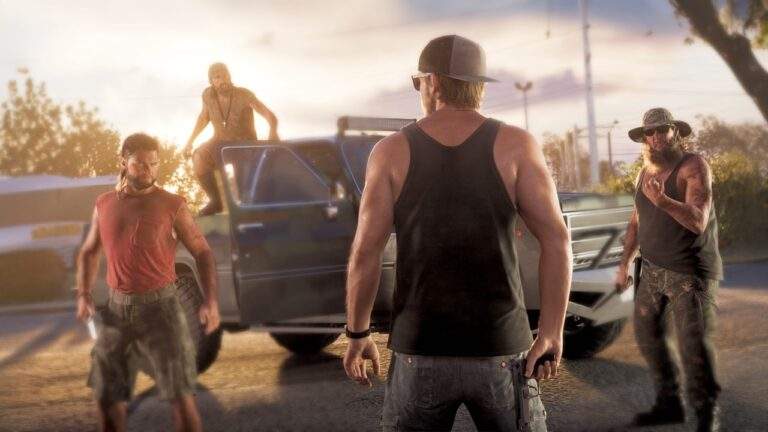
A bigger map is one thing. A crime game where your partner can escape with the money after you get caught, your getaway car doubles as an armoury, and the police remember more than its paint colour? That is the stuff that gets me interested.
The GTA 6 details outlined here point towards a more interconnected open world, with plenty of ideas that sound like modern-day extensions of Red Dead Redemption 2. Some sound fantastic. Others, like refuelling cars and managing sleep, are going to depend heavily on how much they interrupt the fun.
I’m treating these as reported pre-release details, not a guarantee of the finished game. There are also some genuine unknowns, particularly around multiplayer, story consequences and the finer points of police behaviour. Those distinctions matter when expectations are already this ridiculous.
Key Takeaways
- Reported launch details include a 30fps console target, an approximately 80-hour playthrough and a 212GB installation.
- Jason and Lucia’s paired play could connect character switching, robberies, driving and relationship choices.
- Weapon limits, vehicle security, criminal profiles and illicit money point towards more involved crime systems.
- Multiplayer packaging, story consequences and several finer gameplay details remain uncertain.
Table of Contents
- Performance, Platforms and Multiplayer
- Jason, Lucia and a Much Larger World
- Weapons, Combat and Robberies
- Cars, Fuel and Things to Do Between Jobs
- Police, Money and Safe Houses
- Social Media, Travel and the Central Relationship
- Release Date, Price and Storage
- The Big Change Is How These Systems Fit Together
Performance, Platforms and Multiplayer
25. The console frame-rate target is 30fps
The reported target is 30 frames per second across the launch console versions, without a performance mode or the rumoured 40fps option for PS5 Pro.
The important word is “target”. That does not promise a locked 30fps, so occasional dips remain possible. It is disappointing, but hardly surprising given the visual ambition. Much like Red Dead Redemption 2 on PS4, the apparent priority is fidelity over frame rate.
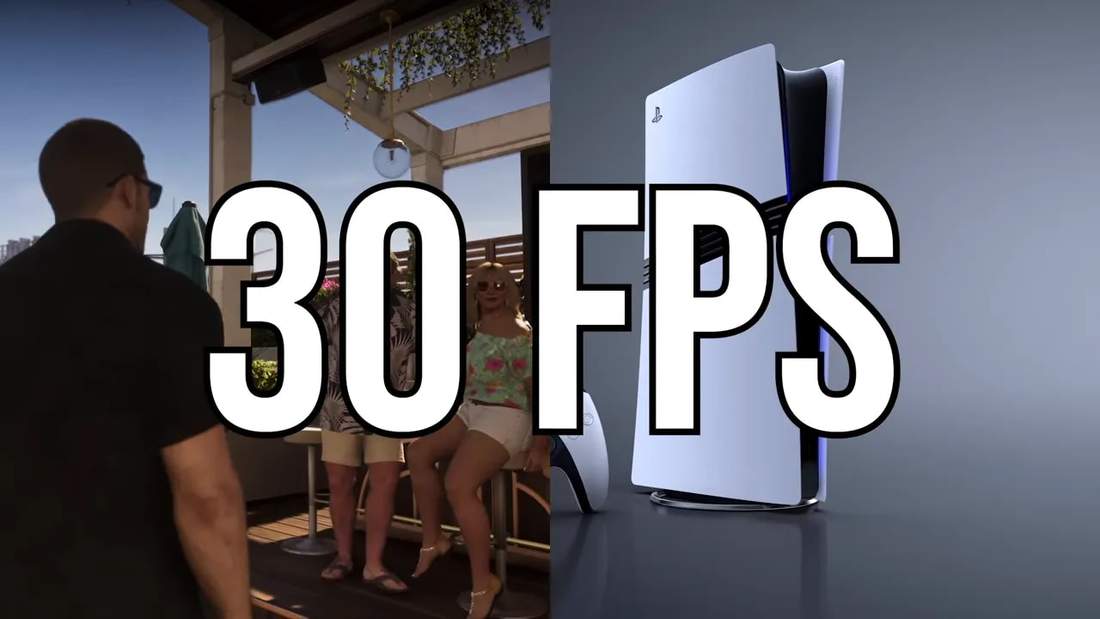
Personally, I would make the opposite trade-off. Still, if 30fps is the ceiling, consistent frame pacing matters far more to me than another small graphical flourish.
24. PlayStation and Xbox have different extras
The reported PlayStation features include haptic feedback and 3D audio, with enhanced ray tracing on PS5 Pro. Improved loading times are also being promoted for both PS5 models.
I would keep the loading claims in perspective, especially alongside the reported PlayStation marketing arrangement. Rockstar games typically concentrate their most noticeable loading at the beginning of a session. A slightly longer initial wait would not, by itself, decide which version I bought.
The Xbox cloud-streaming arrangement sounds more complicated. The description given is of streaming using Series S settings, with access restricted to consoles rather than PCs. That would make it a convenience option, not the highest-fidelity way to play.
PS5 Pro sounds like the strongest visual option of the versions discussed, but the enhancements do not sound essential. I would be perfectly happy with a competitive Series X version that runs steadily.
23. GTA 6 Online still has important unanswered questions
The big question is not simply whether multiplayer exists. It is whether the next online component comes with GTA 6, arrives as a separate download, or requires another purchase.
PlayStation Store backend discoveries by PlayStation Game Size have been interpreted as evidence of built-in multiplayer support. Three licence entries reportedly reference session and multiplayer functions. The catch is that similar entries can appear for games without meaningful multiplayer features.
That is a clue, not a conclusion. The reported expectation is an online launch sometime in 2027, without transfers of existing GTA Online characters. Beyond that, I would not assume the packaging, price or launch structure is settled.
Jason, Lucia and a Much Larger World
22. Character switching adds a paired option
GTA 5 let me bounce between Michael, Franklin and Trevor. GTA 6’s reported approach centres on Jason and Lucia, with a third selection that puts them together.
That sounds more interesting than simply reducing three protagonists to two. Some missions and activities are apparently specific to an individual character, while others can be tackled as a pair.
During a chase, the idea is that I can switch from driving to controlling the passenger, fire at pursuers, then return to the driver. Robberies could become more flexible too: if one protagonist gets caught, the other might still escape with some of the loot.
The potential is obvious. The real test is whether the partner feels useful rather than like another thing I have to babysit.
21. A standard playthrough could take around 80 hours
A reported New York Times interview with Rockstar North’s co-studio head puts one standard playthrough at about 80 hours. That is not presented as a completionist run.
For context, the rough comparisons discussed are around 30 hours for GTA 5 and 50 for Red Dead Redemption 2, although individual playtimes vary enormously. I find HowLongToBeat’s player-submitted estimates useful for understanding that distinction between finishing a story and clearing everything.
Length is only half the claim. Story choices are also said to have consequences, with replayability being a deliberate goal. How far those branches extend remains unclear, and I would not jump from “meaningful choices” to expecting completely different campaigns.
A chapter-based structure, similar to Red Dead Redemption 2, is suggested rather than firmly established here. Either way, 80 hours is a serious commitment before a second playthrough even enters the conversation.
20. Leonida is described as an enormous, varied map
The map is described as roughly three times the size of Red Dead Redemption 2’s, spread across at least six major regions. Vice City is the obvious centrepiece, with its own districts and subcultures, but it is not the whole attraction.
The locations discussed include the Leonida Keys, Port Gellhorn and a national park with wildlife and outdoor activities. That variety matters more to me than a giant number attached to square mileage.
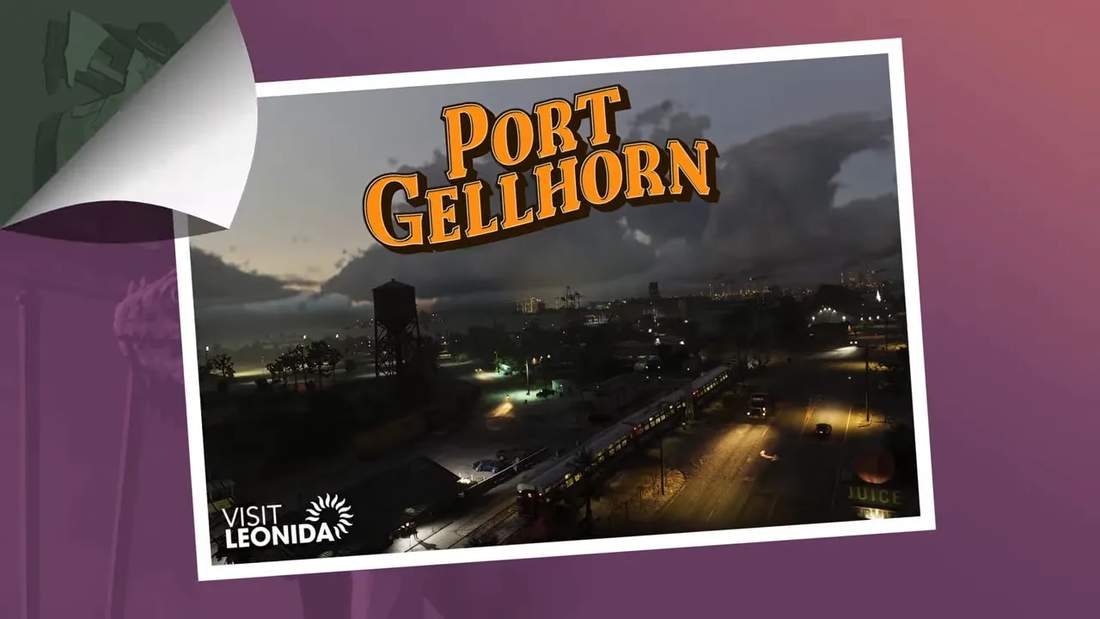
Roads are reportedly about 15% narrower than GTA 5’s, with denser traffic and an attempt at more believable rush-hour conditions. That could make a chase feel very different without changing the car itself.
The reported return of map fog means exploration gradually reveals the state. Is that how a modern phone map works? Not really. Do I prefer having a reason to head down an unfamiliar road? Absolutely.
19. Hundreds of interiors could give robberies more depth
The interior count is described as being in the hundreds, potentially surpassing previous Rockstar games. I like that for immersion alone. A city feels more convincing when its buildings are not all sealed boxes.
More importantly, those spaces are tied to the robbery system. Petrol stations, small businesses and banks are discussed as targets, with back rooms and alternative entrances rather than just a counter inside one room.
That gives exploration a practical purpose. Finding another way into a business could matter when deciding whether to sneak in or make an extremely loud entrance.
18. Missions are supposed to allow more freedom
One of the fairest criticisms of GTA 5 and Red Dead Redemption 2 is the gap between their open worlds and their tightly controlled missions. Outside a mission, almost anything goes. Inside one, taking the wrong route can feel like disobeying a stage direction.
The reported GTA 6 approach allows more room for stealth or direct combat, with cutscenes adapting to the method used.
I do not expect every cinematic encounter to become a Hitman-style sandbox. Rockstar’s bespoke animations and carefully staged sequences are still part of the appeal. But even a little more flexibility would be a meaningful improvement over being told exactly how to solve every problem.
Weapons, Combat and Robberies
17. Carrying an entire arsenal is apparently over
The reported weapon limit is two pistols and two long guns, but that description needs a little explanation:
- Pistols can be put away in pockets.
- One large weapon can be slung over a shoulder.
- A second large weapon has to stay in the character’s hands.
- Switching away from that second large weapon means dropping it.
The vehicle becomes the equivalent of the horse in Red Dead Redemption 2, with extra weapons stored in the boot. That makes preparation and parking location more important without necessarily shrinking the overall collection.

Attachments, modifications and multiple weapons filling similar roles are also described. The trade-off is less equipment instantly available, but more thought about what I actually bring.
16. People will notice a gun in public
NPCs are reportedly more responsive to visible weapons. A character can dynamically conceal a pistol, while a large firearm is harder to explain away.
People may comment or panic, but the precise consequences are unclear. I would not assume that every visible rifle immediately produces a wanted level, nor that every civilian response works the same way.
This sounds promising if it creates tension before a robbery. It sounds less promising if walking a few steps from the car becomes an endless cycle of police calls. The implementation is everything.
15. Focus is described as both a combat and planning tool
Focus reportedly goes beyond slowing time and marking targets. Its described uses include:
- Highlighting weak points on enemies and vehicles.
- Identifying robbery exits and security features.
- Helping with casing locations and opening safes.
- Spotting police through walls.
That last function becomes particularly important because police are said to no longer appear on the minimap in the usual way.
I read this as an attempt to move information away from a permanently cluttered interface and into an ability I actively choose to use. Whether that feels more immersive will depend on how often Focus becomes compulsory.
14. Non-lethal attacks and suppressing fire add options
The reported combat changes include disabling enemies with leg shots and potentially disarming them. A yellow aiming indicator is described as signalling a disabling hit that leaves an enemy out of the fight, rather than ready to start firing again a moment later.
Suppressing fire is another interesting addition. Shots near an enemy can apparently make them panic and take cover, creating an opportunity to flank them or escape.
None of that establishes that a fully non-lethal playthrough is possible. What it does suggest is a wider set of responses than simply eliminating everyone in the room. I like having those options, even in a series that has never exactly been short of gunfire.
Cars, Fuel and Things to Do Between Jobs
13. Vehicle theft has security tiers
Stealing a parked car is described as a more involved process, with different security levels. Older vehicles can apparently be broken into and hotwired, while newer or more expensive cars require equipment such as key-cloning devices.
Some tools are tied to story progression, making certain vehicles harder to access early on. Security can also extend beyond a noisy alarm, including a described system that reports the car’s location unless it stays above a certain speed.
Keeping a stolen vehicle permanently reportedly involves a registration fee, with higher costs for more expensive cars. Meanwhile, the classic approach of pulling a driver out still exists, but motorists may resist or struggle long enough to make a parked car the quicker option.
It is a substantial change for a series named after stealing cars. I just hope the extra steps create good stories rather than paperwork.
12. Petrol and electric cars need refuelling or charging
Cars are said to use fuel, with stolen vehicles potentially arriving with very different amounts left in the tank. Electric vehicles are described as needing dedicated charging stations.
The reassuring part is that fuel reportedly lasts a long time. The comparison is closer to the original Mafia’s occasional role-playing detail than a constant survival-game chore.
I can appreciate the occasional getaway complicated by a nearly empty tank. I am considerably less interested in organising every trip around a fuel stop.
11. Side activities cover a lot of ground
The activities discussed go well beyond a couple of sports and a shooting range:
- Pool, basketball and mini golf.
- Fishing and hunting.
- Kayaking and scuba diving.
- Shooting-range challenges.
- Backyard wrestling.
There are also criminal side jobs, including sourcing requested vehicles for fences and raiding gang hideouts for dirty money.
The density sounds almost excessive, in that Final Fantasy 7 Rebirth sort of way. But optional distractions are a big part of what makes a Rockstar world worth inhabiting rather than merely completing.
10. Drive-throughs and food provide practical bonuses
Drive-throughs are among the reported additions. Finally, an opportunity to turn an unnecessarily elaborate fast-food order into part of the routine.
Food is described primarily as a source of bonuses rather than a strict survival requirement. Coffee can temporarily improve stamina, protein bars can increase workout benefits, and larger meals provide greater health benefits.
Overeating can apparently affect appearance, although it is said to require a substantial amount. The health setup itself sounds simpler than Red Dead Redemption 2’s cores: a conventional regenerating bar, with food benefits extending the meter.
I am fine with that. Extra depth does not always need another set of circular gauges.
9. Jason and Lucia can both work out
Gyms are reportedly back, with exercise minigames available to both protagonists. They can apparently attend together, too.
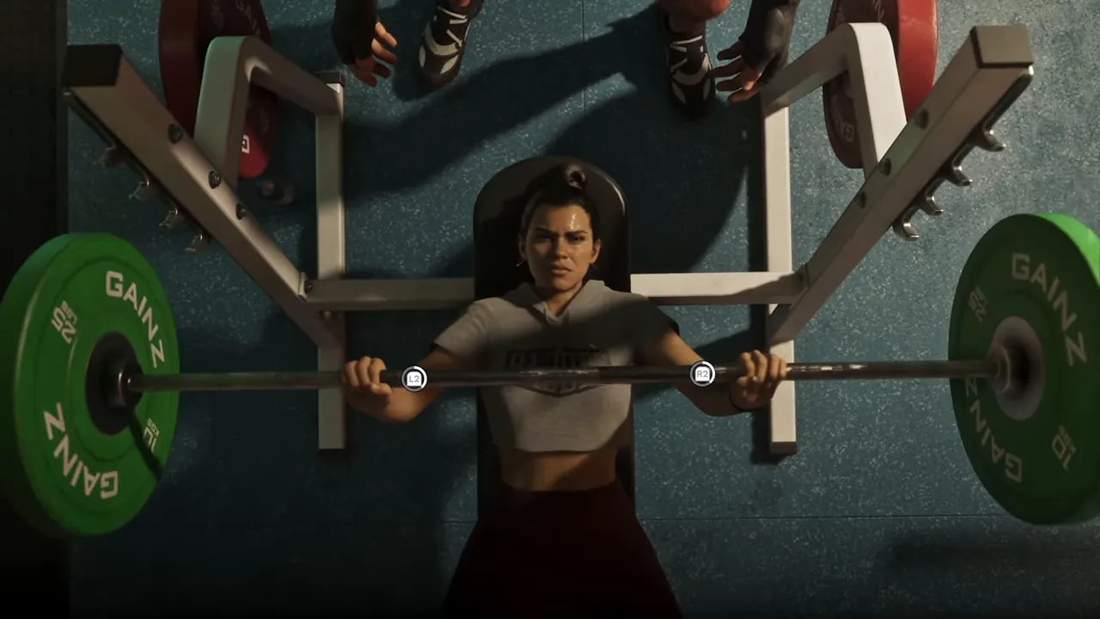
Regular exercise is described as improving health and stamina, with visible changes in muscularity at major milestones. Access requires a membership card, although whether that is purchased or gated by story progress is unclear.
The important part is that these upgrades are presented as optional, not necessary to finish the campaign. I like the San Andreas flavour without the implication that I have to schedule leg day before the next mission.
8. A health app tracks food, exercise and sleep
An in-game health app is said to make these systems easier to follow by tracking eating, workouts and sleep.
Insufficient sleep reportedly reduces the regeneration rate of some stats. Since health and stamina refill automatically, that could affect recovery after damage or exertion.
The severity is not clear. I would not assume Jason and Lucia become useless after a late night, but an occasional visit to a bed sounds like part of maintaining their condition. At least the app should make the effects less mysterious than they have sometimes been in earlier games.
Police, Money and Safe Houses
7. Six wanted stars return alongside a criminal profile
The reported return of a six-star wanted level is less interesting to me than the system underneath it. Police are described as building a criminal profile based on clothing, appearance, hairstyle, facial hair, the vehicle used and whether the protagonists are together.
That means escaping the immediate chase may not erase recognition. Laying low can help, but being seen again could revive the problem.
The suggested countermeasures are more varied than a quick respray:
- Use a disguise during the robbery.
- Change clothing or appearance afterwards.
- Swap vehicles.
- Split up when travelling together.
A hollow outline around the wanted stars is described as indicating that police do not know the suspect’s appearance. I like the distinction between “the police know a crime happened” and “the police know exactly who I am”. That could make evasion more interesting than simply driving beyond a search circle.
6. Money is divided into safe funds, cash and illicit proceeds
The reported economy separates money and valuables into different risk categories:
- Banked funds: money stored safely in an account.
- Cash on hand: spendable money that can be lost after death or arrest, with ATMs used to deposit it.
- Illicit goods: stolen valuables that need to be sold through a fence.
Marked banknotes add another complication because they reportedly need laundering before they can be used normally.
That gives a successful robbery an extra stage. Getting out of the building is not necessarily the same as securing the payday. It also makes the earlier possibility of one partner escaping with the loot sound much more consequential.
5. Safe houses unlock through the story
Safe houses are described as story rewards rather than properties I can simply buy. The comparison is to Red Dead Redemption 2’s camps, which serve as hubs for the current stage of the narrative.
It is unclear whether earlier homes remain usable after moving on. Garages, however, are said to be purchasable, providing storage for vehicles and illicit goods.
The homes themselves sound more interactive, with television channels, drinks, snacks, sleep and shared activities. Much of that may have little strategic importance, but I appreciate the lived-in quality. Sometimes making a place feel like home is enough.
Social Media, Travel and the Central Relationship
4. Social media reacts to the story
At least three major in-game social platforms are described, carrying posts, adverts and viral clips that change as the story progresses. Some content is said to respond to the protagonists’ actions.
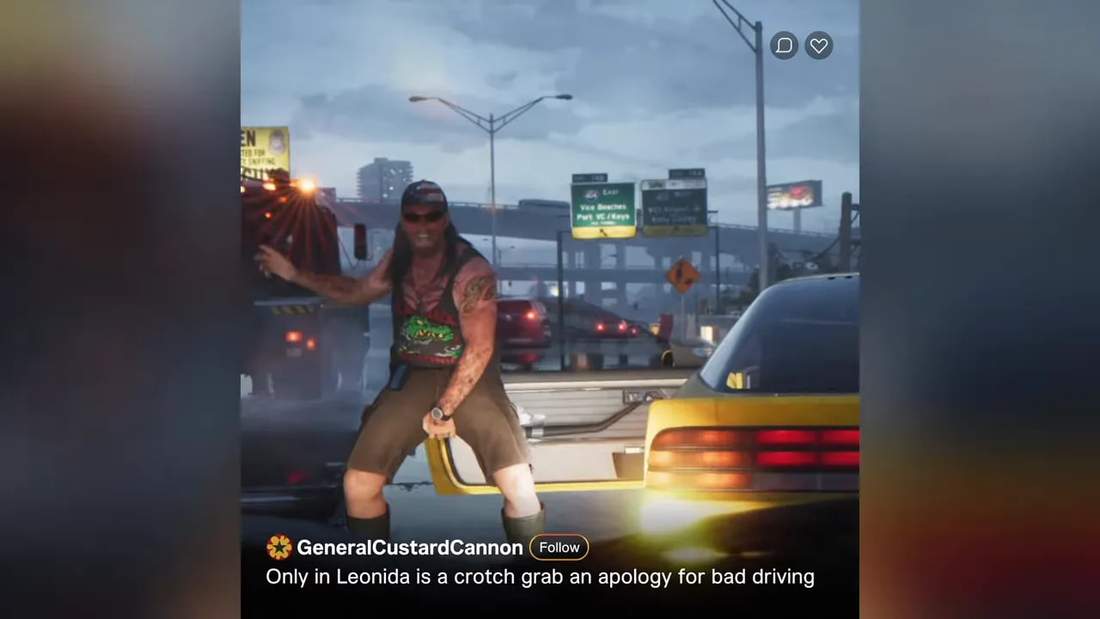
The interaction has limits. Jason and Lucia can text each other, but posting publicly, building online friendships and arranging dates through these platforms are not part of the described system.
Retail listings have also suggested that posts can reveal hidden missions, although that point is explicitly unconfirmed. Other side content is described as emerging from overheard conversations or a partner pointing out something nearby.
That is the part I find promising: several natural ways to stumble into a job, rather than every opportunity arriving as another icon.
3. Ride-hailing and partner driving offer alternatives to driving myself
A ride-hailing app is described as another way to get around, alongside the familiar taxi concept. As in GTA 4, there is apparently the option to stay in the car and experience the journey.
Travelling with another character can produce longer conversations. When Jason and Lucia are together, switching to the passenger is also said to let the partner drive towards the destination automatically.
I would distinguish that from confirmed instant travel. Whether partner-driven journeys can actually be skipped is unclear. Even without a skip, being able to browse the in-game phone while someone else handles the road could make long journeys less demanding.
2. The relationship can stay professional or become more romantic
A background relationship system reportedly tracks the bond between Jason and Lucia. Depending on how I play, it can remain more businesslike or lean further into romance.
There are suggestions that this affects the ending, but the scale of that influence is unknown. I would not assume that a low relationship score automatically means betrayal or a disastrous finale.
The description also makes clear that neglecting romance does not cause an early break-up that derails the game. The pair stay together; the variable is how close they become.
I like that flexibility. An open-world crime story can accommodate a romantic dimension without making every player engage with it to the same degree.
Release Date, Price and Storage
1. The reported launch details include a 212GB install
The launch information presented lists 19 November, a standard price of $79.99, and an Ultimate Bundle at $99.99. Those are dollar prices, not confirmed UK equivalents.
The Ultimate offering is described as including clothing packs, an exclusive gang raid, access to certain shops and a garage. That sounds more substantial than a purely cosmetic bundle, although the long-term value of those extras is difficult to judge from a list.
The reported installation size is 212GB. Preloading is also described as available in the pre-release information, but that is time-sensitive. I would check the current store listing before relying on availability, pricing, edition contents or storage requirements.
If that download size holds, my practical advice is simple: clear the space and preload when possible. Launch day is not when I would choose to discover how quickly a console can download more than 200GB.
The Big Change Is How These Systems Fit Together
The most exciting idea here is not any single feature. It is the possible chain reaction between them: choose equipment from the car, enter a business through a back room, manage a partner during the robbery, escape without revealing an identity, then turn stolen proceeds into money that is actually safe.
That sounds like a more grounded GTA, but grounded does not have to mean less entertaining. My enthusiasm comes from having more options, not from adding chores.
The balance will decide everything. I want preparation to matter without becoming administration, realism to create surprises without becoming punishment, and the partnership to offer more than another character portrait. If those pieces work together, that is a much more compelling leap than simply making Vice City bigger.