
I can forgive a video game adaptation for changing things. Different medium, different demands. What I have a harder time forgiving is an action movie with barely any action, a fighting game adaptation with lousy fights, or a horror film that replaces atmosphere with somebody explaining the plot.
These 20 movies and television shows find all kinds of ways to miss the point. Some barely resemble their source material. Others cram in recognisable characters and somehow understand them even less. A few are fascinating disasters with enough imagination to earn a little affection. Most commit the much less entertaining crime of being boring.
This is a countdown, not a rigid ranking. Borderlands appearing at number 20 certainly does not mean I think it is better than everything below it. Also, spoilers ahead, including some endings that practically demand an explanation.
Key Takeaways
- Weak action repeatedly undermines adaptations of action-heavy games, including Borderlands, Doom and Max Payne.
- Recognisable characters and Easter eggs cannot replace coherent storytelling.
- Unfaithful adaptations can still have personality, as the bizarre live-action Super Mario Bros. demonstrates.
- My biggest complaint is lost identity: these films and shows often discard what made their games compelling.
Table of Contents
- 20. Borderlands
- 19. Super Mario Bros.
- 18. Doom
- 17. Max Payne
- 16. Halo
- 15. Siren
- 14. Resident Evil: The Final Chapter
- 13. Mortal Kombat: Annihilation
- 12. Wing Commander
- 11. Silent Hill: Revelation 3D
- 10. House of the Dead
- 9. Mortal Kombat: Conquest
- 8. Mega Man: Fully Charged
- 7. In the Name of the King 2: Two Worlds
- 6. The Power Team
- 5. Mortal Kombat: Defenders of the Realm
- 4. Street Fighter: The Legend of Chun-Li
- 3. Tekken 2: Kazuya’s Revenge
- 2. Sonic Underground
- 1. Return to Silent Hill
- What These Adaptations Keep Getting Wrong
20. Borderlands
A Borderlands movie could work. I know that because Tales from the Borderlands already demonstrated that this universe can support entertaining, character-driven storytelling without relying entirely on shooting things.
The 2024 film manages to lose both halves of that equation. It is not particularly funny, and for an action movie based on an action game, there is remarkably little worthwhile action. What is there feels incomplete, with sloppy editing that makes me wonder whether the production had enough usable footage to assemble the sequences properly.
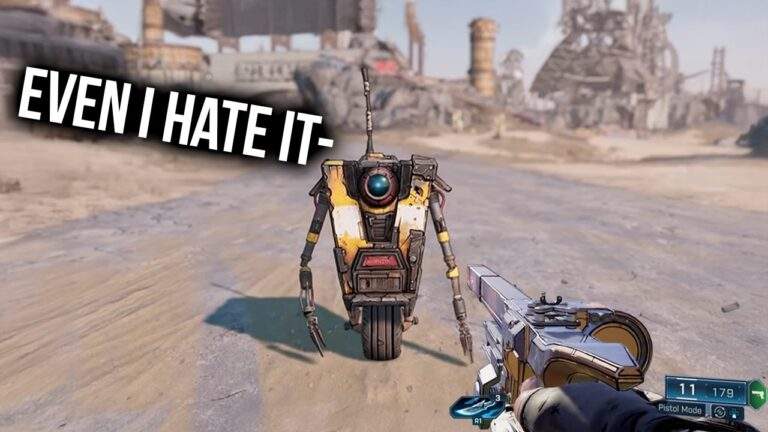
Then there is that cast. Kevin Hart barely gets to be funny. Jack Black somehow makes Claptrap more irritating than his game counterpart. Cate Blanchett leads the whole thing while being handed a character with almost nothing interesting to do. That is an impressive amount of talent to waste.
The basic premise should be straightforward, yet the plot feels confusing, overcomplicated and underwritten at the same time. Eli Roth directed, with Tim Miller handling reshoots, but the finished film never finds much momentum or personality. I was not expecting cinematic greatness. I would have settled for a few decent jokes and coherent action scenes.
This is not enjoyable bad cinema. It is just lifeless.
19. Super Mario Bros.
The live-action Super Mario Bros. was not the first Mario film. The animated Super Mario Bros.: The Great Mission to Rescue Princess Peach! arrived in Japan in 1986. But the American live-action outing became a particularly memorable example of what happens when a game licence and a completely different creative vision collide.
Directors Rocky Morton and Annabel Jankel, the creators of Max Headroom, seemed interested in making a strange science-fiction adventure. Mario got attached to that idea, whether he belonged there or not.
Bob Hoskins is genuinely good casting for Mario. Dennis Hopper could have made a terrific Bowser in a more recognisable adaptation, and he is amusing here through sheer Dennis Hopper energy. No ridiculous haircut is going to stop that man from putting in a performance.
The problem is tone. Cartoon slapstick, adult-oriented jokes and grotesque body horror all occupy the same film without ever becoming a convincing whole. I cannot tell whether it wants to entertain very young children or present an edgier alternative for adults.
Still, those cyberpunk sets and odd world-building details have personality. As a Mario adaptation, it is maddening. As a weird, offbeat failure, it has something. I would take an imaginative disaster like this over several of the joyless films elsewhere on this list.
18. Doom
I was more willing to give Doom some credit in 2005 because it occasionally tried to recreate something recognisable from the games. Looking back, those scattered gestures do not compensate for a dull Aliens imitation.
Dwayne Johnson is unusually short on charisma, Karl Urban does most of the heavy lifting, and Rosamund Pike gets very little to work with. For comparison, Urban’s Dredd is not based on a video game, yet its escalating action and tightly focused progression capture the appeal of a game far better than Doom does.
The film spends too much time standing around delivering exposition. It also replaces demons from Hell with transformed humans, as though the actual premise of Doom were something embarrassing that needed fixing. I do not need Doom to apologise for being Doom.
There is one major exception: the first-person action sequence. Created separately under the special effects supervisor, it has a different rhythm and energy from almost everything around it. It is easily the standout, and I suspect later first-person sequences in unrelated films took a few notes from it.
Unfortunately, one lively sequence cannot rescue an entire film that seems reluctant to deliver the thing named on the poster.
17. Max Payne
The Max Payne games draw from John Woo’s heroic bloodshed, noir and surreal psychological horror. The 2008 film mostly seems interested in looking like Sin City, without finding a compelling equivalent for the games’ personality.
Director John Moore, who also made A Good Day to Die Hard, replaces much of the expected high-energy gunplay with sluggish police drama and drug-induced imagery connected to Valkyr. That is a strange priority for an adaptation of a game so closely associated with bullet time.
Mark Wahlberg feels badly miscast as Max. Mila Kunis might have made an effective Mona Sax in a different production, but this version never gives her the direction or material to become that character. Ludacris turning up as the grumpy police authority figure does not make the ensemble feel any more convincing.
I keep returning to the same basic issue: if the appeal of the game includes spectacular action, the action cannot be the weakest part of the adaptation. Max Payne turns something stylish and intense into a dreary cop movie with occasional hallucinations.
16. Halo
The Halo television series, which ran for two seasons from 2022 to 2024, is frustrating because it is not consistently terrible from moment to moment. It does not look especially cheap. The cast is generally strong, and there are some impressive action sequences.
Seeing Master Chief outside his armour so frequently feels odd, but my bigger complaint is structural. The whole series plays like an extended introduction to the show I actually wanted.
The characters do not reach the Halo until the end of season two. Even then, the story has not simply arrived at the starting point of the first game in a straightforward way. There is plenty of background material in the Halo universe, so I understand the temptation to begin earlier. I just think a series called Halo needs to get to its defining setting before patience runs out.
I could accept one season of preparation. Compressing the essential material from both seasons into the first, then spending season two on the ring, would have made more sense to me. Cancellation makes the existing structure feel even worse: two seasons of groundwork for a payoff that never properly happens.
15. Siren
It is entirely possible to forget that Siren received a film adaptation in 2006. That is appropriate, because forgettable is its defining quality.
The original horror game came from Keiichiro Toyama, director of the first Silent Hill. Its distinctive ingredients include sightjacking, multiple protagonists and nonlinear storytelling. The film leaves those behind and becomes a fairly generic small-town Japanese horror story.
There is a siren, and some late zombie imagery resembles the game’s Shibito. Beyond that, the connection feels thin enough that a different title might have passed unnoticed.
I find it especially disappointing when a supposedly cinematic adaptation is less formally interesting than the game it adapts. Apart from an ineffective final twist, this one offers very little to remember.
14. Resident Evil: The Final Chapter
By The Final Chapter, fidelity to Resident Evil was hardly the central issue with Paul W. S. Anderson’s film series. That argument had left the building several instalments earlier.
I could accept nonsense as part of the package. What I cannot accept is nonsense becoming sluggish. This finale feels cheaper, less energetic and overly concerned with explaining its way out of accumulated loose ends.
It alternates between bargain-bin Mad Max: Fury Road imagery and exposition, while disposing of established characters in deeply unsatisfying ways. Wesker being crushed by a door is a particularly miserable send-off. Dr Isaacs becomes the ultimate villain, leaving the finale centred on a film-original antagonist rather than the game villains the series has already used up.
The continuity is ridiculous, too. The world’s oceans dry up, a later film builds a major sequence around a ship on the water, and then the finale returns to a dried-out wasteland. At a certain point, I stop trying to reconcile it.
I noticed a few plot ideas that oddly echo elements associated with Resident Evil Requiem, but that curiosity does not make this an entertaining conclusion. The earlier films could at least keep the absurdity moving.
13. Mortal Kombat: Annihilation
The original Mortal Kombat film worked as a relatively self-contained, entertaining adventure. Annihilation takes the opposite approach: throw in as many characters as possible and hope recognition substitutes for a story.
Characters appear, contribute almost nothing, and sometimes disappear almost immediately. The Easter eggs effectively become the plot. Between them are exposition scenes and fights that rarely justify the clutter.
Shao Kahn suffers badly. Instead of an intimidating warlord, he becomes a petulant son with family issues, spending surprisingly little time in the skull mask that helps define his appearance.
Then there is the final confrontation between Liu Kang and Kahn. The computer-generated creatures are spectacularly unconvincing. It is the sort of effects sequence that makes me wonder how nobody stopped and reconsidered the entire approach.
Fan service is not the same thing as understanding what fans enjoy. A coherent film with fewer characters would have been a much better tribute.
12. Wing Commander
Before Star Citizen, Chris Roberts took a shot at directing a Hollywood adaptation of Wing Commander. Being the creator of the games did not automatically make the leap to film successful.
The result combines obvious Star Wars influences with the conventions of a Second World War submarine movie. That mixture could potentially be entertaining, but here the borrowed tropes feel awkwardly transplanted into space rather than reimagined for it.
The central performances are unconvincing, although supporting actors such as Jürgen Prochnow and David Warner do their best with the material. Matthew Lillard supplies a little welcome personality, too.
Unfortunately, this is a space dogfighting film with weak computer-generated effects, so one of its biggest problems is unavoidable. Every return to the supposed spectacle exposes it again.
There are bright spots, but not enough to overcome the overall dullness. When a film’s most enduring talking point is that cinemas screened a trailer for The Phantom Menace before it, something has gone badly wrong.
11. Silent Hill: Revelation 3D
Christophe Gans’ first Silent Hill film captured much of the games’ visual identity and atmosphere, even where other elements were debatable. Revelation loses that crucial foundation.
It feels like an attempt to benefit from the renewed enthusiasm for 3D after Avatar, without anything approaching the resources needed to make the spectacle convincing. More importantly, its horror instincts are completely wrong for Silent Hill.
Instead of patient unease, there are repetitive jump scares, unimpressive monsters and clumsy storytelling. A toaster provides an early scare. That pretty much establishes the level.
Pyramid Head gets pushed into the story again, even though neither of these first two films is adapting Silent Hill 2. Vincent, meanwhile, is transformed from the third game’s unsettling figure into a handsome teenage love interest played by Kit Harington.
I do not object to changes simply because they are changes. I object when every change moves the material towards something less distinctive. Adding a jolt every few minutes does not prevent boredom when there is no atmosphere holding the film together.
10. House of the Dead
No collection of disastrous video game movies can avoid Uwe Boll for long. His run of adaptations was tied to German film-financing tax incentives, and the results vary mostly in how tolerable their badness is.
House of the Dead is not one of the entertaining ones.
Its most baffling decision is to splice actual game footage into the live-action film. Not footage being played by a character. Just game footage inserted into the adaptation itself, apparently to provide excitement that the film cannot generate.
That does not make the movie feel more authentic. It interrupts it while reminding me that the original arcade experience has more life than the supposed cinematic version.
I can appreciate an unusual editing choice when it has a purpose. Here, the purpose seems to be desperation.
9. Mortal Kombat: Conquest
A syndicated Mortal Kombat adventure series in the style of Xena: Warrior Princess is not inherently a terrible idea. Conquest, which began in 1998 and lasted one season, simply fails to give that idea much energy.
The pilot already feels like a tired episode from a series that has exhausted its best material. There is little urgency, few compelling hooks and a central cast that often comes across like supporting characters inexplicably promoted to leads.
The imbalance in action experience does not help. Daniel Bernhardt supplies convincing physicality, while the staging leaves Kung Lao feeling much less capable than the central Mortal Kombat hero should. A newly created character ends up carrying too much of the action.
Lengthy explanations, unnecessary arguments and slow plotting fill the gaps. It has the corniness of a 1990s fantasy adventure without enough of the enthusiasm that made those shows fun.
The finale does have one accidentally memorable quality: everybody dies, and then the series gets cancelled. What was supposed to be a cliffhanger becomes an unexpectedly bleak ending.
8. Mega Man: Fully Charged
I was not exactly holding the 1994 Ruby-Spears Mega Man cartoon up as untouchable television. Even so, Fully Charged makes that earlier interpretation look much more appealing.
The redesigns are rough, and the overall concept feels closer to a robot-themed Ben 10 variation than a convincing Mega Man series. Across 52 episodes, familiar Robot Masters compete for space with less interesting additions.
Dr Wily is not the main villain. Sergeant Breaker Night fills that role instead. The show also introduces a child named Bert Wily, which sounds like the setup for a reinterpretation of the familiar antagonist. Instead, he remains a friend. There is no villainous turn to make that choice pay off.
Those decisions might have worked if the replacement story and animation were compelling. I do not think either is. The animation never becomes appealing enough to overcome the disconnect.
A reinvention does not have to target existing fans exclusively. It does, however, need to offer something worthwhile in exchange for everything it discards.
7. In the Name of the King 2: Two Worlds
BloodRayne, Postal and Far Cry could all provide material for a discussion of Uwe Boll’s adaptations. The BloodRayne sequels are particularly rough. But In the Name of the King 2 stands out because its predecessor had a quality this sequel loses: entertaining ambition.
The first In the Name of the King, based on Dungeon Siege, is a ridiculous fantasy film with an absurdly substantial cast. Jason Statham, John Rhys-Davies, Ron Perlman, Ray Liotta and Burt Reynolds all turn up, while Matthew Lillard makes practically every scene he enters more entertaining.
I would not call it good. I would absolutely understand somebody making it a bad-movie-night fixture. It feels like Boll is actually trying.
The sequel trades that scale and cast for Dolph Lundgren and a much cheaper production. That is not a complaint about Lundgren. It is a complaint about a film that sends a man from Vancouver through a portal into what feels like medieval Canada, then struggles to make his wandering interesting.
The nonsense plot might have been forgivable with personality. Instead, it is low-effort fantasy without the first film’s peculiar charm. A third entry starring Prison Break’s Dominic Purcell is slightly better, which is not much of a compliment.
6. The Power Team
Captain N assembled a collection of Nintendo-associated characters into a cartoon crossover. The Power Team attempts something similar with Acclaim’s roster, which produces a much stranger group.
There is Max Force from NARC, Kuros from Wizards & Warriors, Kwirk and Tyrone from Arch Rivals. I do not think this is quite the all-star line-up the concept needs.
The bigger problem is that the stories barely make sense on their own terms. An early plot involves Mr Big destroying trucks carrying tomatoes. Other stories revolve around game cartridges that can send the characters home, except the heroes sometimes resist the villain’s attempts to send them home using those same cartridges.
I need the basic objective to remain consistent. Do these characters want to leave or not?
Some episodes benefit from genuinely decent TMS animation. That is the one substantial point in its favour. The confused plotting and awkward crossover premise do very little with it.
5. Mortal Kombat: Defenders of the Realm
I can enjoy cheesy Street Fighter material. The live-action film is far too entertaining to belong here, and even the cartoon has a certain ridiculous appeal. Mortal Kombat: Defenders of the Realm does not find the same balance.
Its first challenge is obvious: adapting a notoriously violent fighting series into a children’s cartoon where nobody is even implied to die. That does not make success impossible, but it removes a significant part of the property’s identity.
The voice cast suggests ambition. Clancy Brown and Ron Perlman are involved, and Luke Perry voices Sub-Zero. The simplified designs and dramatic skies appear to take cues from Batman: The Animated Series, but borrowing a visual approach does not reproduce the quality behind it.
The animation is painfully weak. Simplifying characters should make effective movement easier, yet the fights still look like an afterthought.
Meanwhile, the writing spends time on bizarre interpersonal sniping, including a subplot about Sonya mocking Jax for having been overweight at school. It is an astonishing priority for a Mortal Kombat story. I get the impression the drama interested the writers much more than the combat did.
4. Street Fighter: The Legend of Chun-Li
The Legend of Chun-Li has the opposite problem from an adaptation that embraces its characters too enthusiastically. It barely seems interested in being Street Fighter at all.
It feels like a generic action script with a few familiar names added afterwards. I cannot prove that is how it originated, but the disconnect is that severe.
Michael Clarke Duncan as Balrog is the one casting choice I can see working immediately, and he is underused. Elsewhere, Chun-Li never acquires the convincing physical presence the role demands, while Neal McDonough’s M. Bison comes across as a strange, generic Irish gangster.
There are magical scrolls and scattered references, but none of them supplies the larger-than-life energy I associate with Street Fighter. When something recognisably game-related finally appears, it feels intrusive rather than natural.
I would rather have an adaptation risk looking ridiculous while embracing the source than drain away everything distinctive in pursuit of bland seriousness.
3. Tekken 2: Kazuya’s Revenge
The title starts the confusion. Tekken 2: Kazuya’s Revenge is a prequel rather than a continuation, and Kazuya does not meaningfully get the revenge being advertised.
Where The Legend of Chun-Li feels like a generic action film populated with renamed characters, this barely bothers with the recognisable Tekken cast at all. The first Tekken movie at least had some decent fights. This one cannot reliably offer even that.
Instead, it builds a needlessly obscured mystery around a protagonist identified as “K”. The film treats his identity as a revelation even though Kazuya’s name is sitting in the title. I am not sure who is supposed to be fooled.
Cary-Hiroyuki Tagawa’s appearance as Heihachi supplies one of the few meaningful connections to Tekken. Beyond that, the film feels too under-resourced and dramatically empty to justify its own existence, never mind the licence.
2. Sonic Underground
Sonic Underground is a 40-episode fever dream built around Sonic, his brother and his sister forming a band while searching for their mother. All three central characters are voiced by Jaleel White.
I do not dislike White. I just do not think giving him all three siblings was the solution this show needed.
The series borrows some elements from the earlier Saturday morning Sonic cartoon, including Robotnik’s domination and the SWATbots, then surrounds them with a family quest and musical numbers that feel disconnected from the games.
The songs are a major problem. The Donkey Kong Country cartoon had embarrassing musical moments, too, but at least some of those were funny. These rarely reach that level of accidental entertainment.
Previous Sonic cartoons already took liberties with the source material. Underground stretches that connection so far that I struggle to see what the reinvention gains from being Sonic in the first place.
1. Return to Silent Hill
Perhaps recency makes this one sting more, but Return to Silent Hill frustrates me in a way that a barely recognisable adaptation does not. Christophe Gans is sincerely attempting to adapt Silent Hill 2, and I think the film makes the wrong decision at practically every important turn.
The game’s subtlety and emotional unease become blunt exposition. James is recast as a more conventionally edgy figure. Mary’s story becomes entangled with the town’s cult, while the female characters are treated as aspects of Mary rather than being allowed their own dramatic weight.
A therapist explains too much. The scares lack atmosphere. The things that make Silent Hill 2 disturbing are replaced with more obvious, less effective ideas. In an unfortunate reversal, it resembles the clumsy adaptation some people feared Bloober Team’s remake would become.
I can acknowledge that individual images work in isolation. This is not necessarily the least technically accomplished film here. That almost makes the larger failure more aggravating: recognisable imagery is present, but the meaning holding it together has gone missing.
The clearest example is the unambiguously happy ending involving time travel. For this particular story, that is not a minor adjustment. It fundamentally changes the emotional destination.
I would have preferred a film loosely inspired by Silent Hill 2 to one that recreates its imagery while dismantling its dramatic purpose.
What These Adaptations Keep Getting Wrong
I do not need every video game movie or show to reproduce every plot point, costume or mechanic. Super Mario Bros. proves that I can find something worthwhile in a wildly unfaithful interpretation, while Mortal Kombat: Annihilation proves that stuffing in familiar characters does not guarantee anything.
I need an adaptation to understand what makes the original compelling, then find a cinematic way to deliver it. For Doom and Max Payne, that includes forceful action. For Halo, it means eventually reaching the setting promised by the title. For Silent Hill, it means atmosphere and psychological weight, not just fog and a recognisable monster.
A strange failure can still have imagination. A ridiculous film can still be fun. The adaptations that leave me most disappointed are the ones that lose the game’s identity and replace it with absolutely nothing.