
Phantom Blade Zero looked almost too good to be true when it first appeared. The speed, the choreography, the ridiculous weapon attacks: it had that quality where I wondered whether an actual game could deliver on the promise. After playing it, I think S-Game has pretty much nailed that vision.
The bottom line is simple: Phantom Blade Zero is a really fun action game. Exploration and progression are relatively straightforward, there are some annoying rough edges, and parts of the story didn’t work for me. But the combat and spectacle absolutely carry it. More importantly, the fighting isn’t just impressive to look at. It feels good to do, and it gets better as the game opens up.
My impressions come from a review copy played on PC. Phantom Blade Zero is listed for PC and PS5, but my performance comments apply only to my PC experience. I’m also keeping the story and later surprises spoiler-free, because some of the wild stuff this game throws out is worth discovering for yourself.
Key Takeaways
- I found a stylish action adventure rather than a Soulslike, with selectable difficulty and fair but challenging bosses.
- Distinct weapons, Soul Edges, and upgrades that unlock mechanics make experimentation genuinely rewarding.
- Uneven storytelling, occasional targeting issues, and awkward environmental collisions are the main drawbacks.
- My PC experience was mostly smooth, but demanding tracing settings caused some frame drops.
Table of Contents
- A Strange World and a Hero Running Out of Time
- It’s Not a Soulslike, and That Matters
- How Phantom Blade Zero’s Combat Works
- Weapons I Actually Wanted to Experiment With
- The Real Selling Point: Feeling Like a Martial Arts Monster
- Light Exploration, Strong Pacing, and Increasing Spectacle
- The Clunky Bits Are Worth Knowing About
- Visuals and PC Performance
- Is Phantom Blade Zero Worth Buying?
A Strange World and a Hero Running Out of Time
I play as Soul, a powerful warrior who trained under a master alongside a rival. After things go very wrong, Soul is left for dead. A godlike being saves him by replacing his heart with a magical one, but there’s a catch: it only buys him a matter of days.
That’s the starting point for a journey through a fractured world full of competing factions, strange afflictions, creatures, and both physical and metaphysical spaces. There are twists, time jumps, and a whole lot of terminology to get your head around.
Sometimes that’s interesting. Sometimes it’s a bit much. I didn’t connect with every chunk of the story, although it becomes more engaging once it gets moving, and I liked a lot of the characters. Excellent music and strong visual presentation also do plenty of work to make this world appealing.
Still, if I’m recommending Phantom Blade Zero, the story isn’t my main selling point. The actual moment-to-moment action is.
It’s Not a Soulslike, and That Matters
I went in half-expecting another Soulslike that would grind me into dust. That isn’t really what this is. Phantom Blade Zero feels closer to an old-fashioned action adventure, with something for the Ninja Gaiden crowd in particular.
There are three difficulty settings available initially, with a fourth unlocked after finishing. The structure is fairly linear, but there are side objectives, optional areas, and reasons to return to earlier locations. Sometimes that means following a side quest. Sometimes a new ability opens a route that wasn’t accessible before.
There are also plenty of bonfire-style save points where I can save, heal, and level up. That familiar imagery doesn’t make it a Soulslike, though. Enemies generally don’t respawn in the same way, and the overall rhythm is much more about pushing through an action adventure than repeating a punishing combat loop.
Accessible Doesn’t Mean Effortless
Parrying is still a huge part of the combat, but the game has its own approach, and it’s more generous than its appearance might suggest. I wouldn’t confuse that with being easy.
On normal difficulty, I found a satisfying, fair challenge. Basic enemies are often there to be torn through, while bosses are where the resistance really kicks in. Some took several attempts and made me pay attention, but I didn’t feel as though I’d hit an absurd wall that might stop me finishing the game.
If extremely difficult action games are your comfort zone, this might not push you that hard. For me, it landed in a good spot: demanding enough to be engaging without making every victory feel like a major life event.
My advice for the opening is to stick with it if the combat initially feels awkward or difficult. There’s a learning curve, and the sense of control and power improves considerably once its timing starts to click.
How Phantom Blade Zero’s Combat Works
The basic controls are easy enough to understand. One trigger handles dodging, the other handles blocking and parrying, and Soul has light and heavy attacks. The interesting part is how those actions interact with the combat meter and the different attacks coming towards him.
- Blocking spends meter. Absorbing repeated hits wears it down.
- Timed parries preserve meter against basic attacks. Getting the timing right leaves more room for offence.
- Special combos also spend meter. The right attack inputs produce stronger combinations, but they draw from that same resource.
- Blue-flash attacks offer a perfect-parry opportunity. Responding correctly can give Soul an advantage.
- Red attacks offer a perfect-dodge opportunity. A well-timed dodge provides a bonus.
There are ominous black-and-white attacks as well. Without pretending this is a complete combat manual, my basic reaction to those is: pay attention, because something nasty is coming.
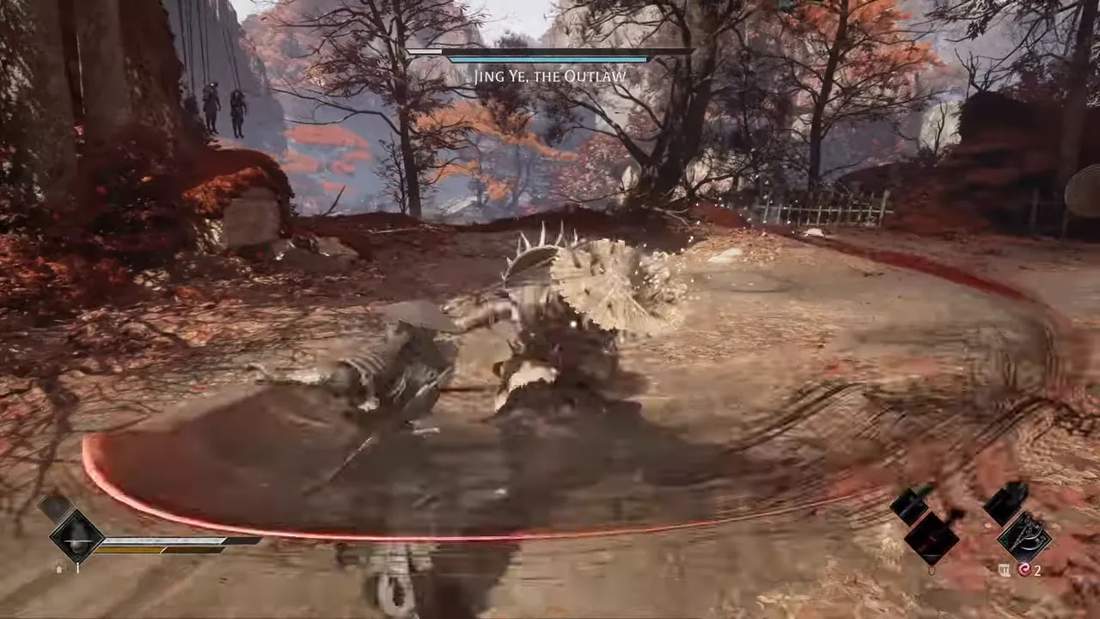
I can also switch weapons in the middle of a combo, with a cooldown attached to that mechanic. That matters because the game isn’t built around doing one rigid string, stopping, and starting again. It wants me to link attacks together and keep the pressure going.
Soul Edges Add the Ridiculous Stuff
Soul Edges are powerful, limited-use special weapon attacks, and they’re a big part of the fun. The selection includes things like:
- A throwing dagger that lets Soul teleport.
- A giant axe for a huge downward smash.
- A massive gun cannon that he can pull out for an attack.
- Fist gauntlets that can break an enemy’s shield.
- Chain axes and other unusual options found throughout the game.
There’s a surprising amount of variety here, with different uses rather than just different visual effects. Soul Edges can be upgraded, like the main weapons, and swapped in and out at any time. They give me another tool to work into a fight rather than replacing the importance of the regular weapon movesets.
Weapons I Actually Wanted to Experiment With
I’m usually a sword guy. In plenty of action games, I find one weapon type that feels comfortable and stick with it. Heavy, slow weapons generally aren’t my thing.
Phantom Blade Zero got me using the weird stuff I would normally ignore. That’s probably the clearest compliment I can give its weapon design.
Many of the main weapons feel genuinely distinct. They have their own strengths, weaknesses, situations where they shine, and little secondary mechanics to learn. Switching between them is satisfying, and finding something new made me want to test it rather than immediately return to my usual setup.
Upgrades Do More Than Raise Damage
Weapon upgrades require resources and currency, and yes, part of the reward is better stats. But certain upgrade milestones also unlock additional mechanics.
Depending on the weapon, that might mean spending meter to temporarily power up a sword, gaining an advantage within a combo, or getting an alternative use for the weapon. Those additions make the upgrade process feel more meaningful than simply nudging a damage number upwards.
That also gives exploration a practical purpose. I want those materials because upgrading a weapon I enjoy can make it more interesting, not merely stronger.
The skill tree follows a similar progression. Early unlocks are fairly modest, such as another special attack point for Soul Edges. Later on, it starts offering more substantial changes, including allowing certain manoeuvres without cancelling a combo. As those options accumulate, Soul becomes much more capable of keeping an attack sequence alive.
The Real Selling Point: Feeling Like a Martial Arts Monster
There’s a very particular thing I want from this kind of game. I pull off something ridiculous, maybe even partly by accident, and have that moment of, “Wait, I just did that?” Phantom Blade Zero delivers that feeling constantly.
The finishers, attacks that catch multiple enemies, and animations flowing into one another all contribute. Whether I’m dismantling a group of weaker opponents or working through a tougher fight, the game sells the idea that Soul is an absurdly powerful warrior.
A satisfying sequence might start with light attacks, move into a heavy combo, continue through a weapon switch, and end with a Soul Edge attack. It builds and builds until I’ve completely overwhelmed the enemy. That’s the appeal. Not just landing one impressive hit, but stitching several different things into a spectacular run of offence.
The animation is crucial. Different weapons have varied, convincing movements, and the transitions between attacks make the combinations feel cohesive. The martial arts influence is obvious in the choreography. The marketing highlighted Donnie Yen’s involvement with the game and motion capture, but what matters to me is that the attention to action choreography comes through in ordinary combat.
If you like kung fu films or action cinema, there’s a lot to appreciate just in the way Soul swings a weapon. I found myself trying out newly unlocked moves simply because they looked so cool.
There Is an Adjustment Period
That animation-heavy approach can feel strange at first. Parrying initially felt a little soft or squishy to me, as though the characters were performing elaborate movements I didn’t entirely control.
With more time, I understood what the game was asking for, and that feeling largely went away. Once it clicks, the combat can feel incredibly smooth.
Still, I wouldn’t describe it as having the razor-sharp precision of something like Sekiro. This is more about fluid action and power fantasy than that particular kind of exacting sword-fighting discipline. For me, that distinction worked in its favour.
Light Exploration, Strong Pacing, and Increasing Spectacle
Exploration is deliberately light. There are optional corners, locked doors, keys to find later, and places worth revisiting. I’m not spending the whole game untangling a sprawling world, but there’s enough beyond the main path to make poking around worthwhile.
The level design does a good job of giving those detours satisfying little nooks and crannies. Useful upgrade loot helps, too. Finding a resource has a clear connection to making my favourite weapons better.
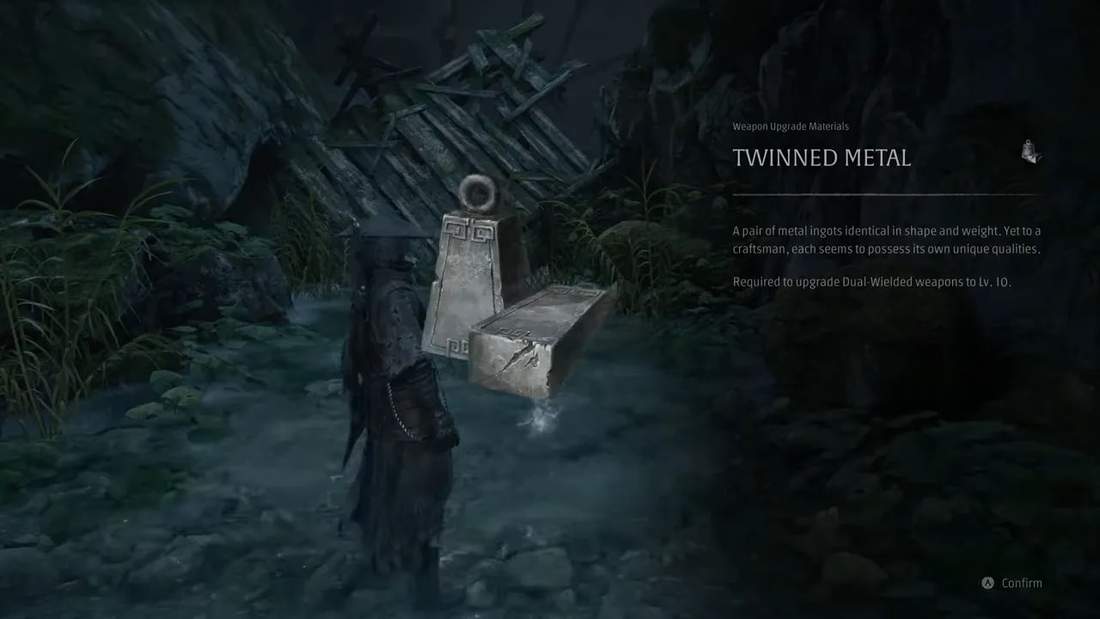
What impressed me more was the pacing. New areas, enemy types, and major fights arrive regularly enough to keep the adventure moving. The connections between locations and the way enemies from different areas are introduced feel thought through. Often, the game gives me a taste of something before making it a bigger part of the experience later.
As it progresses, the spectacle gets increasingly nuts. Some bosses are downright wild, both in their design and in what the fights ask me to handle. I don’t want to spoil those surprises, but the escalation is a big reason the journey stays entertaining.
The important thing is that the challenge still serves the fun. The bosses can push back hard without turning the whole adventure into an endurance test.
The Clunky Bits Are Worth Knowing About
For all my enthusiasm, there are a few recurring annoyances.
- Lock-on isn’t always reliable. Occasionally, targeting feels less cooperative than I’d like.
- Corners can make fights messy. Getting pressured against the edge of an area can leave the action difficult to see.
- Small obstacles can stop Soul. I sometimes got caught on bits of geometry that looked trivial, such as a low rock.
Those moments are frustrating precisely because the rest of the combat flows so well. I can be moving through a stylish fight and then get jammed up by something that barely reaches Soul’s shins.
I wouldn’t say these problems define the experience, but they’re real rough edges. Combined with the story sections I didn’t enjoy, they’re the main caveats behind an otherwise very positive impression.
Visuals and PC Performance
Phantom Blade Zero can look fantastic. Some stretches are more visually ordinary, but the strongest environments have striking art direction, impressive scenery, and bosses whose designs fit beautifully into their surroundings.
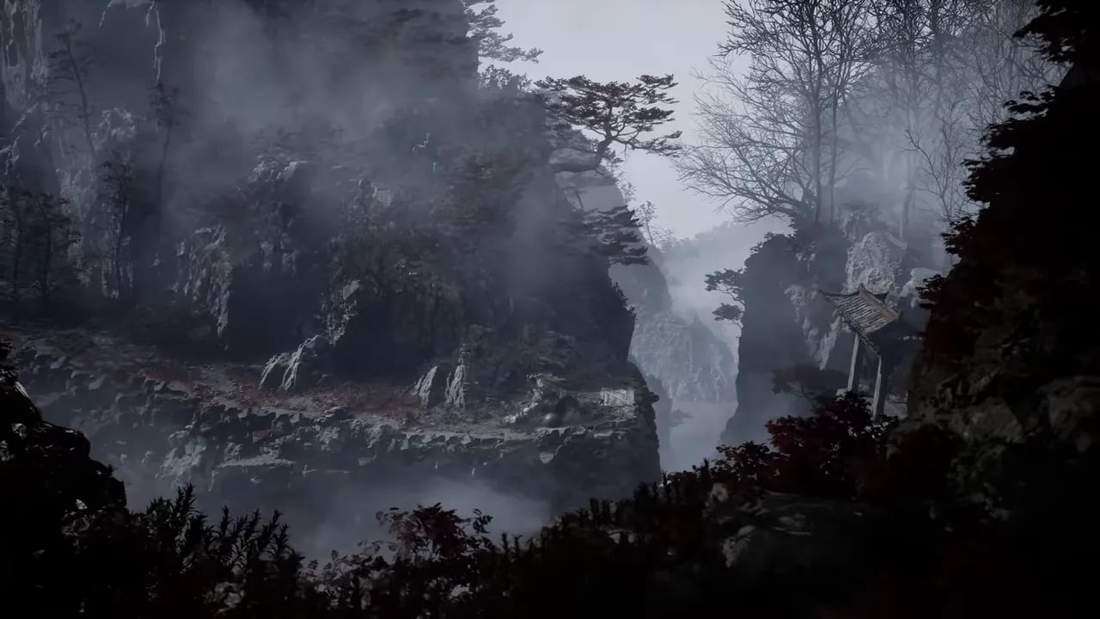
The smooth character animation does a lot of the heavy lifting, too. Good environmental art is one thing; having that backdrop support such fluid action makes the whole presentation more effective.
My PC experience was mostly smooth, although I did encounter frame drops while trying to push the graphics settings, particularly with ray tracing and path tracing. I was deliberately testing the more demanding options, so I wouldn’t turn that into a blanket statement about how it will run on every machine.
I’d check performance reports from people with hardware similar to yours before buying. As more reports become available, the reviews linked through Steam’s Phantom Blade Zero search results are one place to look. My generally good experience doesn’t guarantee identical results on a different PC, and I can’t draw conclusions about PS5 performance from this playthrough.
Is Phantom Blade Zero Worth Buying?
I came away liking Phantom Blade Zero a lot. I expected something punishing and familiar, and instead got a strange, occasionally quirky action adventure with memorable characters, wild spectacle, and combat that kept making me want to try another weapon.
There’s a substantial game here, too. I’d comfortably describe it as something I could spend 40 hours with, rather than a short showcase built around a handful of flashy fights.
If your priority is an intricate story or perfectly precise combat with no awkward edges, I’d temper expectations. If you want a stylish action game with generous defensive mechanics, meaningful weapon variety, and bosses that challenge without completely crushing you, this is much easier for me to recommend.
What I appreciate most is that it knows what it wants to be. The combat, animation, progression, and pacing all support the same goal: making it fun to play an outrageously capable warrior. It doesn’t feel confused about that. And, man, when it all comes together, it delivers.