
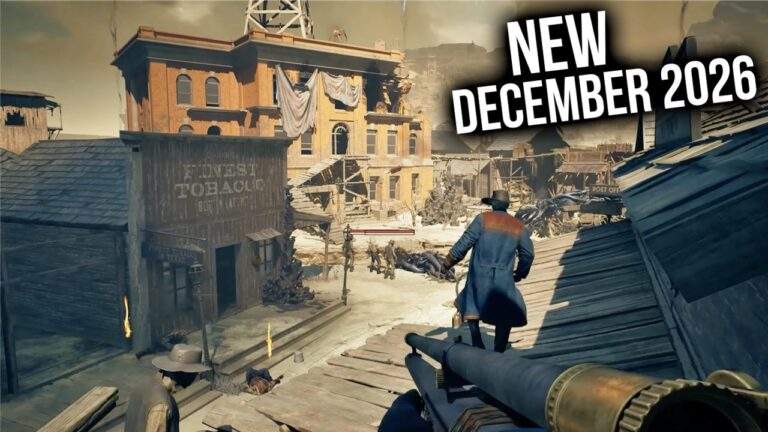
I could make a reasonable argument that December ought to be a quiet month. A little breathing room, a chance to deal with the backlog, perhaps an opportunity to finish something before buying three more things. Apparently, that is not the plan.
December’s line-up has classic franchises coming back, a massive action RPG heading towards its full release, and smaller games with wonderfully questionable premises. Supernatural hotel renovation? Sure. Organised crime committed by raccoons? Obviously. A relaxing farming game where the objective is to kill the entire field? Somehow, also yes.
These are my ten picks for the new games of December 2026, with the scheduled release dates and platforms for each. As always with upcoming releases, those plans can change.
Key Takeaways
- December’s scheduled releases mix returning franchises with unusual smaller games, from raccoon heists to haunted hotel renovation.
- 3 December is especially busy, with Rayman Legends Retold, Thief Remastered, Dumpster Gang and Dawn of War IV planned.
- Path of Exile 2 targets its full free-to-play launch on 11 December, with expanded campaign content.
- Dawn of War IV leads my picks with base building, four factions and more than 70 campaign missions planned.
Table of Contents
- 10. Rayman Legends Retold
- 9. Thief: The Dark Project Remastered
- 8. Dumpster Gang
- 7. There Are No Ghosts at the Grand
- 6. Unharvest
- 5. Professor Layton and the New World of Steam
- 4. Guns of Eschaton
- 3. Path of Exile 2
- 2. Attack on Titan 3
- 1. Warhammer 40,000: Dawn of War IV
- A December That Refuses to Be Quiet
10. Rayman Legends Retold
Scheduled release: 3 December 2026
Platforms: PS5, Xbox Series X|S, Nintendo Switch 2 and PC
Rayman Legends was one of the best 2D platformers of its generation when it arrived in 2013. Bringing it back makes sense. What interests me about Retold, though, is that Ubisoft is doing more than sharpening the picture and sending it back out the door.
This is a rebuild with a new visual style, an expanded story and additional content. The original’s distinctive hand-drawn presentation gives way to fully 3D visuals, while the gameplay remains side-scrolling. That is a substantial aesthetic change for a game whose artwork was such a big part of its identity.
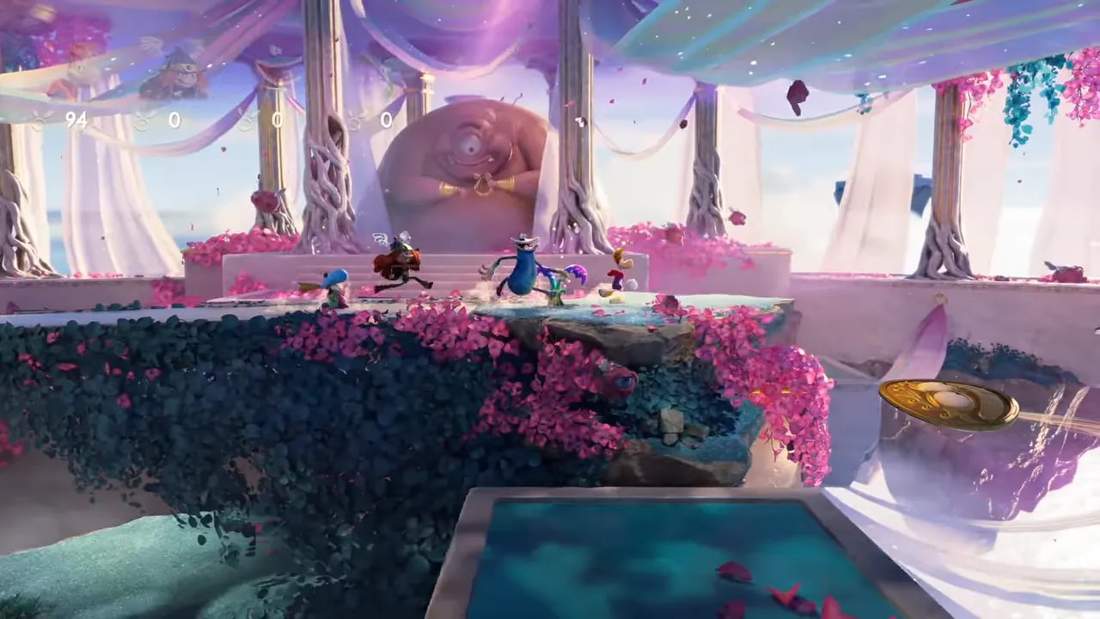
The additions include a sixth realm, dragon-riding sequences, fully voiced cinematics and a new villain. There are also four extra music stages. Personally, that last bit is a pretty effective sales pitch. The musical levels were among the original’s best ideas, so expanding that part sounds entirely sensible.
Four-player co-op returns, which is exactly the kind of cheerful chaos I want from Rayman. There is also an enhanced version of Rayman Origins included. That is another excellent platformer, and it makes this a much more substantial package for anyone who missed both games.
Retold moved from October to December despite Ubisoft having already announced that it had gone gold. The stated reason was additional polish. I am certainly not going to complain about a little more time spent getting a platformer’s details right.
9. Thief: The Dark Project Remastered
Scheduled release: 3 December 2026
Platforms: PlayStation and Xbox consoles, Nintendo Switch systems and PC
When Thief: The Dark Project came out in 1998, plenty of first-person games were about shooting whatever moved. Thief asked a much more interesting question: what if getting into a fight meant the plan had already gone wrong?
I still find that distinction important. As Garrett, a master thief working in a dark, medieval-inspired city, the goal is to slip into places, steal valuable things and leave without attracting attention. Guards, supernatural creatures and wealthy people with insufficiently secure possessions all complicate the process.
Light and sound are fundamental mechanics, not just atmosphere. Shadows provide cover. Distractions create openings. The surface under Garrett’s feet matters because guards can hear movement. A quiet route can be more valuable than a direct one, and a sword fight is generally a sign that subtlety has left the building.
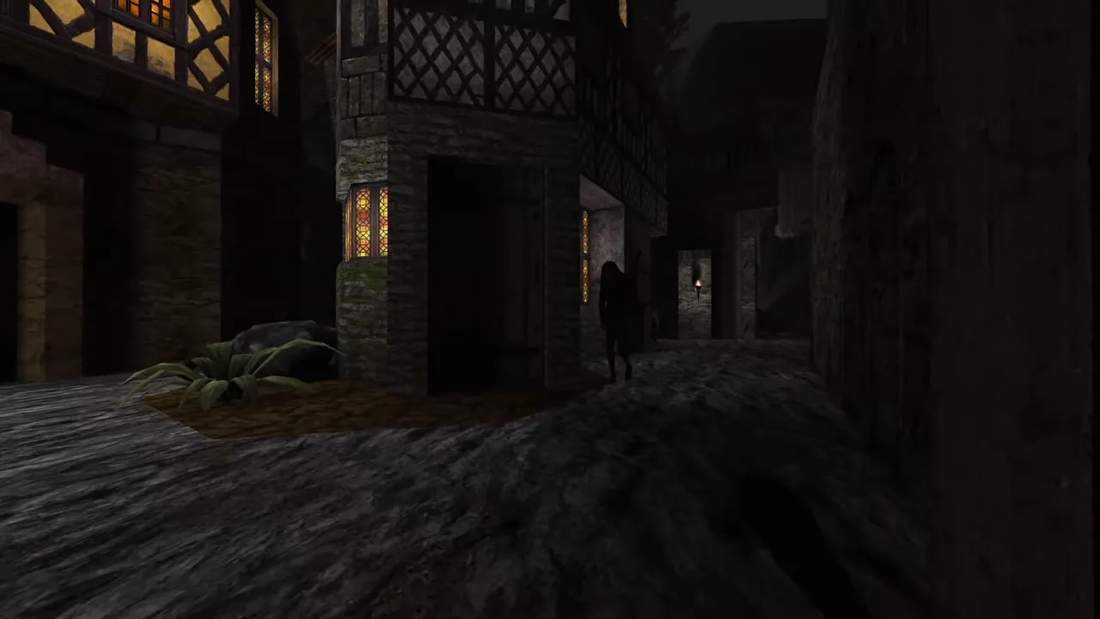
Nightdive Studios is handling the remaster using its KEX engine, with improved textures, models and animations, modern controller support, and support for resolutions up to 4K and frame rates up to 120fps. Given the studio’s work reviving older games, including System Shock, I am interested in what it can do here.
The package also includes the extra missions from Thief Gold and a new four-mission campaign, The Tarnished Mirror, set after the original story. Built-in custom campaign support is another substantial addition. For a classic immersive sim with such a persistent creative community, making those campaigns accessible matters just as much as making the walls prettier.
For background on the original’s design and history, the Thief: The Dark Project overview is a useful companion. This is a return to a very particular kind of stealth game, and that is precisely why it interests me.
8. Dumpster Gang
Scheduled release: 3 December 2026 on PC
Console versions: Planned for March 2027
Raccoons look like tiny criminals who have somehow negotiated an exemption from consequences by being adorable. Dumpster Gang takes that observation and builds a cooperative sandbox around it. I cannot really argue with the premise.
Up to four players become raccoons breaking into places, stealing loose objects and generally being terrible neighbours. This is a heist game, except nobody involved is a professional. Everyone is a trash panda, and responsible behaviour would frankly undermine the concept.
The action revolves around physics-based interactions. Objects can be picked up, thrown and knocked over. Walls can be climbed, vents provide routes through buildings, and the environment offers plenty of opportunities to turn a simple job into a much bigger problem.
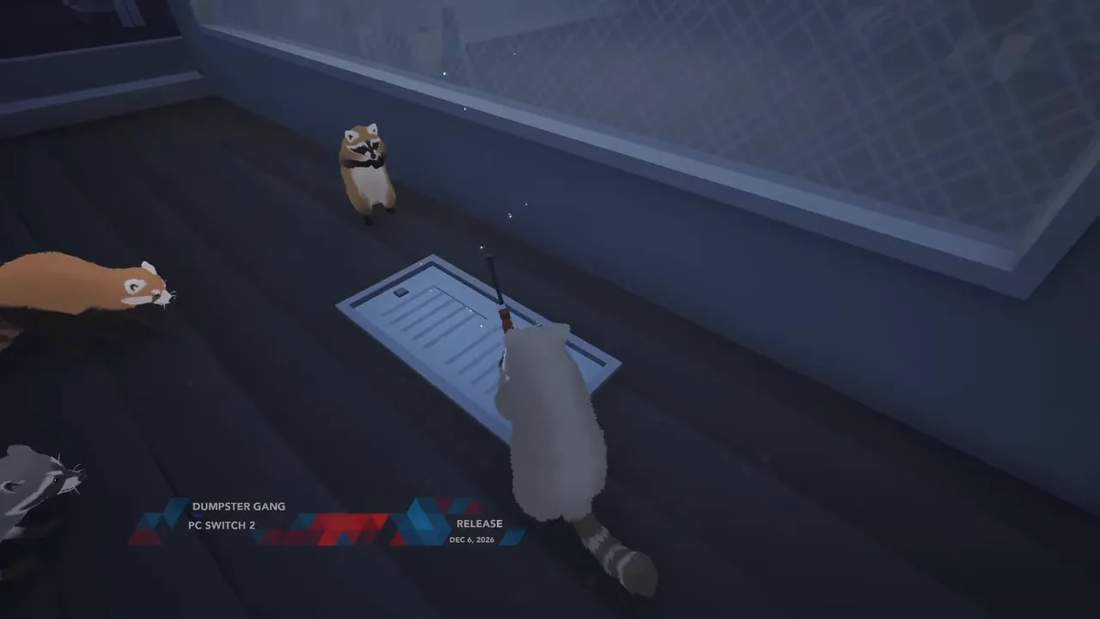
There are actual objectives beneath the nonsense: missions, loot and puzzles that require cooperation. Captured teammates also need rescuing, so when somebody inevitably makes a bad decision, the rest of the gang inherits the consequences.
The exterminator adds pressure by hunting the raccoons. My immediate mental comparison is a persistent horror-game pursuer, although I would not assume the behaviour works exactly like Resident Evil’s Mr. X. The important part is that there is something pushing back against all that recreational vandalism.
I get a little Untitled Goose Game energy from the balance between completing objectives and being an absolute nuisance. Add three friends, physics and a rescue operation that probably should not have been necessary, and I can see the appeal.
7. There Are No Ghosts at the Grand
Scheduled release: 16 December 2026
Platforms: PC and Xbox Series X
Demo: Available on Steam at the time of this preview
Some games have one clear idea. There Are No Ghosts at the Grand appears to have collected about six and decided that choosing between them was unnecessary. It is a first-person hotel renovation game, a supernatural mystery, a horror game and a musical. Also, the tools talk.
I am intrigued. Confused, certainly, but intrigued.
The setup follows Chris David, an American who inherits a rundown hotel in a small English seaside town. There are 30 days and 30 nights to restore it. Unfortunately, the building is haunted, the locals are hiding things, and a normal renovation schedule is apparently out of the question.
During daylight, the work resembles House Flipper or PowerWash Simulator. Strip paint, demolish old furniture, redecorate rooms and make the place look less like a crime scene. At night, the same equipment becomes a supernatural arsenal.
- The vacuum sucks up ghosts in a distinctly Luigi’s Mansion-like fashion.
- The paint sprayer reveals invisible enemies.
- The furniture cannon can launch a bookcase at something trying to kill Chris.
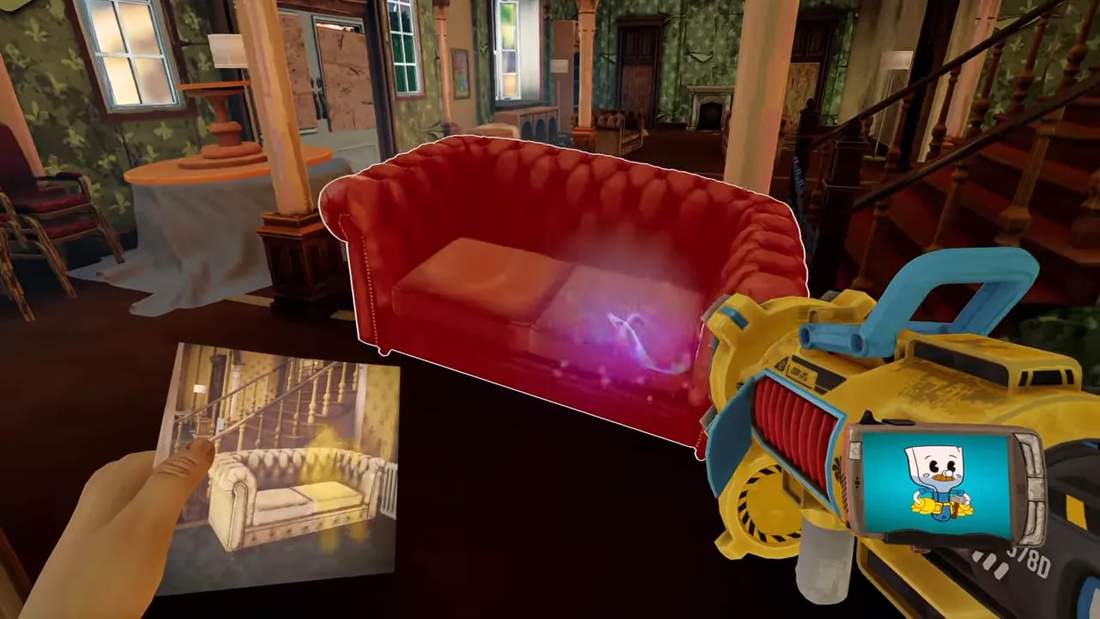
Honestly, firing a bookcase is not the worst emergency response to a haunted hotel.
Then there is the music. Characters break into songs spanning ska, punk and jazz, and dialogue choices determine whether Chris sings back. I do not yet have a neat explanation for how all these parts fit together, but the combination is unusual enough to make the demo a priority for me. There is a big difference between a strange premise and a strange premise that works. I want to find out which one this is.
6. Unharvest
Scheduled release: 7 December 2026
Platform: PC via Steam
Demo: Free demo available
Most farming games ask me to nurture crops, improve the land and gradually build a pleasant agricultural life. Unharvest points at the wheat field and asks what would happen if I killed all of it.
It is a first-person incremental game about draining life from the environment through a supernatural plague. Touch plants, make them wither, collect resources and invest those resources in becoming more efficient at destroying plants. It is almost the reverse of the usual farming fantasy.
The progression is the hook. Early on, individual plants require attention. Upgrades increase the plague’s speed, reach and area of effect until small acts of destruction become large-scale environmental collapse. The satisfaction is the familiar incremental-game loop: a simple action produces resources, those resources improve the action, and the process accelerates.
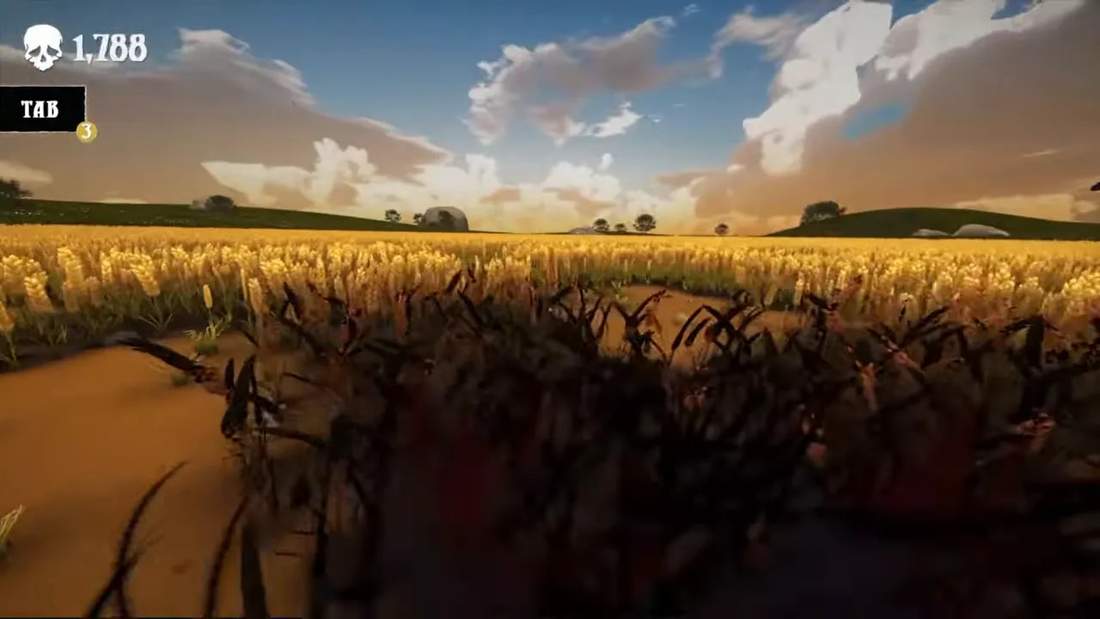
Except, rather than building a thriving farm, the visible result is a lifeless wasteland. A slightly different interpretation of productivity.
What really interests me is the presentation. The developers describe this as relaxing, with atmospheric music, multiple environments beyond the initial wheat fields, and a mysterious story communicated through the surroundings. Exactly what is happening in that story has not been explained.
A cosy, meditative game about becoming an unstoppable ecological disaster is certainly an unusual combination. It also seems to have found an audience: the game passed 25,000 wishlists within ten days of Steam Next Fest. I am curious whether that peaceful rhythm and disturbing objective reinforce one another or just make the whole thing feel even stranger.
5. Professor Layton and the New World of Steam
Scheduled release: 10 December 2026
Platforms: PS5, Nintendo Switch systems and PC
It has been more than a decade since a proper new adventure starring Professor Layton himself. I can only assume he has spent the intervening years waiting patiently for somebody to ask an unnecessarily elaborate question about a suitcase.
Professor Layton and the New World of Steam reunites the puzzle-solving archaeologist with Luke Triton for a mystery in America. The story takes place one year after Professor Layton and the Unwound Future, in the city of Steam Bison.
Steam-powered machinery has helped this rapidly developing city surpass even London technologically. Luke has been living there, and a mysterious incident brings him and Layton back together. A phantom gunslinger terrorising the town is among the problems that need sorting out.
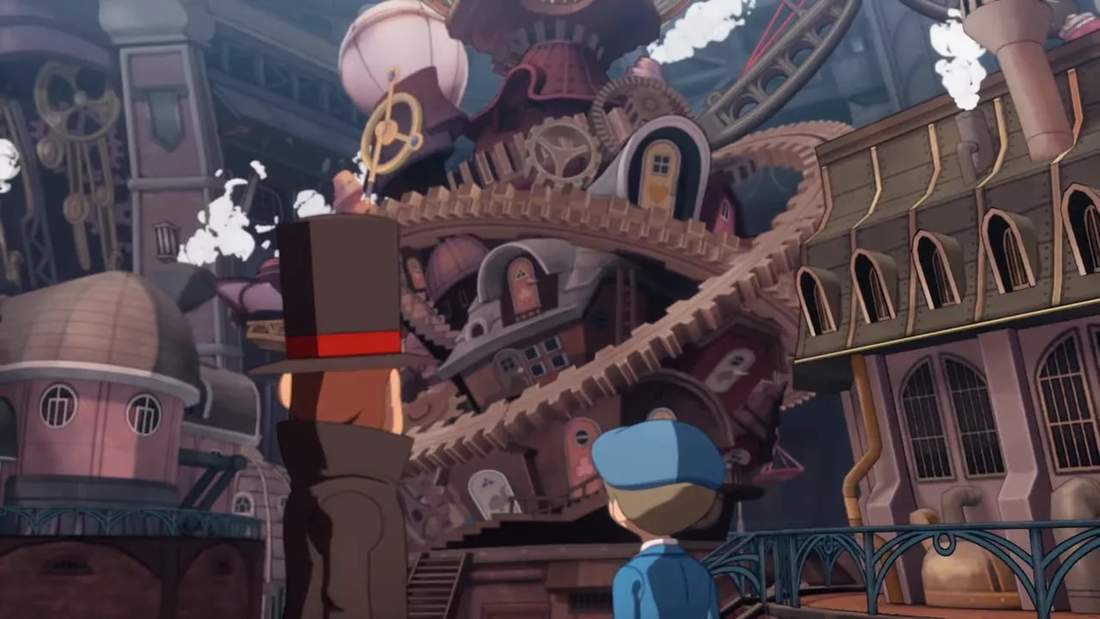
For anyone unfamiliar with the series, the appeal is a mixture of exploration, conversations, clue-finding and brain-teasers. People in these games have a remarkable ability to interrupt an urgent investigation with a puzzle. Before providing something useful, they would very much like help with a completely unrelated logical problem. Naturally.
The presentation moves into fully 3D environments and character models, while the puzzles are being developed in collaboration with QuizKnock, the Japanese group known for educational quizzes and brain-teasers. Level-5 is promising the biggest collection of puzzles in the series so far.
I like that the main attraction remains straightforward despite the modernised presentation: a new place to explore, a complicated mystery and an unreasonable number of puzzles standing between Layton and the answer. That is the part I would want a comeback to preserve.
4. Guns of Eschaton
Scheduled release: 8 December 2026
Platforms: PS5, Xbox Series X|S and PC
The short explanation for Guns of Eschaton is “a Soulslike with guns”. The more interesting explanation is a first-person trip through a supernatural version of 19th-century America where the world is falling apart and the dead are refusing to stay dead. A western, then, but with considerably worse problems.
I would not approach this like a conventional shooter. Ammunition is scarce, enemies are dangerous, and combat puts positioning, timing and attack patterns ahead of simply firing faster than the other thing.
Firearms sit alongside parries and supernatural abilities. Character progression includes different weapons, ammunition types, armour, talismans and occult powers. The ambition is to translate deliberate Soulslike combat into encounters built around aiming a revolver rather than swinging a sword.
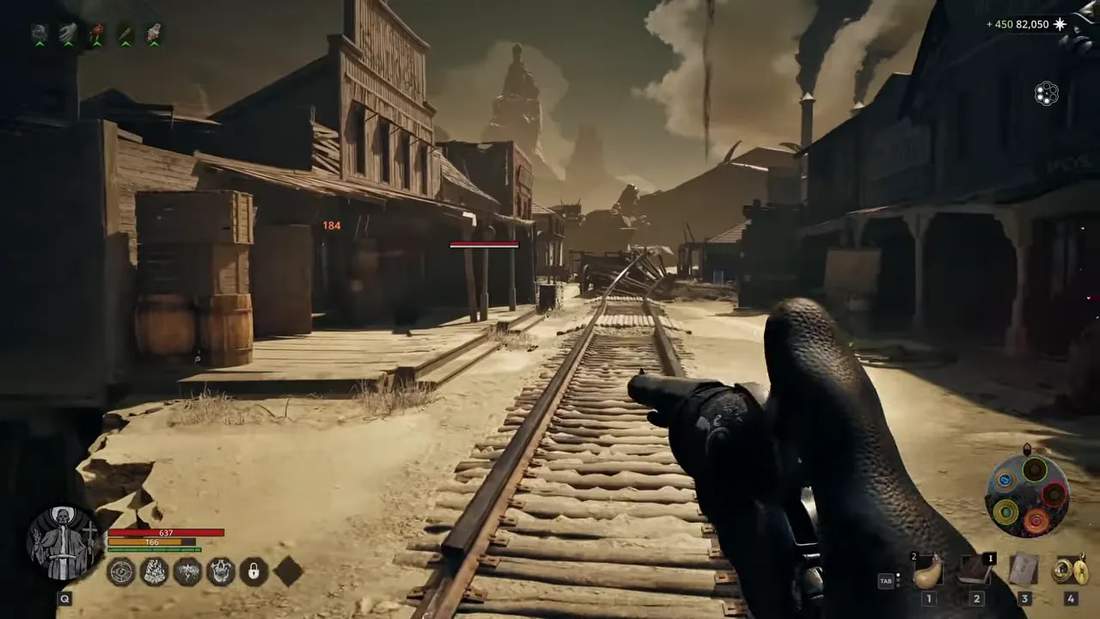
The art direction is a major reason this stands out to me. Its visual identity was shaped by the late Viktor Antonov, whose work on Half-Life 2 and Dishonored helped create some extraordinarily memorable environments.
Here, that identity combines ruined settlements, strange industrial structures, occult imagery and disturbing creatures. Western architecture and supernatural decay are a strong pairing, particularly when the landscape feels as hostile as whatever is standing in it.
There is also two-player co-op. Bringing a friend into a collapsing, monster-infested frontier sounds preferable to handling the entire situation alone, although I doubt it makes the ammunition shortage any less stressful.
3. Path of Exile 2
Scheduled full release: 11 December 2026
Platforms: PS5, Xbox Series X|S and PC
Release model: Free-to-play following paid early access
Path of Exile 2 has been playable in early access since December 2024, so this is not its first appearance. The important change is the planned move to a full free-to-play release, with more campaign content and no supporter pack required to get through the door.
If Diablo’s character progression has ever struck anyone as insufficiently complicated, Path of Exile has an answer. Kill monsters, collect loot, improve a build, then spend a substantial amount of time working out how to improve that build more efficiently. I mean that affectionately. The depth is a huge part of the attraction.
The sequel returns to Wraeclast, a dark fantasy world being consumed by an ancient corruption. The complete campaign is designed around six acts, roughly 100 distinct environments, hundreds of monsters and around 100 bosses.
The combat puts more emphasis on dodging, positioning and reading enemies. Boss encounters have more elaborate mechanics, so standing still and clicking until the problem disappears is not necessarily a reliable strategy. Eventually, an exceptionally strong build might make things look easy. Getting there is another matter.
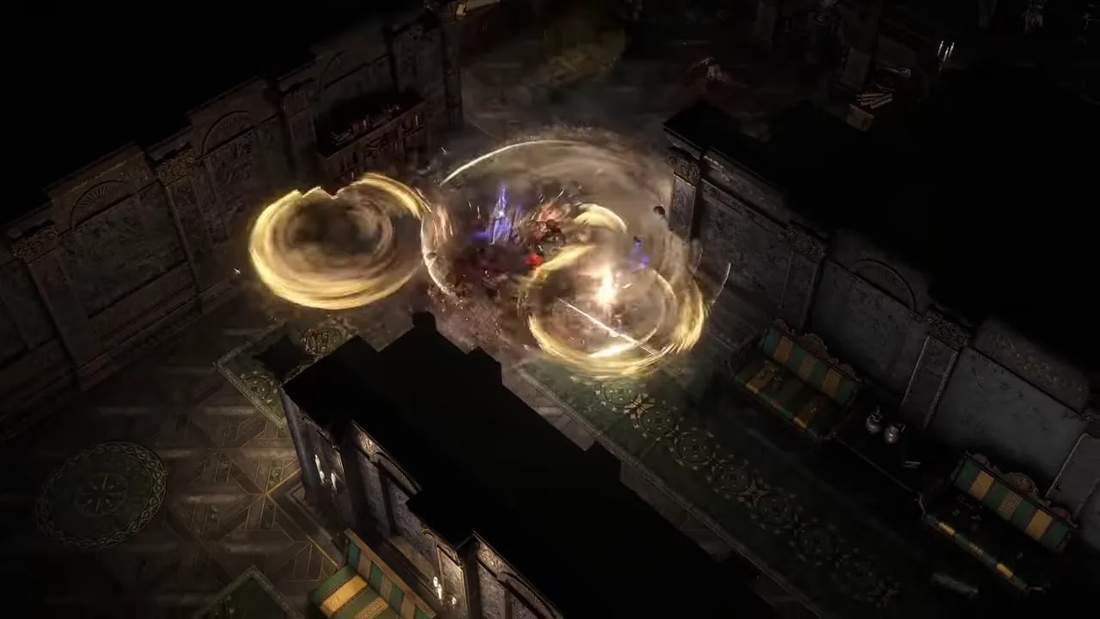
The full game is designed around 12 character classes, extensive passive skill trees, enormous amounts of equipment, crafting, trading and endgame systems. Anyone interested in the finer points of those systems can find additional reference material on the community Path of Exile 2 Wiki.
The full release is set to add three campaign acts beyond the early-access offering, alongside further classes, skills, bosses and other content. For me, that combination of a larger campaign and the removal of the upfront access requirement makes this more significant than a simple version-number change.
2. Attack on Titan 3
Scheduled release: 10 December 2026
Platforms: PS5, Xbox Series X|S, Nintendo Switch 2 and PC
Attack on Titan has always seemed unusually well suited to video games. Giant monsters, soldiers hurtling through the air on grappling equipment and battles where the scale is completely ridiculous. Koei Tecmo has already made a couple of good games from that foundation.
Attack on Titan 3 is aiming for something more comprehensive: an adaptation of the complete story, from its beginning through to its conclusion. That is an ambitious undertaking, not simply because there is a lot of material, but because the story changes so much along the way.
It starts as humanity fighting enormous monsters. Eventually, it becomes a much more complicated political and military conflict where identifying the real enemy is considerably less straightforward.
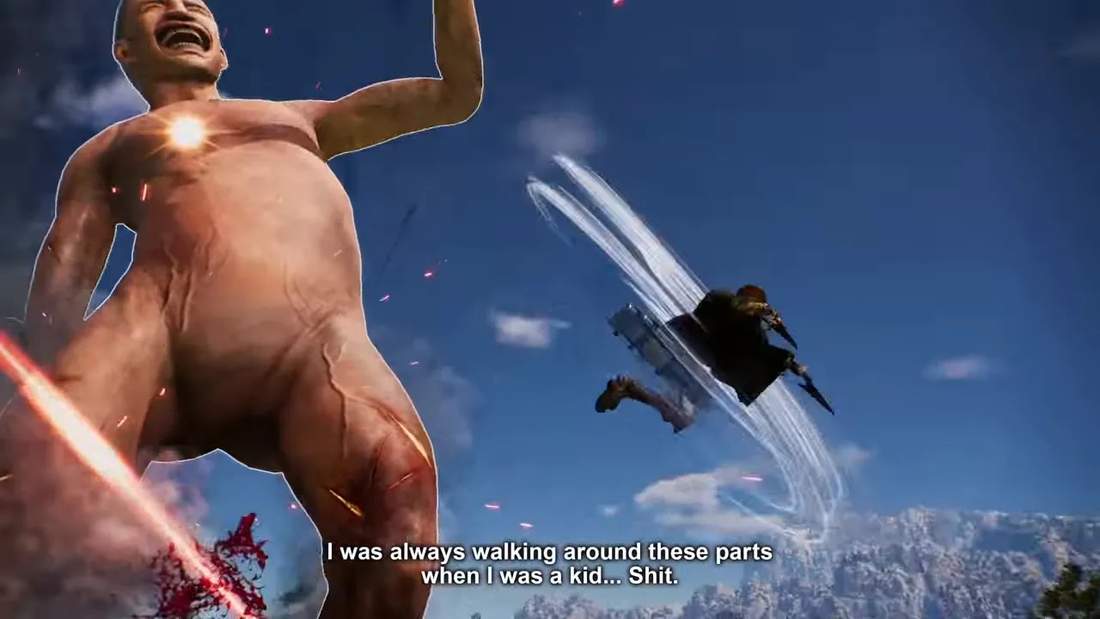
I like the prospect of having the whole thing in one game. The premise remains compelling even when the pacing of the longer story gets uneven, and actively participating in those battles is a different attraction from simply revisiting familiar events.
The developers are also promising new story material alongside the established events. That could be important for making this feel like a worthwhile adaptation rather than just an enormous checklist of recognisable scenes.
A new opening animation is being produced by the studio behind the anime’s final season, although that is planned as a post-launch update rather than a day-one inclusion. Personally, I am much more interested in how the game handles the complete narrative and its increasingly wild action. A new opening is a nice extra. The adaptation itself is the substantial challenge.
1. Warhammer 40,000: Dawn of War IV
Scheduled release: 3 December 2026
Platform: PC
Dawn of War IV takes the top spot because the direction sounds like exactly the kind of course correction this series needs. Dawn of War III tried to combine the original’s large battles with the more hero-focused approach of Dawn of War II, and the result did not really satisfy either audience.
This time, the emphasis returns to large armies, base building and resource management. Build a base, capture important locations, produce units and manage a proper battlefield. That is a strong starting point.
The setting is Kronus, the planet from the original game’s Dark Crusade expansion. Four playable factions are planned:
- Space Marines
- Orks
- Necrons
- Adeptus Mechanicus
The Adeptus Mechanicus are particularly interesting because this is their first appearance as a fully playable Dawn of War faction. They are a religious organisation devoted to technology, with a strong enthusiasm for replacing bits of themselves with machinery. I appreciate the commitment, although I remain unconvinced that prayer is a substitute for knowing how to maintain an engine.
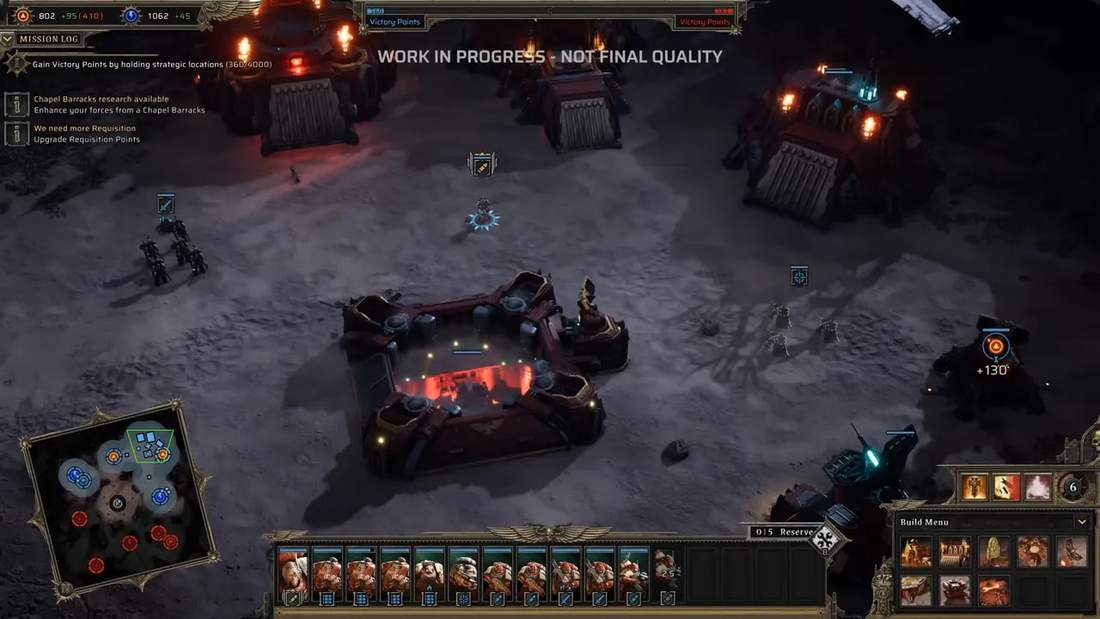
Each faction gets its own campaign, with more than 70 missions across the game, branching story choices and co-op. That sounds like a substantial single-player offering, rather than a short campaign whose main job is to prepare everyone for multiplayer.
Army customisation is another highlight for me. An expanded army painter allows individual changes to unit colours, decals and equipment. In a setting so closely associated with building and painting armies, having more control over the appearance of those forces feels especially appropriate.
The Last Stand survival mode also returns, with three players cooperating against increasingly difficult enemy waves. Beyond launch, the developers have outlined a year of additional content, including new commanders, a mission editor, Crusade mode and two story expansions. Those are future plans rather than launch-day features, but they suggest a substantial commitment.
Development comes from King Art Games, the studio behind Iron Harvest, rather than Relic Entertainment, which made the first three entries. There is relevant strategy experience there. Reviving Dawn of War is still a sizeable undertaking, though, and I want to see whether the enormous battles and deeper campaign ambitions come together.
A December That Refuses to Be Quiet
What stands out to me is the range. There is deliberate stealth in Thief, potentially ridiculous co-op in Dumpster Gang, puzzle-solving in Professor Layton and an enormous amount of character-building in Path of Exile 2. Even the smaller games are doing something unusual rather than politely filling gaps between the bigger releases.
Dawn of War IV is my biggest point of interest, but There Are No Ghosts at the Grand might be the one I am most curious to actually figure out. Renovation, ghosts, talking tools and musical numbers is either a very strange shopping list or a genuinely memorable game. Either way, my backlog is not getting the peaceful December it probably deserves.