
Some games go on basically forever. Sometimes that is a bad thing. Sometimes it is exactly what I want.
I am talking about games with so much space, systemic depth, moddable potential, player-made content, or sheer repeatability that a normal completion-time estimate becomes kind of meaningless. These are the single-player games I can keep returning to for hundreds, thousands, or, in a few cases, effectively unlimited hours.
Key Takeaways
- Modding and community creations make Skyrim, Doom, Minecraft, and S.T.A.L.K.E.R. GAMMA dramatically more replayable.
- Sandbox simulations such as RimWorld, Dwarf Fortress, Kenshi, and Crusader Kings III generate stories instead of fixed endings.
- Massive procedural worlds keep No Man’s Sky, Elite Dangerous, Project Zomboid, and Minecraft effectively inexhaustible.
- Games like Satisfactory, BeamNG.drive, Clone Hero, and American Truck Simulator last because the activity itself is the point.
Table of Contents
- 20. The Elder Scrolls V: Skyrim
- 19. No Man’s Sky
- 18. Mount & Blade II: Bannerlord
- 17. Warframe
- 16. BeamNG.drive
- 15. The Sims Series
- 14. S.T.A.L.K.E.R. GAMMA
- 13. Elite Dangerous
- 12. RimWorld
- 11. 7 Days to Die
- 10. Clone Hero
- 9. American Truck Simulator
- 8. Dwarf Fortress
- 7. Animal Crossing
- 6. Crusader Kings III
- 5. Project Zomboid
- 4. Satisfactory
- 3. Doom
- 2. Kenshi
- 1. Minecraft
20. The Elder Scrolls V: Skyrim
Skyrim has a beginning, middle, and end in its original form, but treating its base-game completion time as the final word misses the point. It is one of the most heavily modded games ever made, and that modding scene has turned it into an almost inexhaustible fantasy sandbox.
Installing mods used to feel like a part-time job. Getting a huge load order stable could be an entire hobby. It is still not entirely painless, but curated mod collections now handle much of the hard work. Follow the instructions, install a collection, and suddenly Skyrim can become a significantly different game.
Some collections combine hundreds of smaller mods into a new experience packed with role-playing systems, survival mechanics, expanded quests, and new ways to live in the world. Gate to Sovngarde is a good example, adding tougher survival conditions, needs such as eating and drinking, more dangerous early encounters, and generated activities that make simply existing in Skyrim more engaging. With more than 100,000 mods and thousands of collections out there, the community made Skyrim into a forever game.
19. No Man’s Sky
No Man’s Sky has received dozens of named updates, and it still does not look like it is done. The launch complaints were valid, and at its core the loop is still gathering resources and crafting things. If survival crafting is not my thing, no amount of planets is going to fix that.
But if I enjoy that loop, there is now an absurd amount wrapped around it. Settlement management, mech suits, pets, creature battles, factions, war zones, water worlds, new ships, and new ways to explore have transformed the original release. Each update might not be world-shattering alone, but together they have made the universe a lot more interesting to inhabit.
The scale was always ridiculous. There are 255 galaxies, each one enormous, with roughly 18 quintillion possible planets. That is 18 followed by 18 zeroes. Only a tiny fraction of the universe has been explored over the past decade, so fully charting it is not a realistic human goal. It is infinite enough for me.
18. Mount & Blade II: Bannerlord
Mount & Blade II: Bannerlord is a sandbox action RPG with no meaningful finish line. I can chase goals, build a clan, conquer territory, trade, fight, or just wander around Calradia as long as I feel like it.
Even character death does not necessarily stop the campaign. If I have an heir, I can continue as them and keep the family story moving. There is technically a distant historical endpoint related to the events leading into Warband, but reaching it would require maintaining a game for roughly 200 uninterrupted in-game years. Most campaigns will end because I am ready to move on, not because Bannerlord forces an ending.
Add the available mods on top of the generational campaign system and I can very easily lose thousands of hours here.
17. Warframe
Warframe is a live-service game rather than a purely solo release, but I can absolutely play it like a single-player game. Co-op and PvP are easy enough to ignore if I just want to work through missions and build up my arsenal.
The core is still the grind: gather resources, unlock new Warframes, improve gear, and keep pushing forward. If that sounds exhausting rather than satisfying, this is probably not the game for me. But for anyone who enjoys having another frame, weapon, or loadout to work towards, it has an unbelievable runway.
Over the years, major updates have added open areas, ship combat, hoverboards, new frames, and a dramatically expanded range of activities. Completion estimates can exceed 1,000 hours even when played efficiently, while more relaxed approaches can stretch into the 4,000 to 5,000 hour range. At that point, it may as well be infinite.
16. BeamNG.drive
There are plenty of racing games with huge maps and endless generated events, but BeamNG.drive is the driving game that really feels like it can go on forever. It is the car game with all the physics, and it lets me destroy a vehicle in ways most licensed driving games would never allow.
I can take a car off a cliff, turn it into an unrecognisable pretzel, and find that deeply satisfying. There is no shame in loading it up for a few minutes just to see what happens when a hatchback meets a ravine at a stupid speed.
It is also much more than a crash simulator. BeamNG.drive is a platform for creators, with user-made modes, scenarios, playlists, vehicles, and maps. I can approach it casually and smash cars, or get seriously deep into driving simulation. Either way, the supply of things to mess with is enormous.
15. The Sims Series
I am not going to pretend EA’s handling of The Sims has been flawless. The series began as one of the most inventive evolutions of the management genre, and The Sims 4 has sometimes felt like a step backwards from earlier games. Still, as a forever game, the series absolutely qualifies.
I can set life goals, build houses, manage careers, raise families, obsess over one Sim, or jump to another household in the neighbourhood whenever I want. Achieving an aspiration does not end the game. A Sim may eventually die, but as long as somebody remains in the family, the story continues.
I can spend an eternity redesigning a neighbourhood, switching between households, and making little lives go completely off the rails. That is before even getting into the mountains of expansions released over the years.
14. S.T.A.L.K.E.R. GAMMA
S.T.A.L.K.E.R. GAMMA, built on the Anomaly mod platform, turns the Zone into something far more open-ended than a standard campaign. The story is still there if I want it, but the real appeal is the living-world simulation surrounding it.
Hundreds of AI characters move through the world on their own. They take jobs, fight mutants, loot bodies, and collide with one another. Factions battle, claim territory, negotiate, and lose ground. Bandits can occupy an abandoned location, I can clear them out, and then other stalkers may eventually move in and strip the place clean.
That constant movement is the magic. The world is not simply waiting for me to arrive and press the next quest button. GAMMA is punishing, hardcore, and stacked with survival systems, but it produces the kind of unscripted stories that make the Zone feel alive for a very long time.
13. Elite Dangerous
Elite Dangerous is technically finite, but that does not make it meaningfully small. Its Milky Way is a one-to-one recreation rather than a universe of multiple galaxies, yet the scale is still hard to process.
Only a tiny fraction of its star systems have been discovered. Estimates from community mapping efforts suggest it would take tens of thousands of years for players collectively to map the whole galaxy at the current rate. I am comfortable calling that effectively endless.
This is not No Man’s Sky with a realism filter. Elite Dangerous has different priorities: flying, exploration, resource gathering, space combat, and a more methodical, scientific tone. Planetary surfaces are not overflowing with activities, and I can see why plenty of people bounce off it. But if I am on the right wavelength, its slow and meditative spacefaring can eat a dangerous amount of time.
12. RimWorld
RimWorld is a colony game, but the real draw is the story engine. Building a settlement from nothing is only half of it. The colonists, their relationships, their bizarre decisions, and the inevitable disasters are what make every run memorable.
Things go wrong constantly. I can spend hours carefully arranging a colony, only to watch it collapse into hunger, violence, cannibalism, and general catastrophe after a few terrible rolls of the dice. Honestly, losing can be almost as entertaining as succeeding.
Eventually, I may learn enough to build a sustainable colony, though that is when the darker possibilities open up. RimWorld allows some extremely grim management choices, from organ harvesting to torture and mind control. There are no fixed goals, so skilled players can keep a settlement alive indefinitely. If that gets too stable, the modding community supplies an enormous amount of fresh chaos.
11. 7 Days to Die
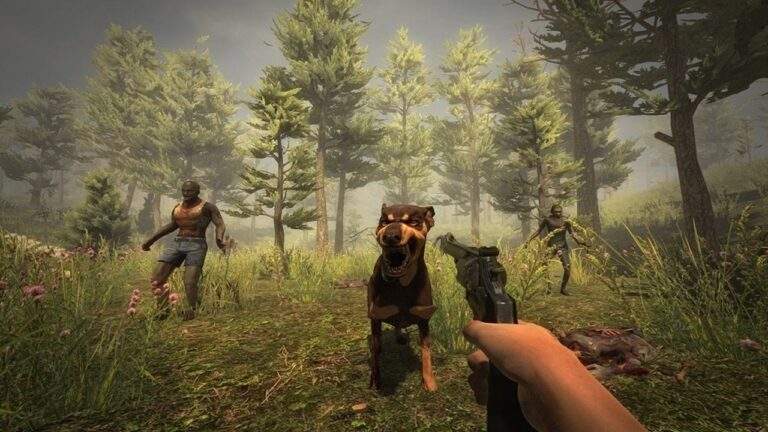
7 Days to Die is a zombie survival game where I am not really meant to survive forever. At higher horde settings, even well-organised players can be overwhelmed unless they lean hard on the game engine’s quirks.
The world itself is not gigantic by open-world standards, but its points of interest make it feel much larger. Hundreds of explorable buildings have their own layouts, traps, and occasional puzzles. That gives scavenging a purpose beyond simply wandering across empty terrain.
Randomly generated maps, custom maps, and major mods such as Darkness Falls and Rebirth provide even more reasons to start again. It is not just busywork base building. It is a cycle of exploration, desperate preparation, horde survival, failure, and another attempt.
10. Clone Hero
Rhythm games have a nearly infinite skill ceiling. I can play casually for a few minutes, then spend years trying to master charts that look physically unreasonable. The issue with most of them is song supply. Eventually, even a huge library runs out of surprises.
Clone Hero gets around that problem through its huge fan-made song ecosystem. It is a PC-focused Guitar Hero-style game with an almost endless selection of custom charts. The bundled official content is comparatively limited, but the user-made material is the whole point.
I can find songs, albums, game soundtracks, absurdly difficult charts, and highly customised presentations well beyond what a normal commercial rhythm game could realistically support. For the right person, Clone Hero can become the only rhythm game they ever need.
9. American Truck Simulator
American Truck Simulator is the ultimate podcast game. The map does not cover the whole continental United States yet, but paid expansions keep steadily adding more territory.
Even a single state can be huge. Texas alone includes 30 cities, 50 smaller towns, roughly 20,000 miles of road, and a lot of scenery between jobs. I am not playing it as a tourism simulator, exactly, but having all that space makes every delivery feel like a genuine trip.
There is no real victory condition. I just keep driving until I am fulfilled, then perhaps drive some more. By many standards, that sounds boring. That is precisely why it works. Either the rhythm of trucking clicks with me or it absolutely does not.
8. Dwarf Fortress
Dwarf Fortress is an old-school sandbox simulation of absurd complexity. It spent years looking nearly indecipherable because it had no conventional graphics, and even with a proper tile set it still asks a lot of my imagination.
The reward is one of the most detailed colony simulations ever made. Systems interact in ways that produce wonderful nonsense, such as the classic case of cats getting drunk after tracking beer through a tavern on their paws and licking it off. Nobody had to script that specifically. It simply emerged from the simulation.
That same complexity causes spectacular disasters. I can build a fortress into something sustainable, but it is far more likely that things will unravel in bizarre and often hilarious ways. Better yet, a fallen fortress does not need to be the end. I can start an adventure in the same world and explore the ruins of my own failed civilisation.
7. Animal Crossing
Not every forever game needs complicated systems and brutal survival mechanics. Animal Crossing proves that a relaxed little town builder can consume hundreds or thousands of hours without demanding much of anything.
I can build up a town, invite the villagers I want, decorate every available corner, and tweak it until it looks exactly right. The goals are simple, but that is part of the appeal.
Some people will reach a point where there is simply not enough left to do. Others will keep tinkering because the game does not really pressure them towards an endpoint. It is calm, casual, and somehow still capable of owning an unreasonable amount of my time.
6. Crusader Kings III
Crusader Kings III is grand strategy, but it has just as much in common with a sandbox role-playing game. Unlike Civilization, I am not racing towards a clean win condition. I am managing a realm, a family, and all the bad decisions that come with both.
A campaign can end when my dynasty dies out, when I am content with what I built, or when the historical end date arrives. The available start dates and end date already allow an enormous span of medieval history. If I disable the end date, though, I can rule indefinitely.
At that point, major historical events are no longer there to shake things up, but I can make my own drama. I can rise from obscurity to kingship, wreck a dynasty through terrible marriages and worse succession plans, then crawl back up again. The character stories are what keep it alive after the management layer becomes familiar.
5. Project Zomboid
Project Zomboid begins with the message that this is how I died. It is not kidding. One bite or scratch can infect me, there is no cure, and even an untreated wound from broken glass can turn into a fatal problem.
Surviving alone in a zombie-filled world means tiny mistakes snowball fast. With enough practice, I can build sustainable compounds using rainwater and crops, but making it to that point takes real discipline. And yes, once I become fully self-sufficient, life can get a little boring.
That is why the map matters so much. Its Kentucky setting covers seven detailed towns across an enormous area that is difficult to cross on foot. When I die, the world does not vanish. I create a new survivor, track down my old zombified character, and deal with the consequences. Project Zomboid just keeps going.
4. Satisfactory
Satisfactory does eventually run out of upgrades, blueprints, and story content. It has a fixed world and a progression path that can be completed. For some players, that is the end.
For a certain kind of factory-building brain, that is when the real game begins. Unlocking everything is not the goal. The goal is building the cleanest, prettiest, most efficient and most ridiculous production network possible.
I can keep expanding with conveyor belts, train tracks, logistics hubs, and massive supply chains long after every formal objective is done. Once the checklist is empty, all that remains is the factory. For the people hooked on optimisation and industrial design, that is more than enough.
3. Doom
The original Doom games are not infinite by themselves. Doom, Ultimate Doom, Doom II, the Master Levels, and The Plutonia Experiment contain a strong pile of classic maps, but I could eventually finish them all.
The fan community changed that completely. For decades, mappers have released custom campaigns, megawads, new weapons, enemies, texture packs, and music. The annual Cacowards celebrate a huge number of standout community projects, not just a basic top-ten list.
There is so much quality Doom material out there that I could spend years just playing what fans have made. Or I could start making my own levels. Doom proves better than almost anything that a dedicated fan base can turn an old game into a permanent creative platform.
2. Kenshi
Kenshi is ruthless, disorienting, and confusing for a good while. Its world is alien, hostile, and very willing to get me killed minutes after I begin. That is part of the deal.
But as a pure sandbox, it is hard to beat. If one character dies, the game continues as long as one ally remains. I can switch to them, rebuild, recruit more people, and carry on.
I may begin as a nobody getting beaten up in the desert. Eventually, I can build a squad, establish a settlement, create a nation, and wage war on rival factions. Most people will not see every possibility because Kenshi is committed to making the learning process painful. Stick with it, though, and it can produce an endless supply of hard-earned stories.
1. Minecraft
Minecraft is the obvious number one because it is huge, endlessly flexible, and built around player creativity. Even its old technical limits were so distant that they were effectively unreachable through ordinary play.
The famous Far Lands in early versions began around 12,550,000 blocks from the centre of the world, where terrain generation started behaving strangely. One player spent 14 years and roughly 2,500 hours reaching them without cheating. The theoretical old-world breakdown point was even farther away, at around two trillion blocks.
Modern versions fixed those old world-generation problems, so the game is now genuinely endless in practical terms. But raw map size is only one part of it. There are custom maps, new game modes, mods, total conversions, adventure packs, technical builds, survival worlds, and enough community-made content to keep me busy for multiple lifetimes.
I might get bored after 20 minutes, sure. Minecraft is that kind of game. But if it clicks, there are very few solo games with a bigger supply of things to do.
That is the real pattern behind every game here. A forever game is not necessarily the one with the biggest map or the longest checklist. It is the one that gives me enough freedom, depth, creativity, or unpredictability that I can keep making my own reasons to come back.