
Giant monster brawlers are a criminally underserved genre. I can point to King of the Monsters, War of the Monsters, the Godzilla games released between 2002 and 2007, and GigaBash, but the list gets pretty thin pretty quickly. Sometimes I just want to pick an enormous beast and settle an argument by throwing another enormous beast through a city. That should not be such a niche request.
Godzilla: Destroy All Monsters Melee Remastered brings back the 2002 GameCube brawler, complete with its wonderfully silly premise and some very obvious early-2000s design baggage. It also gives the monsters and their urban punching bags a substantial visual overhaul.
I played on PC through Steam, paid $30, and thought it was absolutely worth the asking price. The listed platforms also include PS5, Xbox Series X/S and Switch 2, but my performance impressions come from PC and a little time on Steam Deck.
My recommendation comes with one big qualification: this is a party brawler for friends, not a carefully balanced competitive fighting game. Approach it that way and there is a lot to like.
Key Takeaways
- I found the $30 remake easy to recommend for casual monster battles with friends.
- Rebuilt monsters, detailed cities and responsive combat preserve the original’s appeal while improving its presentation.
- Limited modes and unbreakable grabs hold it back, especially in online matches against strangers.
- The G-Force Lab improves unlock progression, and performance was strong in my PC and Steam Deck testing.
Table of Contents
- A Proper Rebuild, Not Just a Sharper Picture
- Simple Fighting With Enough Depth to Keep Improving
- A Small Roster With Meaningful Differences
- Eight Locations, Plenty of Destruction and a Mothra Assist
- Single Player Is Enjoyable but Limited
- Online Play Works, but Quick Match Exposes the Cracks
- Four-Player Melee Is Chaotic Fun With Too Few Options
- The G-Force Lab Makes Unlocking Things Better
- PC and Steam Deck Performance Were Strong
- Should You Buy Godzilla: Destroy All Monsters Melee Remastered?
A Proper Rebuild, Not Just a Sharper Picture
The best thing I can say about this remake is that it feels like the original looks in my memory. Then I went back to the actual original, and nostalgia received a fairly substantial punch to the face.
This is not simply the old game rendered at a higher resolution. The monsters have entirely new models, the city stages have been rebuilt with much more detail, and there are new menus and CGI cutscenes. Almost everything looks different without losing the identity of the game.
The exception is the main mode selection screen, which looks a little cheap. It gets the job done, but it does not make the strongest first impression. Fortunately, the things that matter most, namely giant monsters flattening cities, look great.
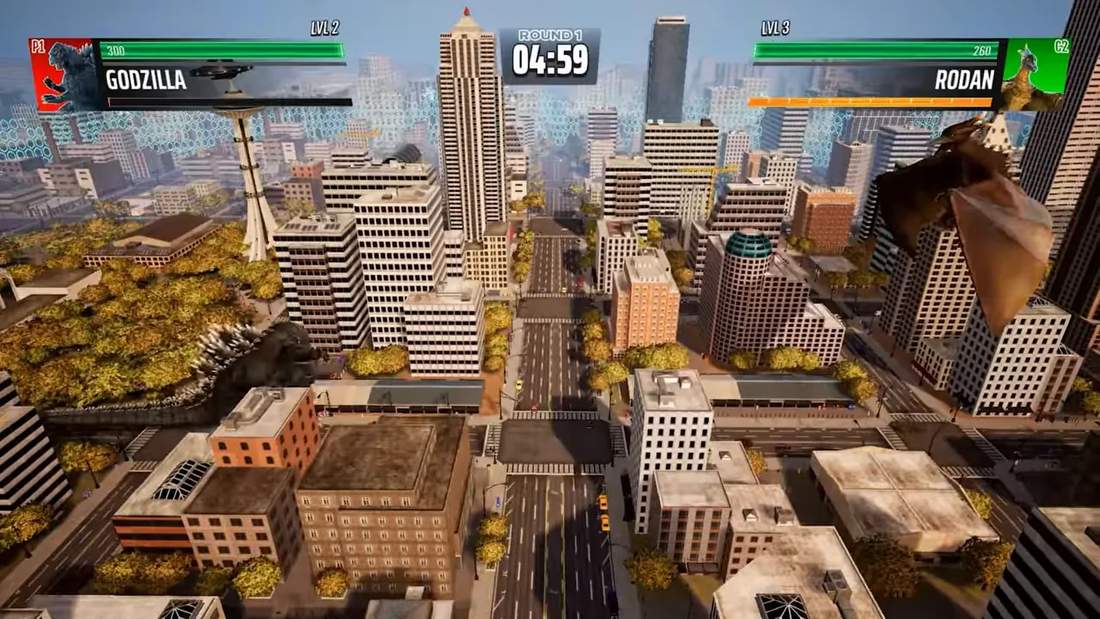
The original could look grey and foggy. Here, the environments have much more character, with recognisable details from the cities they represent. Smashing them into rubble is a joy, which is probably a terrible thing to say about city planning but an excellent thing to say about a Godzilla game.
Simple Fighting With Enough Depth to Keep Improving
I would put the combat somewhere between a conventional fighting game and a party game like Super Smash Bros. The inputs are relatively straightforward, so getting started is easy. There is also enough complexity that I was still improving several hours in.
That balance is important. A giant monster game can coast on spectacle for a little while, but spectacle alone does not necessarily make the tenth fight as enjoyable as the first. Destroy All Monsters Melee has a bit more fighting-game DNA than some of its neighbours, and learning how its mechanics work makes the action more satisfying over time.
It is not properly balanced, and it lacks features I would expect from a serious competitive fighter. I will get to the biggest omission shortly. But the basic business of moving around an arena and beating up another monster feels good. Really good, actually.
The remake also feels faster to control. Some of that comes from the smoother frame rate, though I suspect the developers have nudged the action along a little as well. I cannot separate those factors definitively, but the result is clear: fights feel less sluggish.
There is a trade-off. The monsters lose a little of that slow, lumbering kaiju weight. For my money, the more responsive action is worth it, and the game lands on a pretty decent balance between enormous creatures and enjoyable controls.
A Small Roster With Meaningful Differences
There are 12 playable monsters. That is not a huge selection for a fighting game, and later games in this series offered more choices. Still, most of the monsters here feel distinct rather than like Godzilla with a different head attached.
King Ghidorah requires a different approach from Megalon, for example. Abilities and gimmicks drawn from the films give the roster personality, and different opponents call for different strategies.
- Aerial abilities: Some monsters can hover while they have energy, fire projectiles from the air or swoop in for an attack.
- Extra ranged options: Kiryu can launch missiles in addition to the usual energy attacks.
- Defensive tricks: Mecha-King Ghidorah can absorb attacks with a shield and restore health, which can be every bit as obnoxious as it sounds.
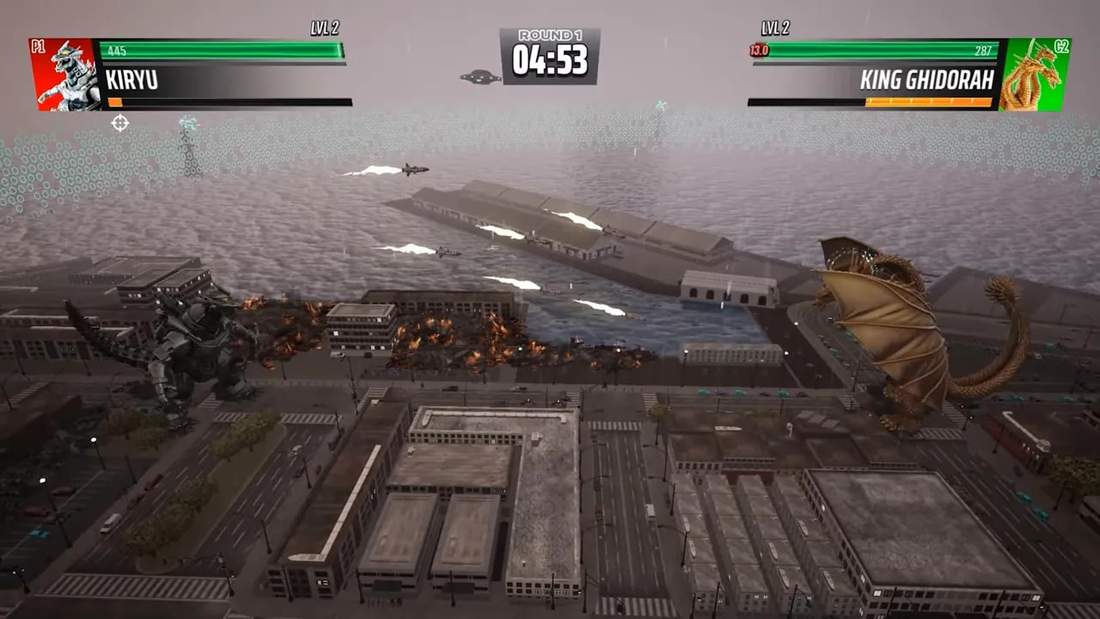
Those differences help keep the matches from blurring together. I would certainly welcome a larger roster, but I would rather have a smaller collection of interesting monsters than a bigger selection that all play essentially the same way.
Eight Locations, Plenty of Destruction and a Mothra Assist
The game has eight major locations, with variations such as nighttime, heavy fog and black-and-white presentation adding visual variety. Eight might not sound like much on paper, but the environmental overhaul does a lot of work here.
The stages also throw some randomness into the fights. Alien saucers drop power-ups that can restore health or increase damage. Others do something considerably goofier, such as calling in Mothra to bombard an opponent from the air.
I like that mix of monster-specific mechanics and ridiculous arena interference. There is enough to learn that a fight does not have to be mindless, but the game never forgets that its central attraction is a bunch of giant creatures making an absolute mess.
Single Player Is Enjoyable but Limited
Most of the modes will be familiar to anyone who played the original. The fighting carries the experience, because there is not a huge amount surrounding it.
Adventure Mode
Adventure is essentially a standard tournament ladder. I pick a monster, fight through a series of opponents and eventually reach the boss.
Short cutscenes bookend the mode, with an alien menace taunting humanity in a very early-2000s fashion. The new CGI versions are more cartoony than the originals, but that suits the tone. Nobody needs this particular alien invasion to be a solemn meditation on the human condition.
The scenes do not leave a huge impression, though, and they are the same regardless of which monster I choose. After the first run, skipping them becomes pretty tempting.
Destruction Mode
Destruction sounds better than it turns out to be. There is no opposing monster, just buildings to attack until the timer expires. That is not inherently bad, but without another creature to fight, the limitations become obvious quickly.
The baffling part is that only one stage is available at a time, with the available level rotating every three days. I do not see that creating meaningful longevity. The mode is not compelling enough to make waiting for another location feel worthwhile.
I would much rather have every destruction stage available immediately. It would not transform the mode, but it would make it a more useful extra.
Survival and Practice
A basic Survival mode rounds out the single-player challenges. There is also a Practice mode, which the original did not have and which I am glad to see included.
Practice is especially welcome in a game that sits between casual chaos and something more mechanical. Having somewhere to get comfortable with a monster is a sensible addition, even if the overall single-player package remains fairly lean.
Online Play Works, but Quick Match Exposes the Cracks
I was pleased to find online play included at all. Too many revivals of this kind leave it out. Here, I can arrange a match with a friend or jump into Quick Match.
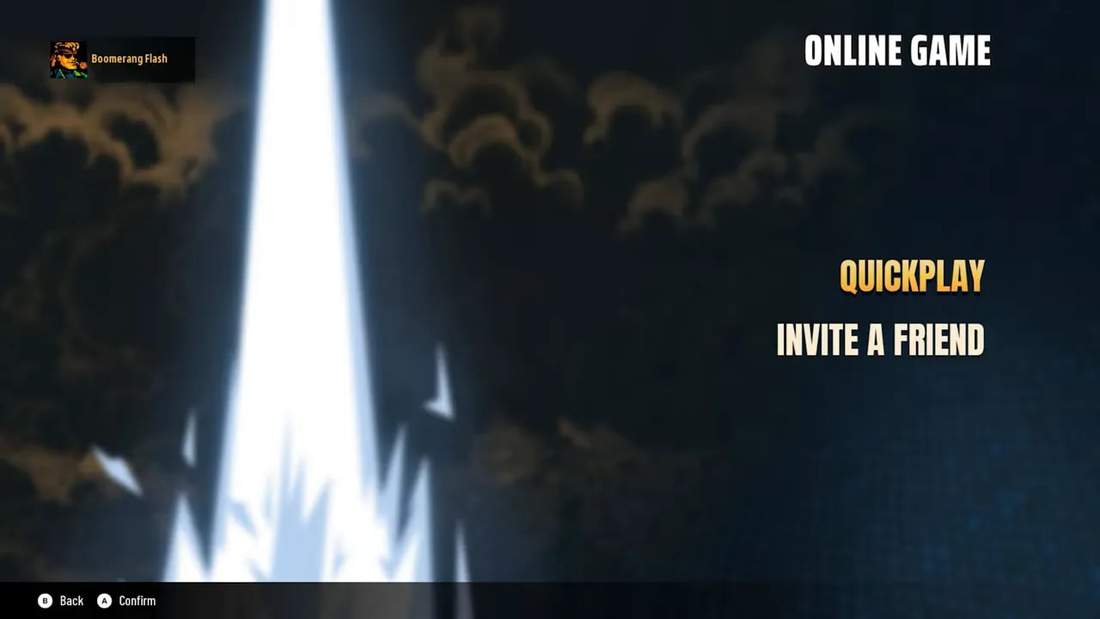
Quick Match is about as basic as it gets: select the option, choose a monster and queue for a one-on-one fight. Technically, my online experience was stable and ran well. My issue was not the connection. It was what people did with it.
Playing strangers brought the weakest parts of the combat straight to the surface. In my matches, that meant plenty of Godzilla 2000 and a whole lot of repeated grabs.
There is no way to break a grab. That is the single clearest reminder that this is still fundamentally a game from 2002. A monster with a fast grab, such as Godzilla 2000, has a substantial advantage because it can grab an opponent before an attack gets going.
It is not an unbeatable strategy. There are counters to the approach. The problem is that dealing with it produces long, drawn-out matches full of keeping away and trying to bait another grab opportunity. I do not find that particularly entertaining.
It is little-brother strategy: find the annoying thing, do the annoying thing, repeat until everyone has had enough. Online, I just get to sit through another grab animation.
My advice is simple: play casually with friends rather than buying this primarily for matches against strangers. The online functionality is welcome, but it does not magically turn an unbalanced party brawler into a satisfying competitive game.
Four-Player Melee Is Chaotic Fun With Too Few Options
Custom Match is the local-play option, although “custom” is doing a fair amount of work in that name. The selection includes one-on-one fights and Destruction, while four-player matches default to Melee.
Four monsters fighting at once is absolutely chaotic fun. The zoomed-out camera generally does a good job of keeping the action in frame, and the spectacle of everyone tearing through the same city is exactly the sort of nonsense I want from this game.
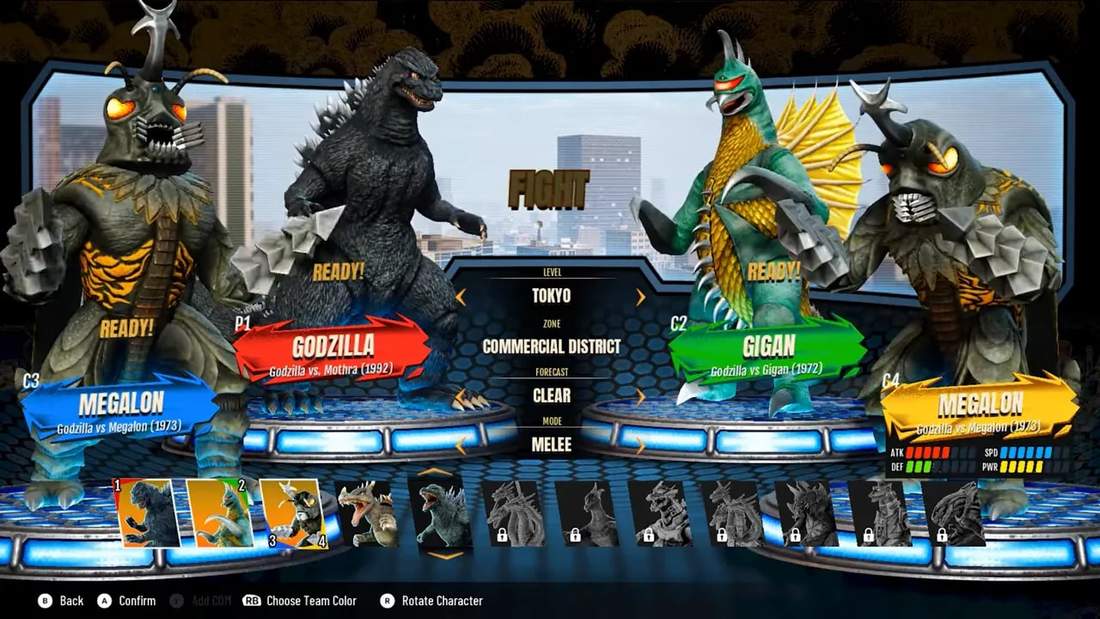
My frustration is with how Melee determines the winner. Rather than giving each player a limited number of lives, it awards points during the match. Dying is not an elimination because the monster respawns. The focus is on dealing damage and accumulating the highest score.
That encourages a fairly mindless approach: charge into the scrap, mash away and hope the points work out. It is still fun with friends. I just wish the rules gave that fun more room to develop.
The options I would most like to see are:
- A limited-lives format similar to Smash Bros. stocks.
- Team-based modes.
- King of the Hill or domination-style objectives that use the large stages.
- More control over match length.
Those are requests, not features currently on offer. I hope the game gets enough support for additions like these, because more flexible rules could make an already enjoyable party game last much longer.
The G-Force Lab Makes Unlocking Things Better
One clear improvement over the original is the G-Force Lab, the new system for unlocking content.
Most monsters start locked, but progressing towards them is not much of a chore. Completing matches in just about every mode earns points, and I can choose which research project to focus on.
If I want a particular monster first, I can prioritise that project. If I would rather unlock a stage, I can work towards that instead. It is a simple change, but choosing what I actually want is much better than following a fixed unlock path.
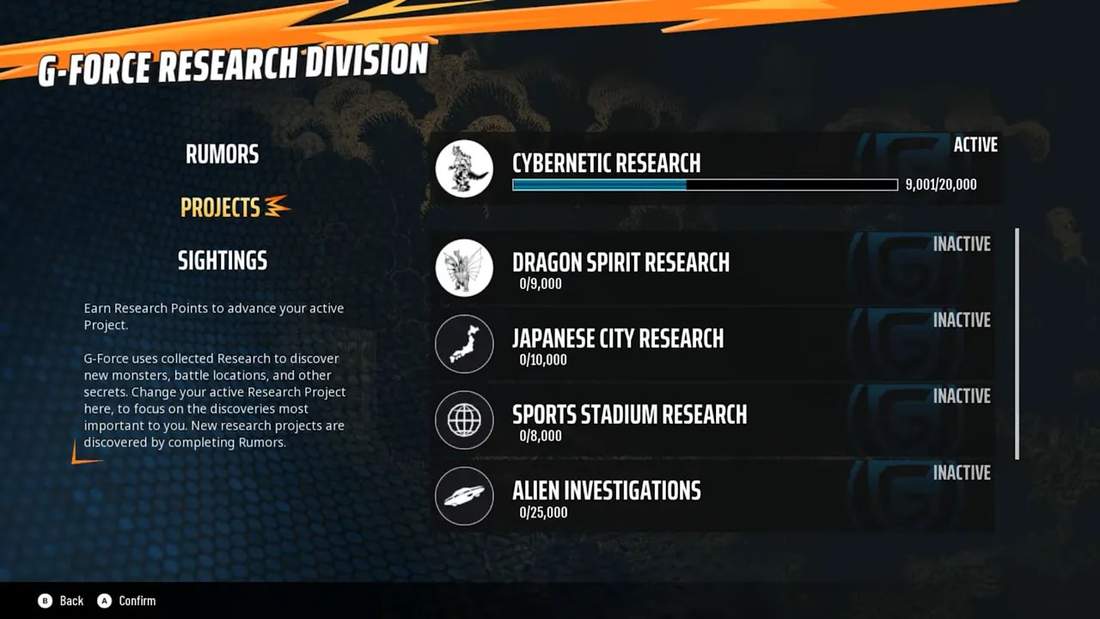
Some projects have extra requirements, such as levelling up particular monsters, but the game explains what is needed. I never found those conditions especially troublesome.
Unlocking everything is not a major grind either. Working through Adventure with each monster provides a straightforward route through the content.
Individual Monster Levels Add a Little Progression
Each monster can also level up individually. This mainly matters in Adventure, where higher-level monsters can take on harder versions of the single-player ladder.
I do not feel strongly about this addition either way. It provides a small sense of progression and gives anyone who wants to keep developing each beast something to do after the main unlocks are finished.
It is mostly harmless extra longevity, rather than a reason to buy the game on its own.
PC and Steam Deck Performance Were Strong
My PC experience was excellent. The game ran well on a mid-range machine, offered plenty of graphics options and did not produce noticeable stuttering or slowdown, even during the chaos of Melee.
That should be normal, but remakes do not always make it safe to assume. I appreciated being able to get on with the monster wrestling without technical problems getting in the way.
I also spent a little time playing on Steam Deck, where it ran pretty much flawlessly in my testing. Combined with the stable online performance I experienced, the whole package felt technically solid.
Those are impressions from the systems I used, not a promise about every possible configuration or the console versions. On PC and Steam Deck, though, I came away impressed.
Should You Buy Godzilla: Destroy All Monsters Melee Remastered?
At $30, I think this is an easy recommendation for Godzilla fans who want a fun, accessible monster brawler, particularly with friends.
The new monster models and environments are major improvements. The action feels responsive, performance was excellent in my testing, and the combat has enough depth to remain interesting beyond the first few matches. Choosing my own unlock priorities is another welcome upgrade.
The limitations are real: a small roster, fairly sparse modes, restrictive local-match options and a grab system that can make online fights against strangers miserable. I would not buy it expecting a new tournament staple or an enormous single-player campaign.
I think of it as a wrestling game starring Godzilla and pals. That framing makes much more sense than treating it as a perfectly fair competitive fighter. With friends, a few house rules about what is and is not acceptable can smooth over the worst behaviour and leave the fun intact.
I would love to see this become the start of a new run of Destroy All Monsters games. A new entry built around these basic mechanics, with a larger roster and more flexible modes, could be something special. For now, this is a very enjoyable excuse to be the big green smash machine and make a city everybody else’s problem.