

The Witcher 3 Remastered is shaping up to be much more than a routine next-gen patch. Scheduled for 29 September, this free upgrade aims to make a legendary RPG feel far more current without charging existing owners all over again. That is already a pretty great start.
The package touches visuals, combat, movement, monsters, menus, progression, console support, accessibility, and more. Some parts are still a little vague, so I would not pretend every detail is locked down, but the direction is clear: CD Projekt Red appears to be tackling many of the little frustrations that have lingered since 2015 while giving the game a huge technical refresh.
Key Takeaways
- The free remastered upgrade arrives on 29 September for existing owners of The Witcher 3.
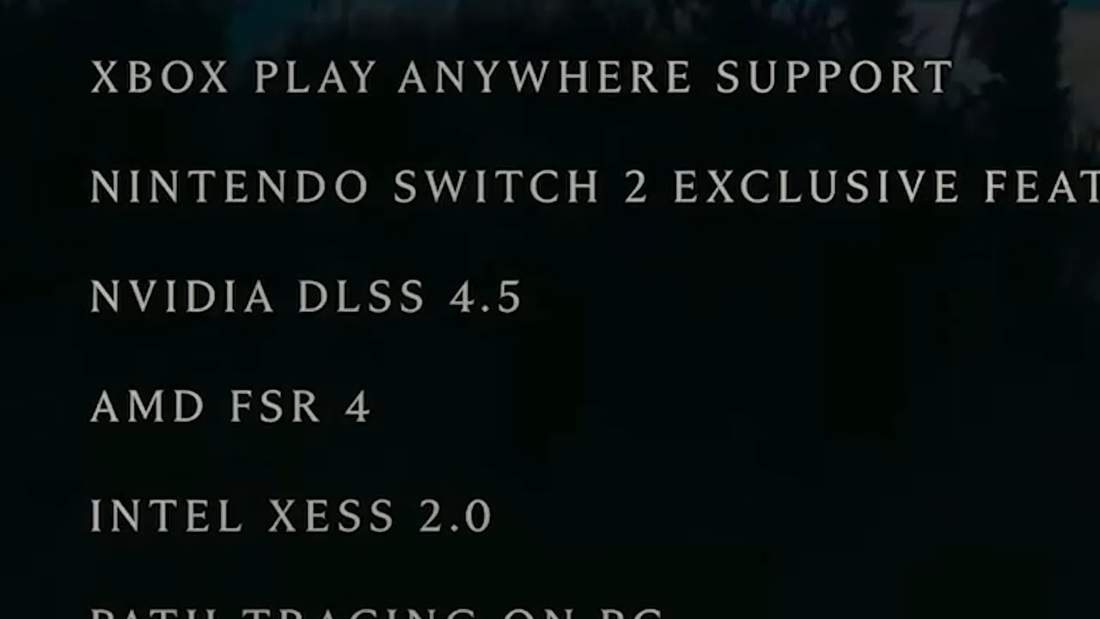
- PC gets major rendering additions including path tracing, ray reconstruction, ray-traced hair, DLSS 4.5, FSR 4 and XeSS 2.0.
- Combat, monster behaviour, traversal and Roach handling are being rebuilt to feel faster and more responsive.
- Transmog, skill tree revisions, accessibility features, quest tracking and platform-specific support round out the overhaul.
Table of Contents
- 1. A major visual overhaul, including path tracing on PC
- 2. Combat is being modernised
- 3. Monsters will be faster, more aggressive and less predictable
- 4. Armour transmog finally lets Geralt look how you want
- 5. Traversal and on-foot movement should feel much smoother
- 6. Roach is getting much more responsive handling
- 7. Quality-of-life, UI and accessibility improvements add up
- 8. The skill tree is being reworked, but not thrown away
- 9. Platform-specific console features are on the way
- 10. The remastered edition is a free upgrade for existing owners
- Is this really The Witcher 3 2.0?
1. A major visual overhaul, including path tracing on PC
The obvious headline is the graphics. The previous next-gen update added higher-resolution textures and ray tracing, but it also came with a bit of baggage. It could look excellent on a powerful PC, sure, but performance took a noticeable hit, and not everyone loved the altered look of the game.
This remaster looks like an attempt to go bigger while addressing some of that feedback. The visual feature list is massive, including:
- Updated textures
- Ray tracing improvements
- A global lighting rework
- Improved subsurface scattering
- A new shading model
- New tone mapping
- Reworked foliage shading
- Refreshed motion blur
- HDR improvements
- Native DirectX 12 support
- Rendering parallelisation
PC is also getting the serious high-end stuff. That includes path tracing, ray reconstruction, and ray-traced hair, following the general path established by Cyberpunk 2077. Support is also planned for NVIDIA DLSS 4.5, AMD FSR 4, and Intel XeSS 2.0.
Console players should still benefit from plenty of the lighting, texture, and rendering improvements, even if the very highest-end PC options are likely out of reach. Based on what has been shown, the game looks sharper and more detailed across the board. My one lingering concern is the same as everybody else’s: I really hope older PC hardware does not get flattened by the performance cost.
2. Combat is being modernised
Combat is probably the second-biggest change here. The goal is apparently to make The Witcher 3 feel like a game launching today, with controls and responsiveness that feel more natural to newcomers while reducing some of the areas that have always created frustration.
I have always had some affection for Witcher 3 combat as its own slightly awkward thing. It does not need to become a completely different action game. Still, there is no denying that it could feel a bit floaty and imprecise, especially when fights became crowded.
The new footage suggests quicker attacks, snappier inputs, and a better overall pace. The key question is whether this retains the weight and identity of Geralt’s fighting style while smoothing off the parts that made combat annoying rather than challenging. I respect the attempt either way.
3. Monsters will be faster, more aggressive and less predictable
It would not make much sense to speed Geralt up while leaving every monster built around the old pace. That is why monster behaviours are also being revised alongside the combat changes.
Enemies are expected to be more aggressive and generally quicker, with more varied attack patterns and a few extra surprises. The intent seems to be making fights more dynamic instead of simply making every beast hit harder.
That is especially exciting because monster encounters have always been one of the best parts of The Witcher 3. If creatures can react more effectively to faster dodges and attacks, hunts should feel more active and unpredictable without losing that classic preparation-and-payoff rhythm.
4. Armour transmog finally lets Geralt look how you want
Yes, it is happening. The Witcher 3 is getting armour transmog, which means I can use the appearance of one armour set while keeping the statistics of another.
The implementation appears to be handled through a master armorer and costs gold, rather than being a simple cosmetic slot in the inventory. That may be a little less convenient than an instant menu toggle, but I actually like that it seems integrated into the world instead of being dumped into the game with no context.
It is a long-requested RPG feature for a reason. Sometimes an armour set has the stats I need but makes Geralt look like he got dressed in the dark. Now there should be an actual solution to that.
5. Traversal and on-foot movement should feel much smoother
Geralt moving around the world has always been one of the more awkward aspects of the original game. Back in 2015, it was easy enough to forgive because The Witcher 3 was ridiculously ambitious and accomplished almost everything it set out to do. But Geralt could still lumber around a little like he had just stood up after a very long nap.
The remaster is not turning him into a parkour superhero. He is not suddenly going to run up walls or leap across rooftops like an assassin. What is changing is the everyday stuff that adds up over dozens or hundreds of hours:
- Climbing fences
- Using ladders
- Moving through tighter spaces
- General environmental traversal
- Animation responsiveness
Those may sound like small adjustments individually, but movement is something I do constantly in this game. Reducing the friction in those everyday moments could have a surprisingly big effect on how the entire world feels to explore.
6. Roach is getting much more responsive handling
Mounted movement is also receiving an overhaul, and honestly, that might be one of the most welcome quality-of-life changes on the list. Roach can get me across the map much faster, but precise horse control in the original game could be pretty rough.
Dense environments were especially painful. Trees, fences, walls, tight tracks, random geometry, Roach could encounter all of it and decide that the concept of movement was no longer worth entertaining.
The new handling looks much more responsive. Footage shows Geralt riding through forested terrain and weaving around trees in a way that would have been extremely difficult with the older controls.
There is a small trade-off here. Less responsive horses can feel more realistic because riding an animal is not supposed to be exactly like driving a car. But I am pretty confident most people will take responsive and fun over immersive-but-frustrating. Call me a renegade.
7. Quality-of-life, UI and accessibility improvements add up
The big flashy upgrades get the attention, but a whole stack of smaller changes could be just as important in practice. The full list includes a wide range of quality-of-life improvements, although not every item has been explained in detail yet.
Confirmed areas include:
- UI improvements
- Improved menu navigation
- New quest tracking
- Modernised tutorials
- New accessibility features
- Looting rework
- Improved road pathfinding
- Cross-platform mod support
- Immersive meditation
- Expanded photo mode
- New Witcher Signs effects
“UI improvements” is one of those broad phrases that can mean almost anything, so I am holding judgement until the details are clearer. Still, better quest tracking, clearer tutorials, and smoother navigation are exactly the kind of background improvements that make a huge RPG more pleasant to return to.
The road pathfinding update is particularly interesting because it was mentioned outside the big feature list. That leaves open the possibility that there are other smaller fixes and refinements still to be revealed. In a game this large, the little things absolutely count.
8. The skill tree is being reworked, but not thrown away
The skill tree changes are one of the more mysterious parts of the upgrade. The interface looks different, and it is clearly being presented as a rework, but there is not enough detail yet to say exactly how deeply the underlying system is changing.
I am not expecting a full Cyberpunk 2.0-style reinvention where the old system is effectively scrapped and replaced. Frankly, I do not think The Witcher 3 needs that. Its skill tree is mostly fine. It just has room for better balance, clearer choices, and some potentially more rewarding abilities.
The early look suggests tweaks rather than a complete demolition job. That sounds about right to me. I am curious which skills will receive significant changes and which ones will remain familiar, but I am glad this is not necessarily trying to reinvent every system just because it can.
9. Platform-specific console features are on the way
The remaster is also bringing something specific to each major console ecosystem.
- PlayStation 5 Pro: dedicated support is planned.
- Xbox: Xbox Play Anywhere support is coming.
- Nintendo Switch 2: exclusive features are planned.
The Switch 2 additions are the biggest mystery. Touchscreen and mouse support feel like natural possibilities, but nothing beyond exclusive features has been confirmed here. Gyro controls are another possibility, and amiibo support would certainly make sense if Nintendo and CD Projekt Red decide to go all in on the crossover potential.
I would not mind Witcher 3 amiibo, if only because there is not exactly an endless flood of official merchandise for the game. Yes, they are overpriced little plastic statues. Yes, I would probably still want them.
10. The remastered edition is a free upgrade for existing owners
The biggest change may also be the most consumer-friendly one: the remastered upgrade is free if I already own The Witcher 3.
That includes the two existing expansions, Hearts of Stone and Blood and Wine, for anyone who does not already own them. There is no announced standalone price for the remastered release yet, and it could potentially cost more once it arrives, so anyone interested who has somehow missed the game should probably keep an eye on sales.
The remaster was revealed alongside the announcement of the upcoming Witcher 3 expansion, Songs of the Past, which is planned for 2027. It would have been easy to assume the remaster would arrive alongside that expansion, but it is landing much sooner. That seems like a smart move. It keeps The Witcher in the conversation without making everyone wait another year.
Is this really The Witcher 3 2.0?
This is why calling it a small next-gen update does not really fit. Combat, monster behaviour, traversal, Roach handling, visual technology, progression systems, menus, and accessibility are all being touched at once. It is starting to look more like The Witcher 3 2.0 than a conventional remaster.
There is, naturally, a tiny bit of concern mixed in with the excitement. I have spent hundreds of hours with the original version, and some of these changes might take getting used to. A remake that changes too much can lose the strange charm that made the original special in the first place.
But the individual improvements mostly sound excellent, and CD Projekt Red has shown it can meaningfully rework a game after launch. Until the upgraded version is actually in hand, there is no way to make a definitive call. Still, the early signs are very promising.