

Control Resonant is not Control 2 in the most obvious sense. Remedy has taken a big swing here, swapping Jesse Faden for her brother Dylan, moving into a much broader version of New York, and making the core experience a fast, melee-focused action game.
That is a risky move. Control was already a wonderfully strange game, but its combat, world structure, and sense of presentation were very much their own thing. Resonant is different enough that I went in a little nervous. It is the kind of sequel where the studio could have played it safe and just made more of the same.
Thankfully, it works. It is not perfect, and it makes a few decisions that can make the early hours feel more tedious than they should. But this is a genuinely interesting adventure that gets more satisfying, stranger, and more confident the deeper I got into it.
For context, I played a review copy on PS5 Pro in performance mode. This is also spoiler-free, because some of the game’s best surprises deserve to hit properly on their own.
Key Takeaways
- Control Resonant shifts Dylan Faden into a melee-focused action adventure set across a paranormal Manhattan.
- Combat starts slowly because enemies are spongey, but improves greatly as finishers, Dominance, afflictions, and aerial moves unlock.
- Gravity-based traversal and meaningful side exploration are standout features, despite a cluttered map and messy resource system.
- Prior knowledge of Control helps, but the built-in recap covers the major events well enough for newcomers.
Table of Contents
- A New Lead Character in a Twisted New York
- Control Meets Devil May Cry, Prototype, and Gravity Rush
- Traversal and Exploration Are Where Resonant Really Elevates
- There Is Plenty of Spectacle, Even If the Performance Needs Work
- Customization Is a Nice Extra
- Do You Need to Play Control Before Control Resonant?
- Control Resonant Verdict
A New Lead Character in a Twisted New York
This time, I play as Dylan Faden, Jesse’s brother from the original Control. After waking from a coma and stepping out of the Oldest House, Dylan finds a New York that has become a paranormal disaster zone. Jesse is missing, the Hiss is still a major threat, and all kinds of other inexplicable phenomena are folding the city into something deeply wrong.
Parts of Manhattan feel like Inception smashed into a horror movie. Streets bend in impossible directions, spaces become unstable, and familiar urban environments are reshaped into something supernatural and hostile.
Initially, Resonant can feel like a departure from the first game. There are fewer familiar faces early on, and the presentation begins a little more subdued than I expected. You do not immediately get the same level of wild mixed-media experiments, surreal cutscenes, and full-on Remedy weirdness that made Control so memorable.
Give it a few hours, though. The studio absolutely gets there. The strange experimental sequences, unusual story moments, and wildly creative side content begin to stack up, and the game starts feeling much more like a proper expansion of this universe instead of a spin-off wearing its clothes.
Dylan is also a surprisingly good protagonist. I missed Jesse when the game was announced, because she is such a strong lead, but Dylan has a lot to work through. Nobody trusts him after the events of Control, and he is trying to reckon with the damage he caused while also processing the fact that he has just woken up from a coma.
He comes across as awkward, aloof, and a little weird in a way that suits this world. Shawn Durr’s performance sells that discomfort well, making Dylan feel like a person who has been dropped into a nightmare he is not emotionally equipped to handle.
Control Meets Devil May Cry, Prototype, and Gravity Rush
The easiest way to explain Resonant is that it feels like Control and Devil May Cry had a baby, and that baby somehow had another baby with Prototype and Gravity Rush. Yes, Prototype. Remember that one?
This is a melee action game first and foremost. You have primary and secondary weapon attacks, special moves mapped to the triggers, jumps, air dashes, floating, abilities, status effects, finishers, and a whole lot of movement options once your build comes together.
For a studio that has not really made this kind of character-action game before, Remedy has built a solid combat foundation. Weapons feel distinct, the hit feedback is satisfying, the animations have weight, and there are enough abilities and systems layered over the basics to make encounters more than just button mashing.
That said, it does not have the deep, endlessly replayable fluidity of Devil May Cry. It is not as quick and precise as Ninja Gaiden, either, and I would have liked more opportunities to build flashy combos. The game has the parts for it, but it does not always let them flow together as smoothly as the best games in the genre.
The Early Combat Has a Spongy Problem
The main issue is that the combat takes a while to get good. At the beginning, before Dylan has gained enough tools, enemies can feel incredibly spongey. They absorb a lot of damage, and I spent plenty of fights repeating the same basic attacks while slowly chewing through health bars.
That can be a grind. Enemies remain challenging throughout the game, and even later fights can take a while. Resonant does not always give that classic action-game power trip where you return to an earlier area and erase everyone in seconds.
Part of the reason is level scaling. As I progressed, zones and enemies scaled up too, so encounters continued to demand effort. It keeps fights tense, but it also means the game sometimes resists letting Dylan feel truly overpowered.
Still, the combat improves significantly once I had more options. The early frustration pushed me into exploring, taking on diversions, and looking for upgrades because I wanted more power. In an open structure, that is actually a pretty effective motivation.
Falter, Finishers, and Dominance Create the Best Combat Loops
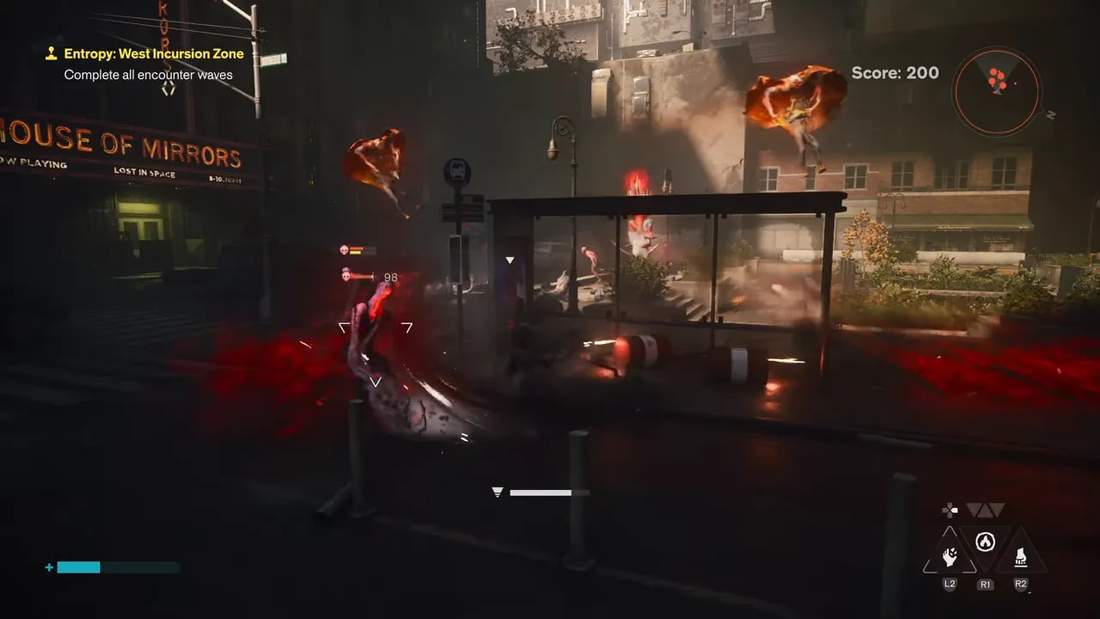
Enemies have a health bar and a stagger meter called Falter. Fill that meter and the enemy becomes vulnerable to a finisher. Pull off the finisher and Dylan enters Dominance, a very short state where he becomes substantially more powerful.
That is where the combat starts to click. A strong encounter can turn into a chain reaction:
- Build Falter and trigger a finisher.
- Use Dominance to tear through nearby enemies.
- Apply effects such as burn.
- Stack afflictions so enemies explode or trigger further damage.
- Ground-pound one enemy, then launch another into an air juggle.
- Stay airborne with double jumps, dashes, and float movement.
When a fight comes together, Resonant feels great. I could set someone on fire, blow up another enemy through stacked effects, slam into the ground, then lift an opponent and keep them airborne. The game is generous with air juggling and aerial mobility, so Dylan can stay in the sky for a surprisingly long time.
There are multiple weapons and builds to experiment with, and I did enjoy changing things around. My one complaint is that respeccing or rerolling requires a special consumable. It is not a devastating restriction, but a game that wants players to experiment this much really should let you respec freely.
Traversal and Exploration Are Where Resonant Really Elevates
Resonant is not technically one seamless open world. It is made up of large zones connected by tunnels, hallways, and other transitional spaces. But honestly, I think that undersells it. The city is big, the rooftops sell the scale of Manhattan well, and the various areas have enough variety to keep exploration interesting.
There are detailed interiors, haunted locations, odd noises to investigate, Objects of Power to track down, and side activities that never feel like generic open-world checklist nonsense. Yes, I was turning on radio towers in this game. But it never felt cynical, because the structure and tone are distinctly Remedy.
The biggest reason exploration works is that it is tied directly to getting stronger. I kept finding reasons to take detours, because more movement tools and more combat options made the world easier and more fun to navigate.
Gravity Manipulation Changes the City
At a certain point, Dylan gains the ability to flip himself towards other surfaces. He can pull himself onto walls, run across spaces that used to be ceilings, and approach environments from totally different angles.
That gravity-bending mechanic changes both traversal and combat. It opens routes through Manhattan while letting fights happen on walls, vertical buildings, and other impossible surfaces. Gravity Rush is an obvious comparison, but Resonant uses the idea in a way that still feels distinct.
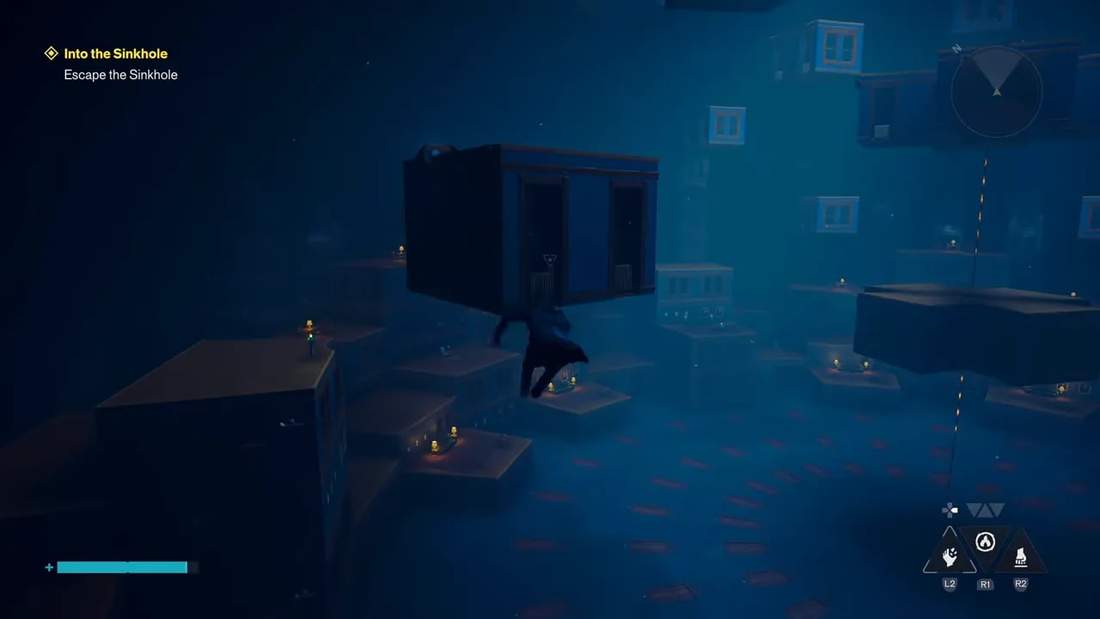
That is the key thing with the exploration. It does not become tedious busywork because the rewards matter. Finding a strange location or completing a side activity can lead to a new ability, a stronger build, or another way to manipulate the city.
The Map and Upgrade Materials Are Less Successful
The actual map is one of the weaker parts of the experience. It is cluttered, not especially intuitive, and I got turned around more than once. Some smaller interiors also look similar enough that navigating them becomes confusing.
The character-upgrade system has the right level of complexity overall. There are numbers, loadout bonuses, weapon modifications, and resources to consider, but it is not impossibly dense. The problem is that the crafting resources have too many vague names, and I often forgot exactly which thing I needed for a particular upgrade.
Instead of deliberately seeking out one identifiable material, I was frequently opening crates and completing quests while hoping I would receive whatever resource the menu wanted. That makes progression feel a little less intentional than it should.
Fortunately, the game handles build management in a very cool way. By holding down on the D-pad, Dylan can enter a void-like personal space, similar in spirit to Alan Wake 2’s Mind Place. The transition is nearly instant, thanks to fast loading, and it lets me adjust my build, upgrade weapons, equip bonuses, craft loadout items, and mess around without breaking the pace.
There is even a training room for testing weapons and abilities. That is exactly the sort of feature a system-heavy melee game needs.
There Is Plenty of Spectacle, Even If the Performance Needs Work
Control Resonant has a huge, detailed world, and it generally looks and runs well. The scale of the city comes across especially well on rooftops, where the skyline and twisted urban spaces really sell the sense that Manhattan has become something alien.
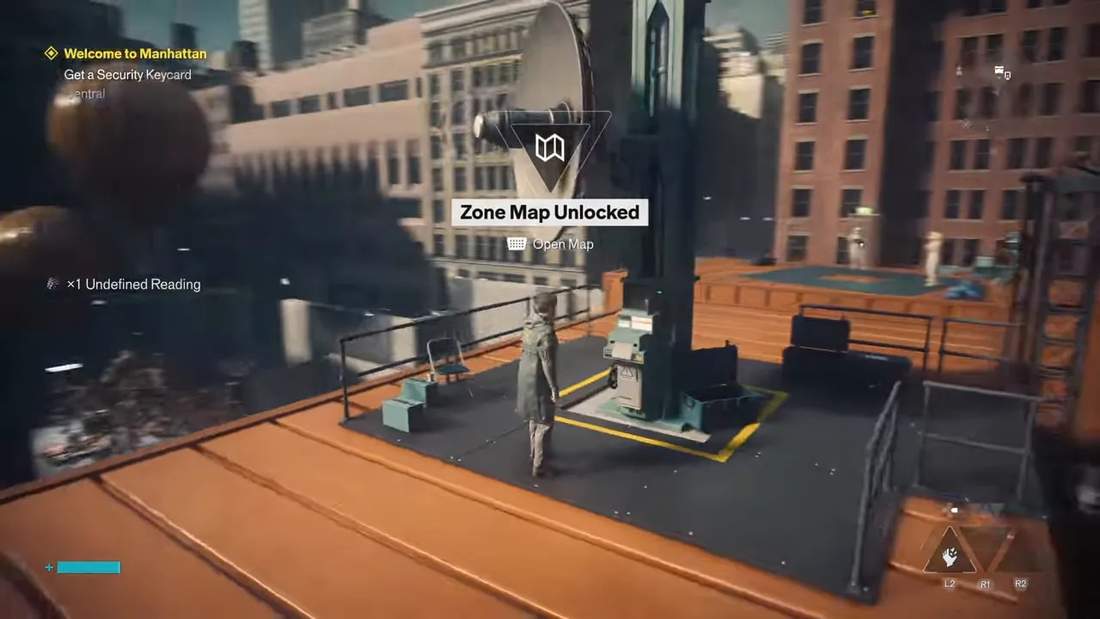
On PS5 Pro performance mode, I did notice some frame-rate dips when sprinting through open spaces while large groups of enemies were spawning. There was also some visual flickering in the lighting, particularly on certain metal surfaces that could look a little grainy.
Those are the kinds of technical issues I hope patches can improve. They are distracting when they happen, but they do not derail the game.
More importantly, the game holds together when Remedy really starts doing technically demanding and visually experimental sequences. Boss entrances, huge encounters, strange environments, sound design, story beats, and bizarre linear set pieces all bring the spectacle.
Some side quests are also delightfully silly, which is important. A Control game should not be relentlessly serious. The world needs room for creepy, unsettling, funny, and completely baffling ideas to coexist.
Customization Is a Nice Extra
Character customization is not something I necessarily needed from a game like this, but I found myself enjoying it. Dylan can wear different clothes, goggles, hats, hairstyles, facial hair, and other accessories.
You do not have to stick with a poncho-and-man-bun look if that is not your thing. The options are flexible enough to make Dylan feel a little more personal without turning the game into a full fashion simulator.
Do You Need to Play Control Before Control Resonant?
Some familiarity with the original Control definitely helps. The first game does a lot of the heavy lifting when it comes to explaining the rules, tone, quirks, and mythology of this strange universe. It is also just a great game, so if you have not played it, that is worth fixing. You can find the original Control on Amazon.
That said, you do not need to have every document, side mission, and lore detail memorised. If you know the major events from the first game, you should be fine. Resonant also includes a useful previously-on recap on the main menu to get you up to speed.
Control Resonant Verdict
I think Control Resonant is very good. It has some real flaws, especially in the early combat, the enemy sponge factor, the map, and the needlessly confusing upgrade materials. I also wish it gave players more freedom to experiment with builds without charging a consumable to respec.
But Remedy has attempted a completely different genre, a new protagonist, a wider zone-based open-world structure, and an ambitious gravity-driven traversal system. And it has pulled most of that off.
Once the tools unlock and the weirdness ramps up, the game becomes much more than a solid first attempt at melee combat. It becomes an inventive, strange, and satisfying adventure that keeps finding new ways to make its world worth exploring.
If you are a Remedy fan, I absolutely think Control Resonant is worth playing.