
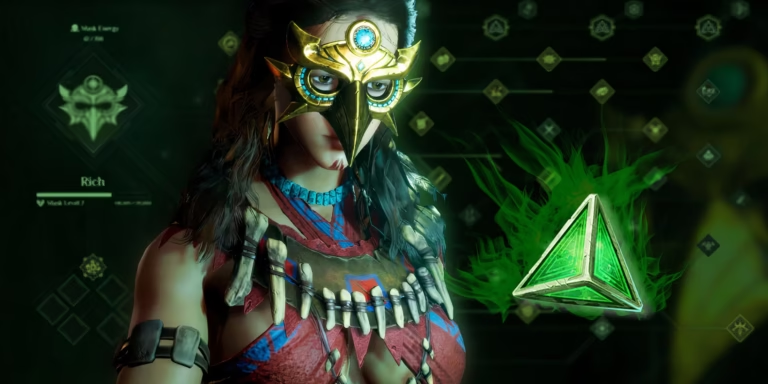
I want to walk you through 5 Things To Know About Soulmask, the new Shifting Sands DLC and the accompanying 1.0 update that redefines how the game plays. If you like survival, base building, and a healthy dose of myth fused with strange technology, this expansion delivers a massive playground. I’ll break down the essentials, highlight what changed in version 1.0, and share practical tips so you can jump in confident and prepared.
5 Things To Know About Soulmask — 1. A bold new Egyptian setting that stands on its own
The first of the 5 Things To Know About Soulmask is the setting. Shifting Sands moves the world from the jungles and mountain temples to a sweeping Egyptian landscape dominated by golden deserts and the Nile. It looks like classic Egypt at first glance, but the twist is obvious: ancient ruins sit beside alien, anti-gravity technology that turns whole chunks of the world upside down.

The DLC is sizeable. It adds over 500 hours of content and is marketed as being as large as the base game, which means it works as a standalone starting point if you haven’t played before. That alone changes how I recommend approaching it: you can start in Shifting Sands, learn the systems, and decide later whether to explore the other regions.
What to expect from the environment:
- Floating islands and inverted pyramids — gravity-bending architecture changes traversal and combat.
- Dynamic daylight cycles — exploration at different times of day opens unique paths and encounters.
- Alien anti-gravity tech — a major exploration mechanic, used to reach otherwise inaccessible ruins.
Tip: treat the Nile as a movement corridor and resource hub. Boats and air travel change how you map and secure territory, so scout waterways early and set up supply lines between key sites.
5 Things To Know About Soulmask — 2. Airships: a flying home base and weapons platform
Second on my list of 5 Things To Know About Soulmask is the airship. This is more than a mount or a transport. The airship becomes a fully fledged, mobile base where you can relocate your whole tribe and run automated production in the sky.
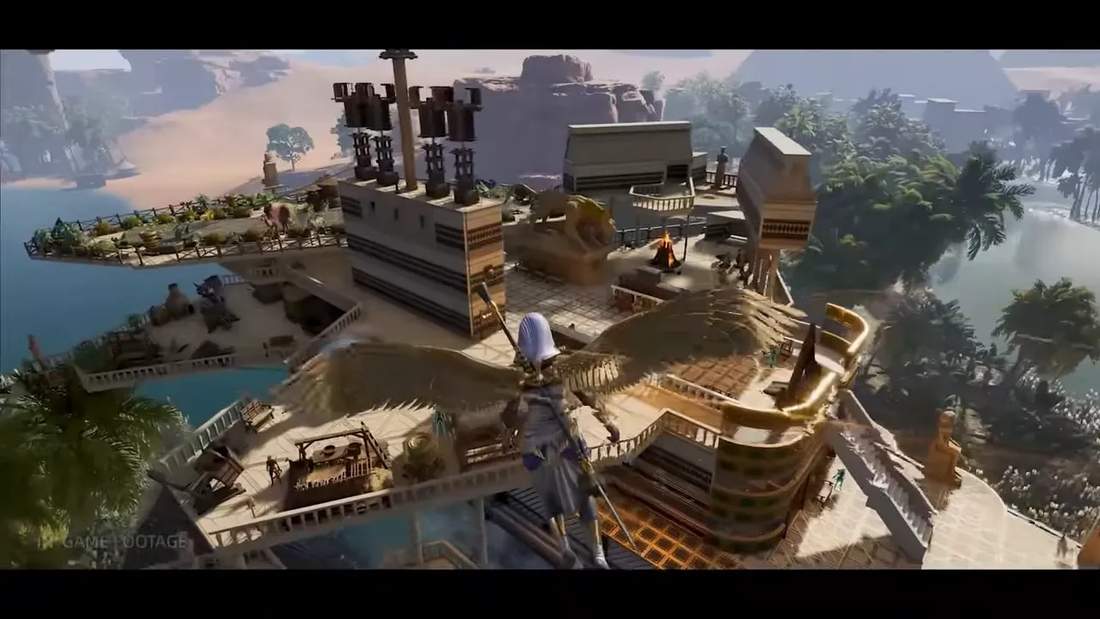
The airship system changes the game’s pacing. Instead of painfully trekking across shifting sands to defend or collect resources, you can lift camp and move to the next objective. It supports:
- Automated production lines — cook, smelt, and craft while you fly.
- Agriculture and animal husbandry — your tribesmen can farm and tend animals on board.
- Training and leisure — maintain morale and skill growth while relocating.
Ship-to-ship combat is a new headline feature. You can outfit your airship with mounted weapons, attack barbarian settlements from the skies, and engage in PvP and PvE battles. Expect large encounters such as the monumental death sandstorm boss that demands coordination, strong loadouts, and defenses.
Strategy hint: design your airship layout with redundancy. Put crucial production modules on separate platforms, keep crop and food storage near medical or morale facilities, and install multiple weapon stations so losing one doesn’t cripple your offensive capability mid-battle.
5 Things To Know About Soulmask — 3. Masks expand into a diverse, tactical toolkit
Masks have always been the heart of gameplay, and the third of my 5 Things To Know About Soulmask focuses on how Shifting Sands expands that system. New masks don’t just add numbers; they redefine how you approach encounters and tribe management.
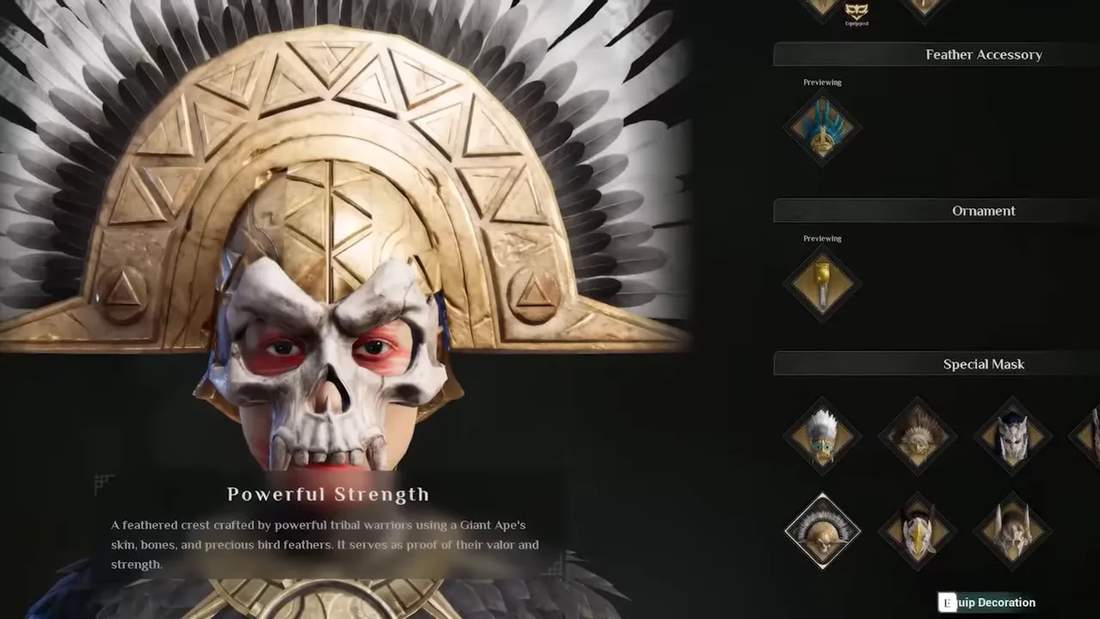
Key masks introduced include:
- Horus Mask — grants free flight and diving attacks, perfect for aerial play and rapid strikes.
- Anubis Mask — a necromancer-style tool: apply status effects and resurrect fallen foes to fight for you.
- Sobeek Mask — defensive and control-oriented, summons water currents to protect and trap enemies.
- Ammonra Mask — solar, high-damage mask that disintegrates enemies with beams and flame waves.
Masks tie into skill trees and long-term progression. Choosing a mask early can steer your build for dozens of hours, so experiment with different masks to see which play style clicks. If you like hit-and-run, Horus fits. If you prefer commanding the battlefield indirectly, Anubis or Sobeek will suit you.
Combat tip: pair masks with tribe roles. For example, an Anubis-led build benefits from a tribe focused on resource production for maintaining summon items and a training setup that boosts survivability while your resurrected units do damage.
5 Things To Know About Soulmask — 4. Pyramids, puzzles, and high-stakes guardians
The fourth entry among 5 Things To Know About Soulmask is the role of pyramids. Pyramids have always been endgame landmarks in the world, and now they become even more central with huge new structures to explore.
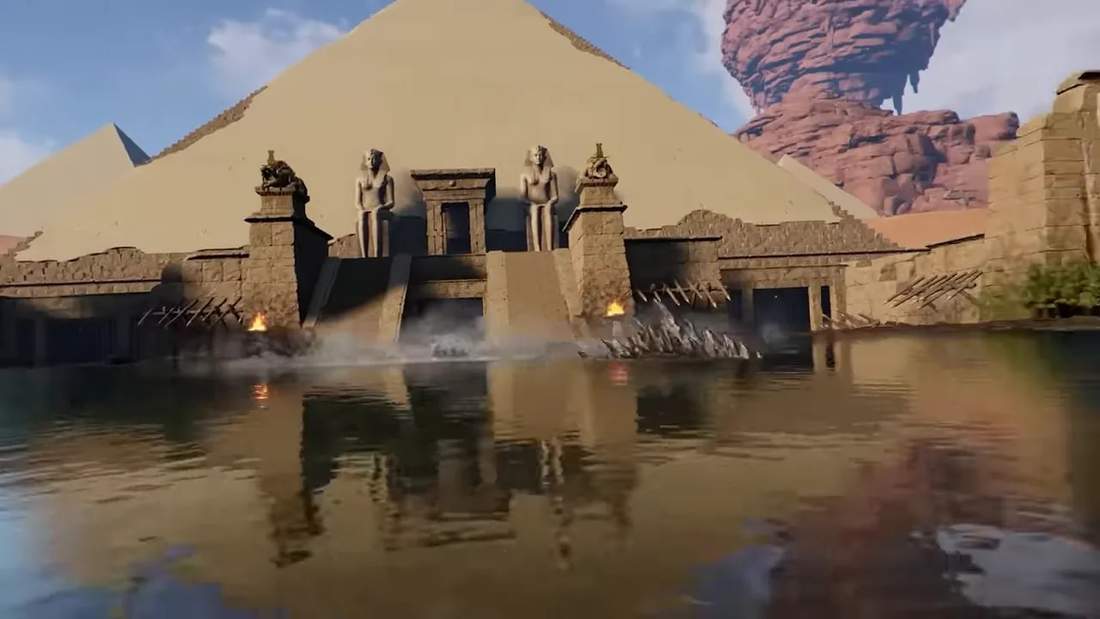
Expect:
- Five foundational pyramids across the world, each guarded by powerful temple guardians.
- New, massive pyramids in Shifting Sands filled with environmental puzzles that require observation as much as combat skill.
- Valuable rewards — unlocking pyramid secrets yields gear, masks, and lore that push your progression forward.
Pyramids in this expansion are designed to be multi-layered challenges. You’ll be decoding mechanisms, manipulating anti-gravity fields, and timing actions to avoid deadly traps. Treat them like dungeons combined with puzzle rooms. A methodical approach beats brute force.
Practical approach: scout the pyramid perimeter, identify potential approaches from air and ground, and bring a mixed team of melee and ranged tribesmen. If the pyramid requires anti-gravity activation, prioritize masks or tools that interact with those systems.
5 Things To Know About Soulmask — 5. Version 1.0 delivers onboarding, modes, and tribe management upgrades
The fifth of the 5 Things To Know About Soulmask is the sweeping 1.0 update that launches alongside Shifting Sands. This update reworks core systems and makes the game more approachable while deepening late-game mechanics.
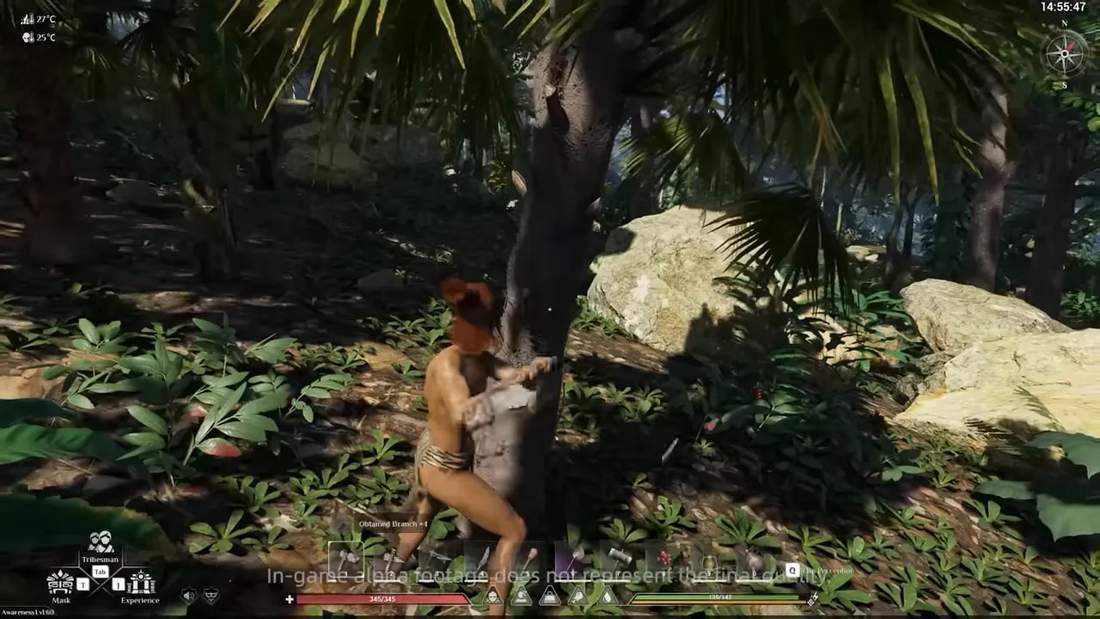
Biggest additions in 1.0:
- Independent tutorial system — a guided onboarding that introduces mechanics without handholding. Great for new players and a helpful refresher for returning players.
- Three major game modes — choose the experience that fits your appetite: a beginner-friendly sandbox, the classic survival progression, or a combat-focused mode.
- Improved tribe management — assign roles, automate production lines, and use long-distance resource transport to keep remote bases stocked.
- Advanced training options — specialized training areas make your tribesmen stronger and more proficient, letting role specialization shine.
The long-distance transportation system is a quiet game-changer. It allows you to move resources across the map without micromanaging every step, which is crucial when you operate multiple bases or a flying airship. Similarly, automating production reduces busywork so you can focus on exploration and combat.
Setup tip: early on, build a central logistics hub and set up resource pipelines to your forward outposts. Even a simple automated line for basic materials will save hours and keep your progression smooth as you tackle tougher pyramids and bosses.
Extra: how tribes and talents shape your experience
A running theme across all 5 Things To Know About Soulmask is the tribespeople system. The game randomizes traits from a massive pool — 871 talents and 23 skills — so every tribe will feel different. That variety makes recruitment and role assignment strategic rather than arbitrary.
How I manage tribes:
- Recruit broadly to increase the odds of finding rare talents you can use for specialization.
- Assign jobs based on talents — a tribesman with farming talents should run agriculture, while those with combat talents head to training grounds.
- Use masks to compensate — if your tribe lacks a desirable talent, a mask that amplifies a weak area can level the field.
The variety means experimentation is rewarded. I often rotate recruits through different roles until their talents reveal the best fit. Automated production and new role assignments make that rotation less punishing.
Practical getting-started checklist for Shifting Sands
If you plan to dive into Shifting Sands, here is a compact checklist to get you started fast:
- Choose a starting mode that matches your experience: sandbox for gentle learning, classic for full challenge, or combat for focused play.
- Prioritize an airship once you can build it — the mobility and production benefits are huge.
- Collect several masks early to test play styles; the Horus mask is excellent for movement while Anubis and Ammonra define combat options.
- Set up automated production and a logistics hub to reduce resource headaches.
- Scout pyramid entrances and mark safe staging areas for long fights or puzzle runs.
One more operational tip: keep a compact pack of tools and a backup mask on your airship. When tackling a pyramid or a boss, being able to swap abilities quickly can be the difference between victory and a long, expensive respawn.
Why Shifting Sands matters for the game’s future
Shifting Sands and the 1.0 update are not just content drops. They represent a maturation of systems: onboarding to bring in new players, modular game modes that broaden appeal, and automation that lets players focus on creativity and strategy. For me, that means Soulmask is moving from an intriguing survival sandbox into a platform with real depth and replayability.
The fact that the DLC can be a starting point is important. It lowers the barrier for newcomers and gives long-term players fresh mechanics to master. The game now supports multiple playstyles without forcing compromise.
Release and practicalities
Shifting Sands launches with version 1.0 on April 10 on Steam. Whether you own the base game or are considering starting with this DLC, plan your first sessions around learning the basics of mask mechanics, setting up your logistics, and getting an airship operational. Those three pillars—masks, air mobility, and tribe automation—will make your first 50 hours far smoother.
I included 5 Things To Know About Soulmask here for clarity, but the best way to appreciate the expansion is to decide which of the new systems excites you most and lean into it. If it’s exploration and flight, build an aerial-focused kit. If it’s deep base automation, design a mobile factory on your airship. The systems are flexible enough to support either approach.
Final thoughts
The Shifting Sands DLC and the 1.0 update push the game into new territory while keeping the core that made it compelling: mask-driven abilities, tribal strategy, and emergent world exploration. These are the 5 Things To Know About Soulmask that I think matter most:
- It introduces a rich Egyptian-themed setting with anti-gravity twists.
- The airship transforms movement and base management into a mobile experience.
- New masks broaden combat and support options in meaningful ways.
- Pyramids become centerpieces of puzzle-driven, high-risk reward content.
- Version 1.0 brings onboarding, modes, and automation that refine long-term play.
If you’re ready to experiment, you’ll find a lot to love: diverse tribes, meaningful progression paths, and a world that rewards curiosity. The learning curve is less steep now, and the sky literally becomes your home base. I’m excited to see how players combine masks, tribes, and airship engineering to create wildly different campaigns.
Remember: 5 Things To Know About Soulmask is a starter map for what the expansion offers. Pick one system to master first, build around it, and the rest of the game will click into place.